
Protection relay and system testing
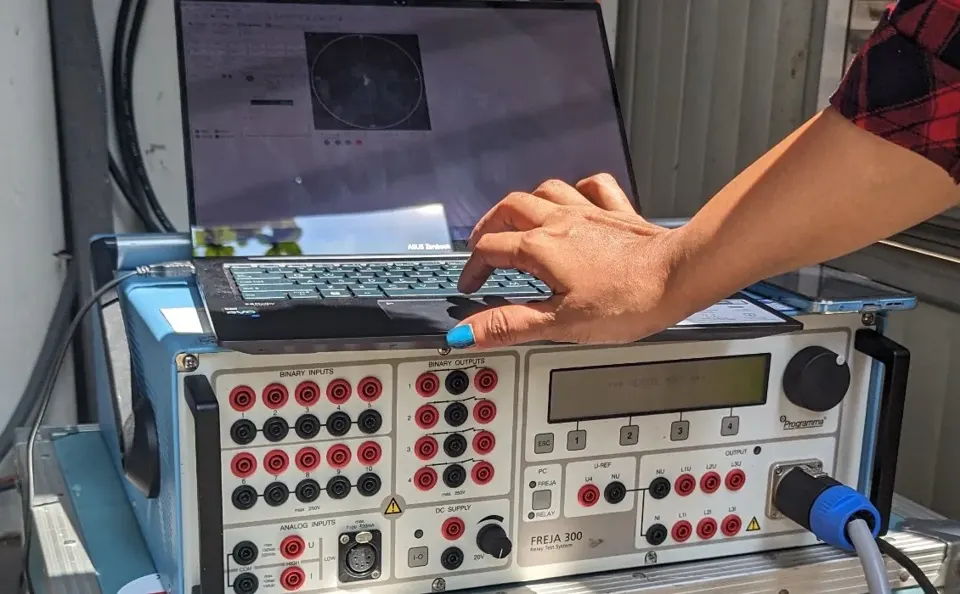
We test that every protection relay on your network will trip the right circuit breaker, at the right current, in the right time — and that the whole chain behind it, the CTs and VTs, the trip circuits and the circuit breakers themselves, will clear the fault — before a real fault finds out for you. Secondary injection on site with our own relay test sets, trip-circuit and scheme checks, and the grid connection relay tests the CEB and LECO witness before a solar plant is energised. Each report is signed by a Chartered Electrical Engineer.
Why relays need testing
Relays fail silently. The test is how you find out first.
A protection relay does nothing for years and then has a fraction of a second to do its one job. If a setting was entered wrong at commissioning, a CT was replaced with a different ratio, a firmware update reset a curve, or a trip wire came loose in the panel, nothing shows on the front of the relay. The first sign is a fault that is not cleared — a transformer that burns, a cable that fails back to the incomer, or a whole site that trips when one feeder should have.
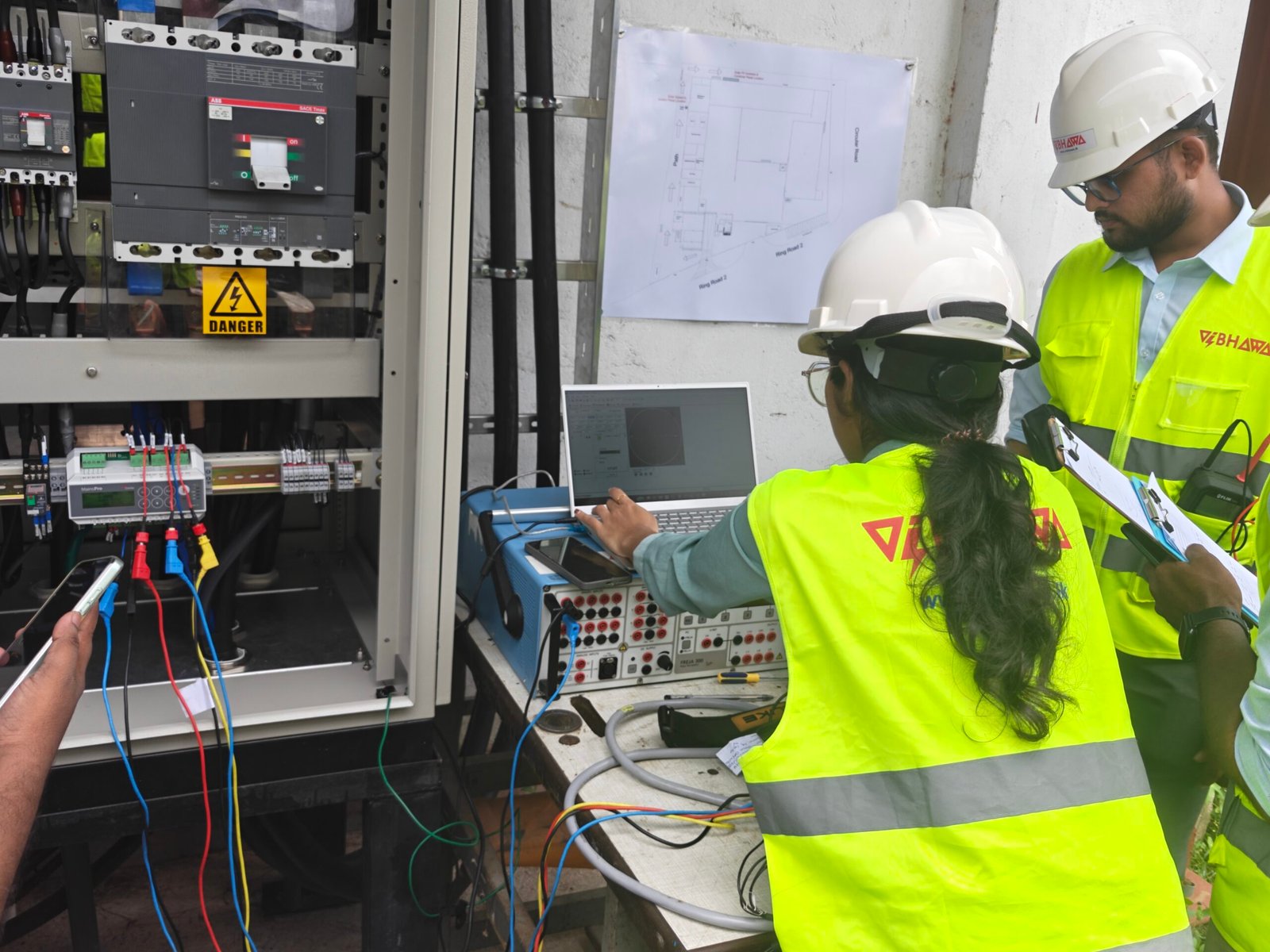
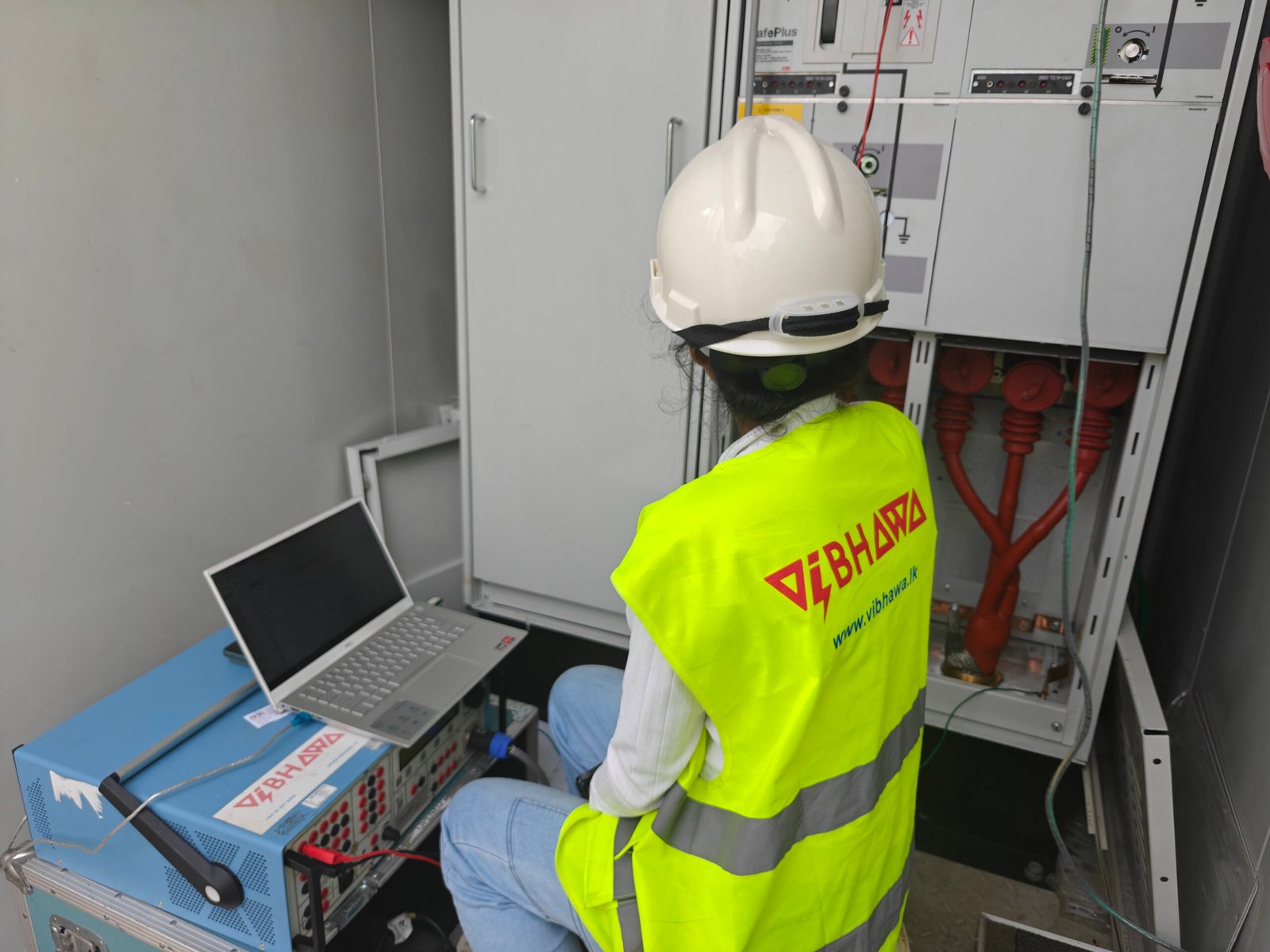
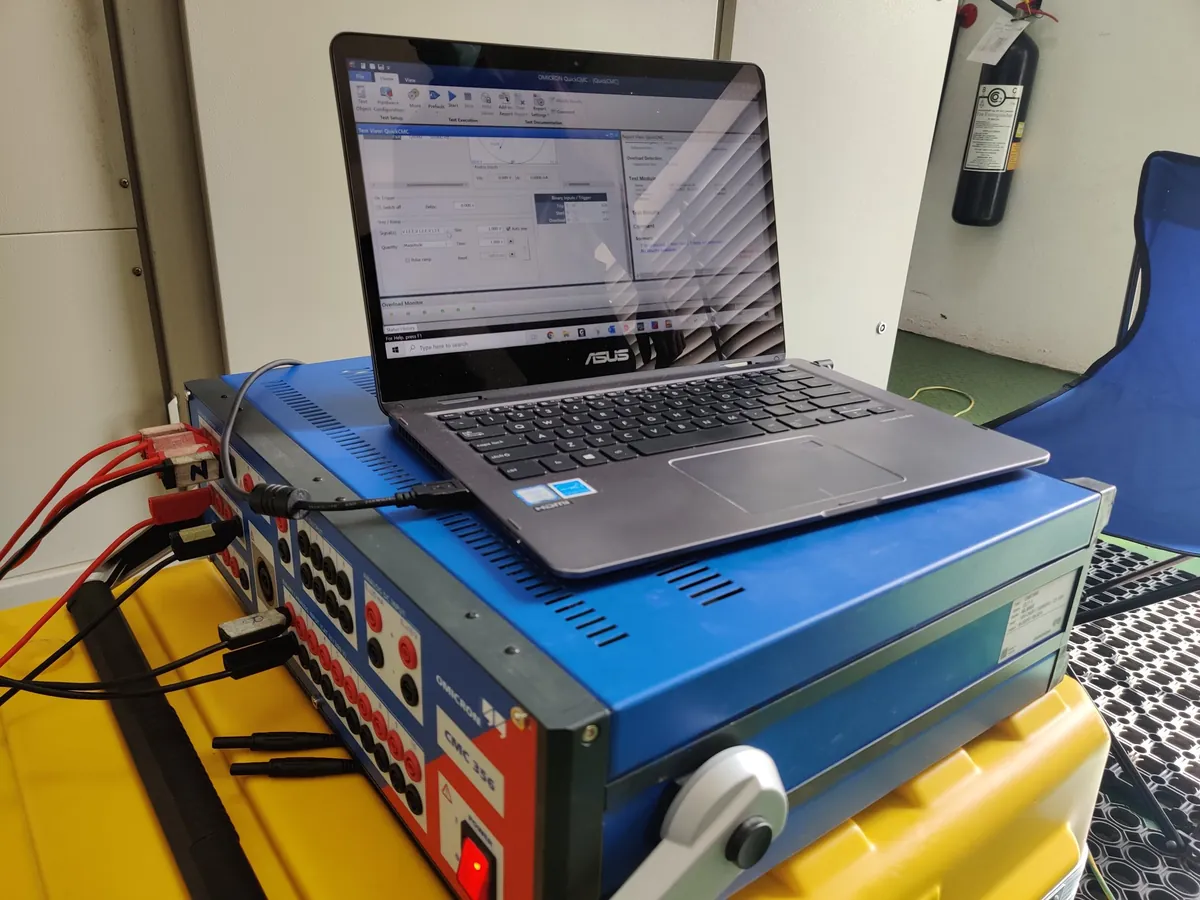
Testing finds those faults while the system is healthy. We inject currents and voltages into the relay, watch it operate, time it, and confirm the circuit breaker actually opens. It is the only way to know that the protection on paper is the protection in the panel.
Passing a test is not the same as being set correctly. A relay can operate perfectly at a wrong setting. That is what a protection coordination study is for: it decides what the settings should be. Relay testing proves the relay is doing it.
What protection system testing covers
Relay testing checks one device. Protection system testing checks the chain from the CT to the circuit breaker that has to open.
What we test
Every protection function in service, against the settings schedule you give us — or the one we write.
| Protection function | ANSI | What we verify |
|---|---|---|
| Overcurrent | 50 / 51 | Pickup, the inverse-time curve at several multiples of setting, the instantaneous element, and grading against the device upstream |
| Earth fault | 50N / 51N | Sensitivity, pickup threshold and trip time — the element most often found set wrong after a CT change |
| Differential | 87 | Pickup, bias slope, and stability for faults outside the zone; harmonic restraint on transformer schemes |
| Under / over voltage | 27 / 59 | Operate value and time at each stage |
| Under / over frequency | 81 | Operate value, time and any rate-of-change element |
| Neutral voltage displacement | 59N | Residual voltage pickup and time — the earth-fault protection on unearthed and high-impedance networks, and on many solar connections |
| Grid interface (solar, generators) | 27 / 59 / 81 / ROCOF | The utility's voltage and frequency trip settings, anti-islanding response and reconnection delay, tested before the CEB or LECO witness visit |
| Reverse power | 32 | Pickup and time on generator and co-generation incomers, so a generator is never motored by the grid |
| Generator differential | 87G | Pickup, slope and stability on generator schemes |
| Vector shift | 78 | Loss-of-mains response on generators running in parallel with the grid |
| LV earth fault, earth leakage, phase failure | 51N / 64 / 47 | Earth fault and earth leakage relays, and phase-failure relays on motor and distribution boards; many can be tested in the panel without removing them |
| Distance | 21 | Zone reach and timing, for utility and transmission-level schemes |
Numerical relays from the major manufacturers, including Schneider MiCOM and Easergy, and the electronic trip units of LV air and moulded-case circuit breakers.
How a test runs
Review
Single-line diagram, settings schedule, relay models, the last test report and the coordination study, if there is one. Anything that has changed since is flagged before we arrive.
Isolate and inspect
The circuit under test is isolated under your permit-to-work, trip outputs are made safe, and the relay, wiring, CT and VT circuits and stored event records are inspected.
Secondary injection
Currents and voltages injected from the relay test set into the relay's measuring inputs. Each function is checked for pickup, timing and logic without energising the primary system.
Primary injection and CTs
At commissioning, current injected on the primary side proves the whole chain together; CT and VT ratio and polarity are checked with the analyser.
Trip circuit and scheme
Trip-circuit supervision, circuit breaker tripping, interlocks and blocking, and the communication links between relays on modern schemes.
Report and restore
The system is returned to service and checked. Results against settings for every function, pass or fail, with corrective actions, signed by a Chartered Electrical Engineer.
Relays are tested against the operating characteristics of IEC 60255 and the manufacturer's settings documentation.
The relay test before a solar plant is connected
A rooftop or ground-mounted plant cannot export to the grid until its interface protection has been tested — and, in Sri Lanka, tested again with a CEB or LECO engineer watching.
The utility sets the voltage and frequency limits a solar plant must trip at, how fast, and how long it must wait before reconnecting, and it requires the plant to stop exporting within half a second if the grid goes down. Those settings live in the interface relay at the point of connection. On larger plants connected at medium voltage there is usually a neutral voltage displacement relay on its own VT as well.
We configure and test that protection before the witness visit, so the day the utility engineer arrives is a demonstration, not a fault-finding session. We then run the test again in front of the utility's engineer and hand over the signed results for the interconnection agreement.
For larger plants we model the connection in ETAP first, so the settings we test are the ones the network needs.
Recent grid connection work: Jay Jay Mills (rooftop PV at its Trincomalee factory, MV connection, LV interface relay and NVD, tested and re-tested in front of the CEB), Warwick Solar Power (Filotex, Katunayake), ASK Engineering (33 kV commissioning and CEB-witnessed interface relay, Horana), IIAL (MV and LV solar installation, Pannala), Pyramid Lanka (1.6 MW), Vario Systems and GRI, Badalgama.
11 kV protection for a floating solar plant in open sea
The 3 MW floating solar plant at Cheval Blanc Randheli connects to the resort through an offshore 11 kV substation on piles and a subsea cable to the onshore substation. Vibhawa carried out the protection coordination study in ETAP, set the relays, and tested them on both substations before the plant was energised into the resort's live network.
The offshore network needed earth-fault protection that does not depend on a large fault current, so the scheme includes neutral voltage displacement protection alongside overcurrent and earth fault. Every element was injected and timed on site, with the trip of each circuit breaker confirmed.
How often to test
The interval is set by the risk, not the calendar.
Our test equipment


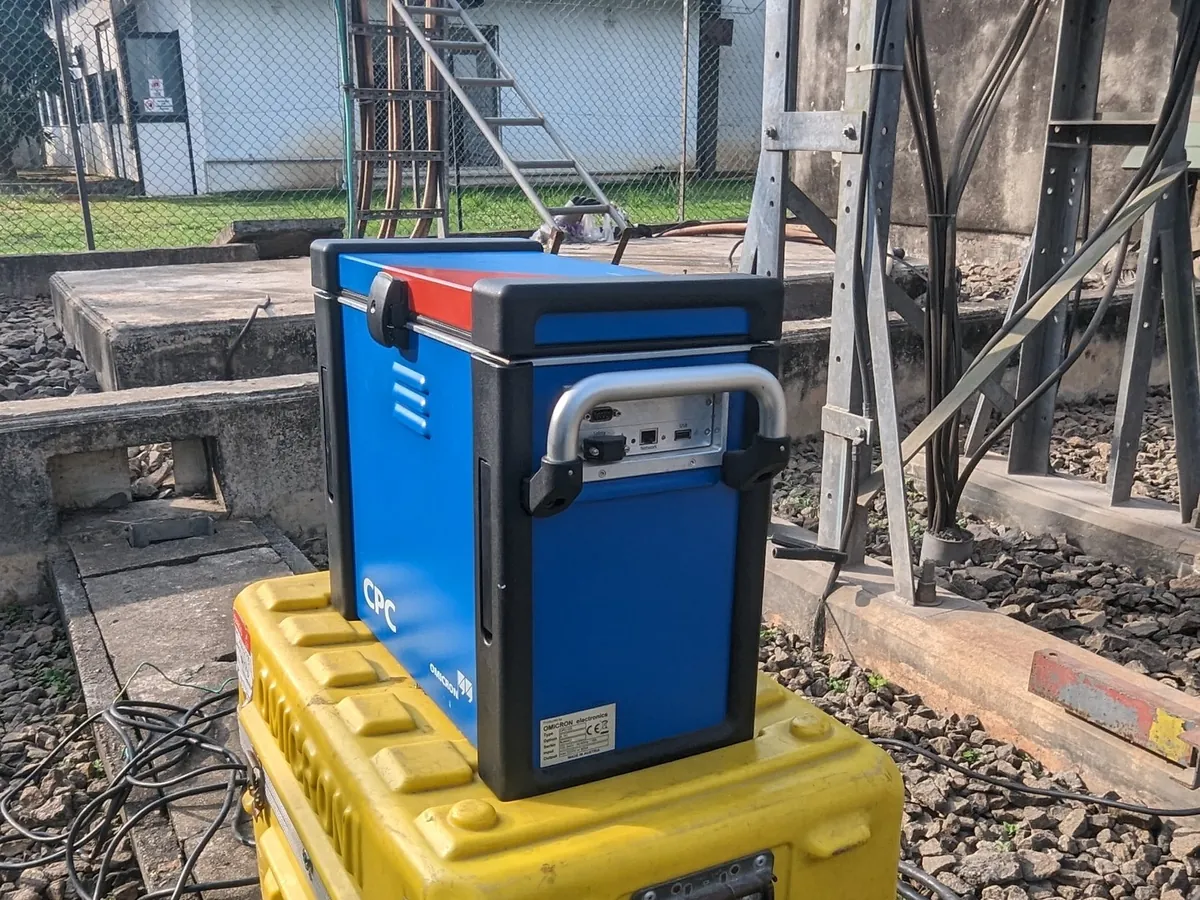
Primary current injection and a CT/VT analyser for ratio, polarity and excitation checks at commissioning. All instruments are calibrated, and the certificates travel with the report.
Where we have done it
Industrial plants, solar plants, utilities' customers and resorts, in Sri Lanka and the Maldives.
| Client | Work | Year |
|---|---|---|
| Cheval Blanc Randheli, Maldives (with SWIMSOL) | 11 kV relay testing on the offshore and onshore substations of a 3 MW open-sea floating solar plant, with the coordination study | 2022–24 |
| Jay Jay Mills | Grid connection relay and NVD testing for a rooftop PV plant, repeated in front of the CEB | 2025 |
| Rotax Limited | MV relay testing | 2026 |
| ASK Engineering | Relay testing (Bokundara); 33 kV solar commissioning with CEB-witnessed interface relay (Horana) | 2025–26 |
| Warwick Solar Power | Testing and commissioning of the LV protection relay, Filotex rooftop solar, Katunayake | 2025 |
| IIAL | MV and LV solar installation testing, Pannala; 33 kV system testing at the SUEZ Jaffna seawater desalination plant | 2023–25 |
| Pyramid Lanka | Pre-commissioning and demonstration of LV cabin protection relays, 1.6 MW solar | 2021 |
| Vario Systems · GRI, Badalgama | Solar protection testing for grid connection; secondary injection of solar PV protection relays | 2021 |
All projects → · What is protection relay testing? Read the guide →
Other electrical testing services
Relay testing is usually part of a wider job. For the settings themselves, see the protection coordination study.
Electrical Testing and Commissioning
Pre-energisation testing and commissioning of new installations before they go into service.
Explore →MV & LV Systems Testing
Insulation, contact resistance and condition of MV (to 33 kV) and LV systems, often in the same visit.
Explore →Lightning Protection & Earthing
Testing and design of lightning protection and earthing, including substation earths.
Explore →Transformer Testing
Winding resistance, ratio, insulation and oil: the asset the relay protects.
Explore →Average rating from our Google reviews — clients across Sri Lanka and the Maldives. Read them on Google →
Frequently asked
Open a question to read the answer. If yours is not here, ask us — the scope call is free.
What is protection relay testing?
Checking that a protection relay detects a fault and operates as set — at the right current or voltage, in the right time, and that it actually trips its circuit breaker. It is done by injecting simulated fault currents and voltages into the relay and measuring its response.
What is secondary injection testing?
Injecting test currents and voltages from a relay test set directly into the relay's measuring inputs, in place of the signals from the CTs and VTs. It tests the relay and its trip circuit without energising the primary system, so it can be done during a short shutdown. Primary injection, used mainly at commissioning, injects on the primary side to prove the CTs and wiring as well.
How often should protection relays be tested?
At commissioning, then every one to five years depending on how critical the installation is — annually for process plants, hospitals and coastal sites is common. Test again after any change to the network, the relay or its settings, and after any fault where the relay's behaviour is in question.
Is relay testing required before a solar plant is connected to the grid?
Yes. For rooftop solar connecting to the CEB or LECO network, the utility guidelines require commissioning tests witnessed by the utility before parallel operation is authorised. Larger plants follow the CEB grid connection requirements, so confirm them with the utility early. We configure and test the interface protection beforehand, repeat the test in front of the utility's engineer, and hand over the signed results.
What is the difference between protection system testing and relay testing?
Relay testing checks individual relays. Protection system testing covers the whole chain: relays, CTs and VTs, trip circuits, communication links and the circuit breakers. A relay can pass on its own and still fail to clear a fault if a trip wire is broken or a CT is connected the wrong way round. Our protection relay testing guide covers the relay types in detail.
What is the difference between relay testing and a protection coordination study?
A coordination study decides what each relay should be set to, so that the device nearest a fault trips first. Relay testing proves that each relay operates at those settings. A relay can pass every test and still be set wrong, which is why the two are often done together.
Can protection testing be done without taking equipment offline?
Injection testing normally needs the circuit under test isolated, so the relay's trip outputs cannot operate live equipment. In most installations only the feeder being tested comes out of service, for a short time, and we plan the sequence around your shutdown. Some LV relays, such as earth fault and earth leakage relays, can be tested in the panel without removing them.
What do we need to send to get a quote?
The single-line diagram and a list of relays with their make and model, or the last test report. With that we can tell you how many days on site and what it costs.
Do you test relays in the Maldives?
Yes, with our own engineers and test sets. Relay testing on resort and utility networks is part of our Maldives programme, alongside coordination studies, safety audits and thermography.
Send us the single-line diagram
Add the relay list or your last test report. We will tell you how many days on site, whether a coordination check is worth doing first, and what it costs.