What Is Protection Relay Testing and Why Is It Critical for Electrical Safety?
When a fault occurs on an electrical network, every millisecond matters. A protection relay that fails to operate correctly can lead to transformer and cable damage, switchgear failure, extended outages, lost production, and serious safety incidents. Protection relay testing is what confirms — before a real fault does — that the protection relay will detect that fault and trip the right breaker at the right time.
For any facility that depends on reliable power — a factory, a hotel, a hospital, a solar plant or a substation — testing verifies that the protection system will respond correctly at the one moment it truly matters.
Key takeaways
- Protection relay testing confirms a protection relay will detect a fault and trip correctly — instead of finding out it won’t during an actual fault.
- Testing alone is not enough. A protection relay can pass every test and still be set wrong for the network it protects. A protection coordination study defines the correct settings; testing verifies them.
- For solar and grid-connected plants, relay testing is also a grid-connection requirement (for example, CEB acceptance in Sri Lanka).
- Test reports should be reviewed and signed by a chartered electrical engineer — the deliverable that satisfies compliance, insurance and utility sign-off.
What Is a Protection Relay?
A protection relay is a device that monitors electrical parameters and identifies abnormal operating conditions. When a fault is detected, the protection relay sends a trip command to a circuit breaker or other protective device to isolate the affected section of the network. The objective is straightforward: to protect people, equipment, and electrical infrastructure from damage.
Protection relays are commonly installed in:
- Industrial facilities and manufacturing plants
- Electrical substations
- Commercial buildings
- Power plants and renewable energy projects
- Data centres
- Water and wastewater treatment facilities
Without protection relays — and without confidence that they are set and working correctly — a fault can spread through a network and destroy expensive equipment in moments.
Why Protection Relay Testing Is Important for Electrical Safety
Protection systems are installed on the expectation that they will perform correctly. But settings drift, components age, firmware changes, and installation errors can sit undetected for years. Testing confirms that a protection relay still operates according to the original protection philosophy.
Professional protection relay testing services verify settings, trip functions, communication schemes, and overall protection performance under simulated fault conditions. This delivers four practical benefits.
Prevent Equipment Damage
Faults place severe stress on transformers, motors, cables, generators and switchgear. A protection relay that trips too late can let a contained fault escalate into a major failure. Routine testing — combined, for transformers, with regular transformer testing — gives a clearer picture of equipment condition and risk.
Improve Personnel Safety
Electrical faults can create dangerous conditions, including arc flash. Fast, accurate fault clearing reduces exposure to these hazards. Pairing relay testing with an electrical safety audit assesses hazards, compliance gaps and protection performance together.
Reduce Unplanned Downtime
Unexpected electrical failures interrupt production, delay operations and drive up maintenance cost. Testing surfaces weaknesses in the protection system before they cause an outage.
Support Compliance and Insurance Requirements
Many facilities keep documented test records as part of compliance and risk-management programmes. Test reports provide evidence that protection systems are maintained to recognised engineering practice — and are often required by insurers and utilities.
What Happens When a Protection Relay Fails?
Protection relay failures are rarely obvious. A protection relay can look perfectly operational while a critical setting has been changed or an internal issue has developed. When this happens, the consequences can include:
- Transformer and motor damage
- Switchgear faults
- Arc flash incidents
- Extended power interruptions
- Production shutdowns
In the worst case, a fault that should have been isolated within milliseconds spreads across a much larger section of the network. This is exactly why relay testing should be treated as a preventive measure — not a reaction to failure.
Types of Protection Relays and Their Testing Requirements
Different protection functions call for different test procedures. The table below summarises the most common protection relay types and what testing confirms for each.
| Protection relay type | ANSI code | What testing verifies |
|---|---|---|
| Overcurrent | 50 / 51 | Pickup current, time-current curve, instantaneous trip, grading with upstream/downstream devices |
| Earth fault | 50N / 51N | Sensitivity, pickup threshold, trip timing |
| Differential | 87 | Operating pickup, bias/restraint slope, in-zone fault tripping, through-fault stability |
| Voltage / frequency | 27/59, 81 | Correct operation when voltage or frequency moves outside set limits |
| Grid-interface (solar/DG) | U/O V, U/O F, ROCOF, vector shift | Anti-islanding and grid-protection response required for utility grid connection |
| Distance | 21 | Zone reach and fault-response accuracy (mainly transmission/utility networks) |
Overcurrent (50/51) and differential (87) protection are the workhorses across industrial, commercial, hospitality and renewable sites, so they receive the most attention in practice. Distance protection (21) is included for completeness but is mainly a transmission- and utility-network function.
For solar PV and generator-connected sites, the grid-interface functions deserve particular care: under/over voltage, under/over frequency, ROCOF and vector-shift protection govern how the plant connects to — and disconnects from — the grid during a disturbance. These are not optional extras; they are the functions the utility checks before approving grid connection.
Vibhawa handles this end to end for renewable-energy plants: the protection system study, relay configuration, and testing, through to the witness verification performed in front of utility engineers to secure the grid connection. We have delivered this for numerous MW-scale solar PV plants connecting to the grid.
Grid-connection protection — MW-scale solar track record
Vibhawa has carried out protection system studies, relay configuration, testing and utility witness verification for grid-connected solar PV plants including the 3 MW Cheval Blanc open-sea floating plant (Maldives), the 1.6 MW Pyramid Lanka solar project, a 1.16 MW solar PV plant for Jay Jay Mills, and rooftop solar grid-connection support for Warwick Solar Power — alongside protection-coordination work for grid-connected power plants such as the 10 MW Ace Power waste-to-energy facility, Sri Lanka’s first.
What Happens During Protection Relay Testing?
A structured process delivers reliable results and defensible documentation.
1. Review the Protection Philosophy
Engineers begin by reviewing single-line diagrams, relay settings, previous test reports, protection coordination studies and any system modifications. This establishes the intended protection philosophy before any test is run.
2. Carry Out Visual and Wiring Inspections
A physical inspection checks relay condition, wiring integrity, terminal connections, communication interfaces, and the CT and VT circuits. Problems found here can defeat a perfectly healthy protection relay.
3. Conduct Secondary Injection Testing
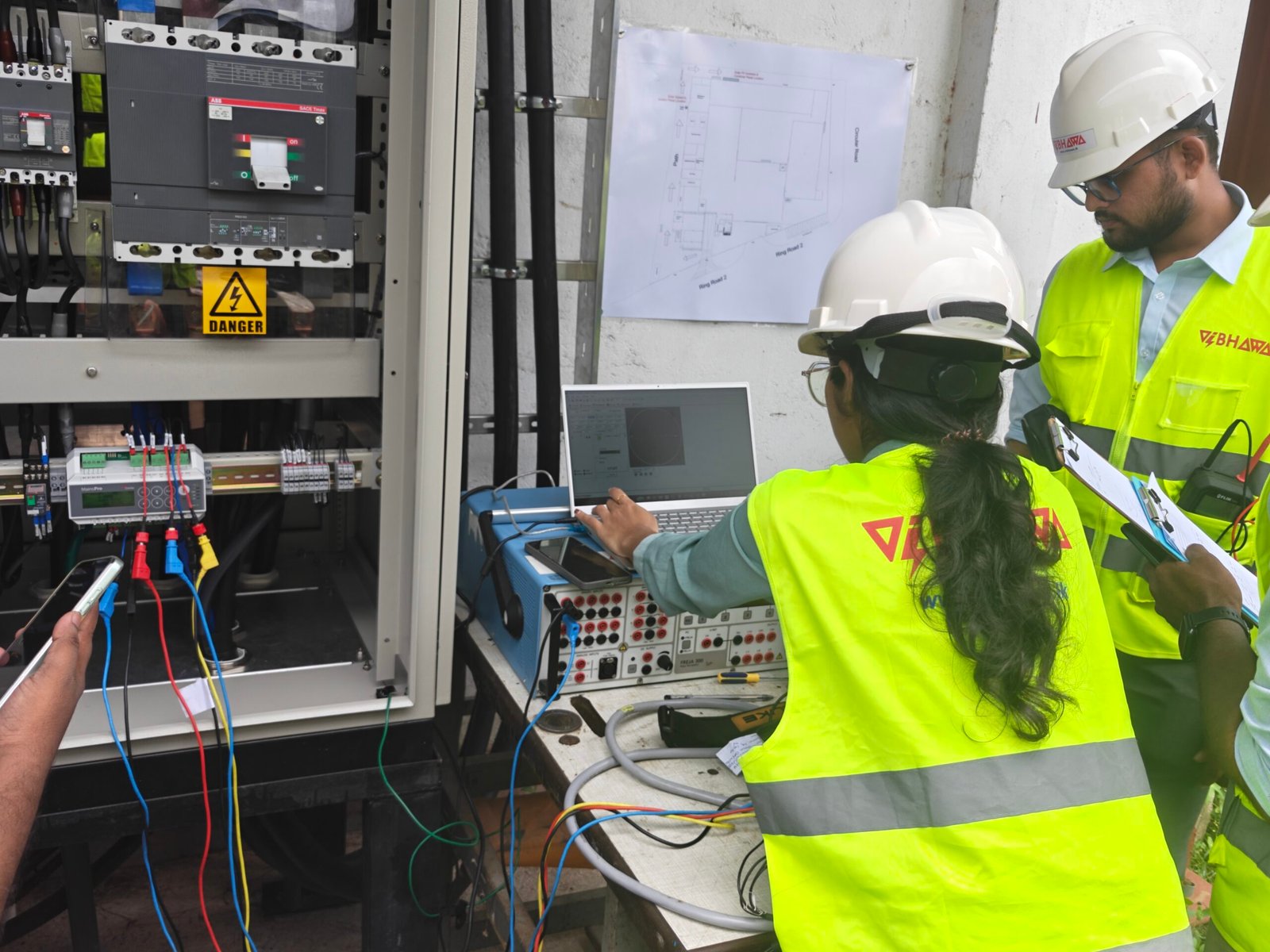
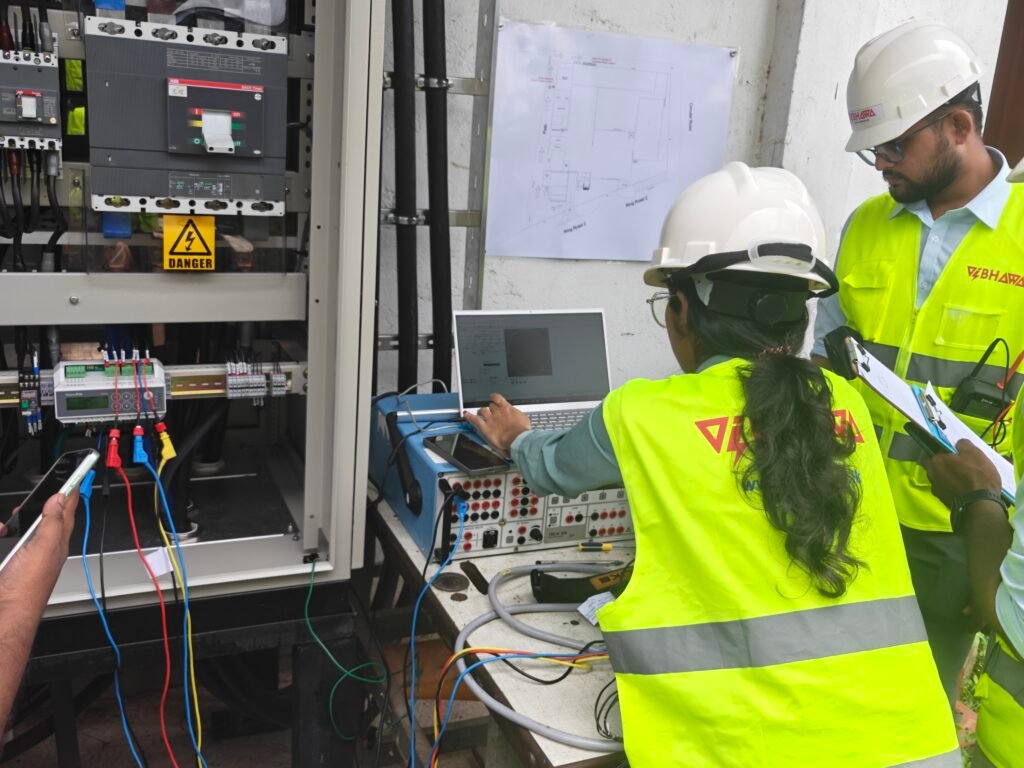
Secondary injection is the most widely used method. Simulated fault currents and voltages are injected into the protection relay’s measuring circuits to verify pickup values, trip timing, logic functions, alarms and communication performance — without energising primary equipment.
4. Conduct Primary Injection Where Required
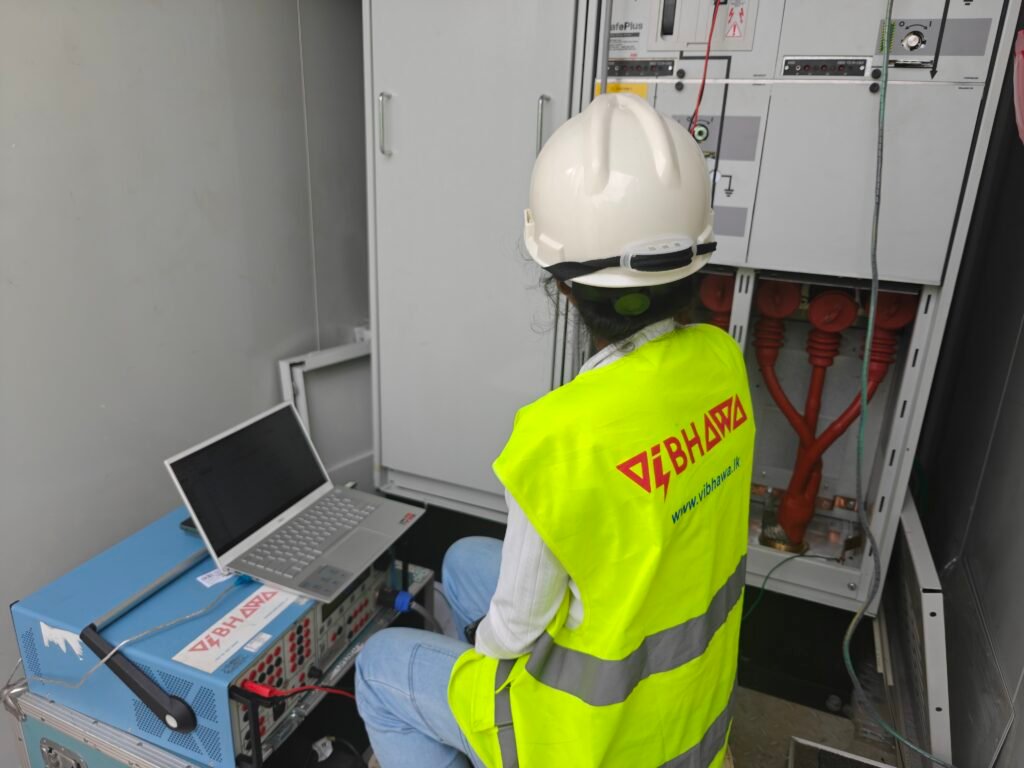
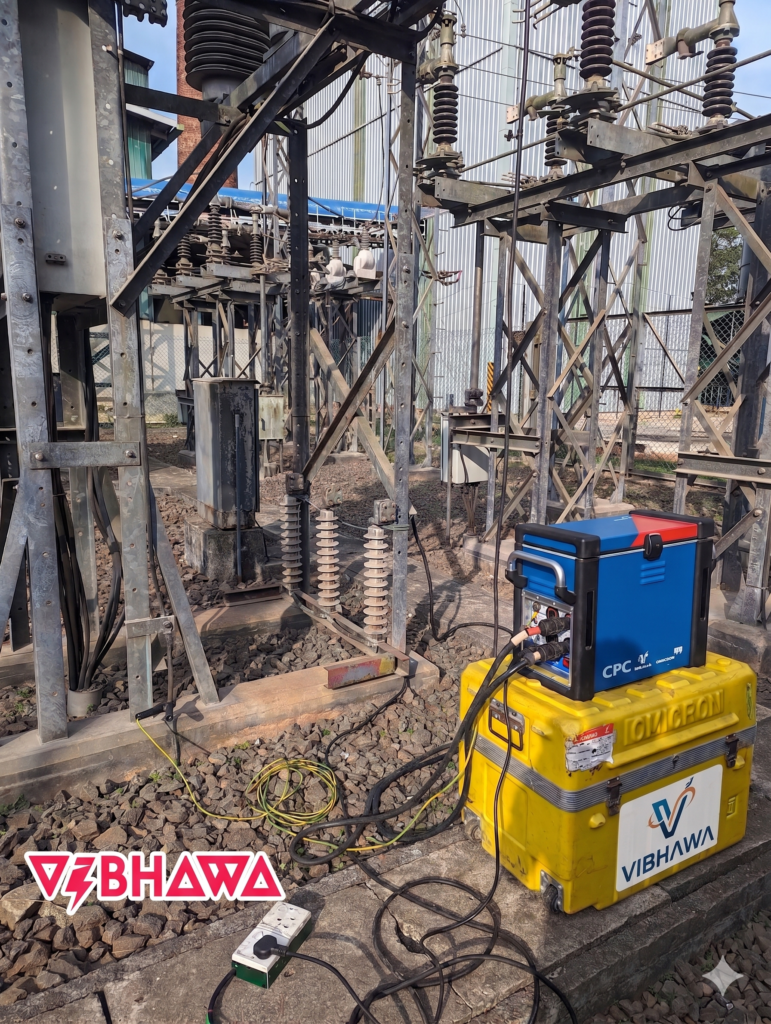
At commissioning, primary injection proves the whole measurement chain end to end — CT ratio and polarity, wiring, and the protection relay together — by injecting current and voltage through the primary circuit. Vibhawa uses primary current and voltage injectors together with a dedicated CT/VT analyser to confirm the protection will see a real fault as intended, not just that the protection relay responds to a bench signal.
5. Verify Trip Circuits and Scheme Logic
Functional checks confirm that a protection relay trip actually opens the intended breaker (trip-circuit supervision and breaker-trip checks), that interlocks and blocking schemes behave correctly, and — on modern installations — that IEC 61850 GOOSE messaging and end-to-end schemes operate as designed.
6. Prepare the Test Report
A detailed report records test results, verified settings, observations, identified issues and recommended corrective actions. At Vibhawa these reports are reviewed and signed by a chartered electrical engineer, so they stand up to utility, insurer and audit scrutiny.
Protection Coordination and Relay Testing: Two Halves of One Job
Protection relay testing and protection coordination should never be treated as separate activities. Testing confirms that a protection relay functions correctly. Coordination determines how all the protection devices should work together during a fault.
This is the point most often missed: a protection relay can pass every injection test and still be configured incorrectly for the system it protects — the wrong curve, the wrong time multiplier, the wrong grading margin against the device upstream. The protection relay works; the scheme doesn’t. Poor coordination leads to:
- Nuisance and unnecessary tripping
- Loss of healthy, critical equipment
- Cascading outages across the plant
- Reduced overall system reliability
Any facility that has expanded, added load, or modified its distribution system should review both relay settings and the coordination study. A protection coordination study using ETAP verifies that settings remain correct for the actual, as-built network — and identifies coordination conflicts, short-circuit risks and protection gaps before they cause damage.
In the field — Cheval Blanc Randheli, Maldives
Vibhawa carried out both halves of this job on the region’s largest open-sea floating solar plant: the protection coordination study that defined the settings, and the 11kV protection relay testing that verified them. The scope included an offshore substation and a submarine cable connection — proof that getting coordination and testing right matters most exactly where access is hardest and downtime is costliest.
Equipment Used for Protection Relay Testing
Accurate testing requires instruments capable of simulating real operating conditions — but the equipment is only as good as the engineer interpreting the results.
FREJA 300 Relay Test System (Megger)
Vibhawa uses the FREJA 300 relay test system for secondary injection and protection verification, confirming protection relay functions, pickup values, trip characteristics, timing and protection logic across overcurrent, earth-fault, differential and grid-interface functions.
Primary Injection and CT/VT Analysis
For commissioning and end-to-end verification, primary current and voltage injectors and a dedicated CT/VT analyser prove the full measurement chain — CT ratio and polarity, wiring and relay together — not just the relay in isolation.
Industries That Require Protection Relay Testing
Protection relay testing is relevant wherever electrical continuity and equipment protection matter:
- Manufacturing and chemical processing plants
- Food and beverage factories
- Hotels and resorts
- Hospitals
- Data centres
- Water and wastewater treatment facilities
- Renewable energy projects — including MW-scale solar PV plants requiring grid-connection witness verification (Vibhawa handled the 11kV protection relay testing for the Cheval Blanc floating solar plant, offshore substation and submarine cable included)
- Power generation facilities and electrical substations
Why Professional Protection Relay Testing Matters
Modern protection involves far more than checking whether a protection relay trips. The engineer has to understand fault behaviour, protection philosophy, coordination principles, relay settings and the relevant standards — and read the results in that context.
Testing should be carried out in line with recognised standards such as IEC 60255 and IEEE C37.90, alongside IEC 61850 for communications and the applicable utility grid code (CEB requirements in Sri Lanka for grid connection).
At Vibhawa, protection relay testing sits inside a wider capability — electrical consultancy, electrical testing and commissioning, protection coordination studies, ETAP system simulation, and condition monitoring. Work is delivered by chartered and qualified electrical engineers, under an ISO 9001 quality management system, with results assessed against overall system performance and long-term reliability. Where useful, relay testing is supported by transformer testing and infrared thermography for a fuller picture of system health.
Ensure Your Protection System Is Ready When It Matters
Protection relays are among the most important safety components in any electrical network. A protection relay that does not operate correctly during a fault puts equipment, operations and people at risk.
Regular protection relay testing — paired with an up-to-date coordination study — verifies settings, surfaces hidden issues, supports compliance, and improves reliability. If your facility hasn’t reviewed its protection system recently, it may be time to confirm your relays are genuinely ready to perform under real fault conditions.
Contact Vibhawa to discuss protection relay testing, protection coordination studies, and electrical system assessments for industrial, commercial and utility installations.
Frequently Asked Questions
What is protection relay testing?
Protection relay testing is the process of verifying that a protection relay correctly detects fault conditions and responds according to its configured settings — using simulated fault currents and voltages to confirm pickup, timing and trip behaviour.
What is secondary injection testing?
Secondary injection testing injects simulated fault signals directly into a protection relay’s measuring circuits to verify its settings and logic, without energising primary equipment. Primary injection, used mainly at commissioning, proves the full chain including the CTs and wiring.
Why is protection relay testing important?
It improves electrical safety, reduces equipment damage, minimises downtime, and maintains system reliability — and provides documented evidence for compliance and insurance.
How often should protection relays be tested?
Intervals depend on equipment criticality, operating environment and utility requirements, but most facilities test every one to five years and at planned shutdowns. Critical or harsh-duty installations are tested more frequently. New installations are tested at commissioning.
Is protection relay testing a legal or grid requirement?
For grid-connected generation and solar plants, the utility (CEB in Sri Lanka) typically requires protection testing and grid-interface protection verification before energisation. Many insurers and compliance programmes also require documented, periodic testing.
How much does protection relay testing cost?
Cost depends on the number and type of relays, system voltage, site access and whether a coordination study is included. The most reliable approach is a scoped quotation based on your single-line diagram and relay schedule.
What is the difference between relay testing and protection coordination?
Relay testing verifies the performance of individual protection relays. Protection coordination ensures all protection devices operate in the correct sequence during a fault. Both are commonly delivered together as part of electrical testing and commissioning services.
Which standards apply to protection relay testing?
Commonly referenced standards include IEC 60255, IEEE C37.90 and IEC 61850, together with utility grid-code requirements and manufacturer recommendations.
Which industries benefit from protection relay testing?
Manufacturing plants, substations, power generation, hospitals, data centres, renewable energy projects, hotels and industrial processing facilities all benefit from routine relay testing. In Sri Lanka these services are typically delivered by experienced electrical consultancy companies such as Vibhawa, which specialise in electrical safety, testing, condition monitoring and system reliability.