Services → Energy Efficiency & Renewables → Energy Audits

Energy audits for industrial and commercial facilities

We measure where your electricity goes, where it is lost and whether your own meters are telling you the truth. Vibhawa is an Energy Services Company (ESCO) registered with the Sri Lanka Sustainable Energy Authority. Our engineers log the supply from the 33 kV and 11 kV intake down to individual machines, scan the distribution system with thermal cameras, reconcile your energy management system against the utility meter, and verify the meters themselves in the field. The report tells you what each saving is worth and what it costs to get.
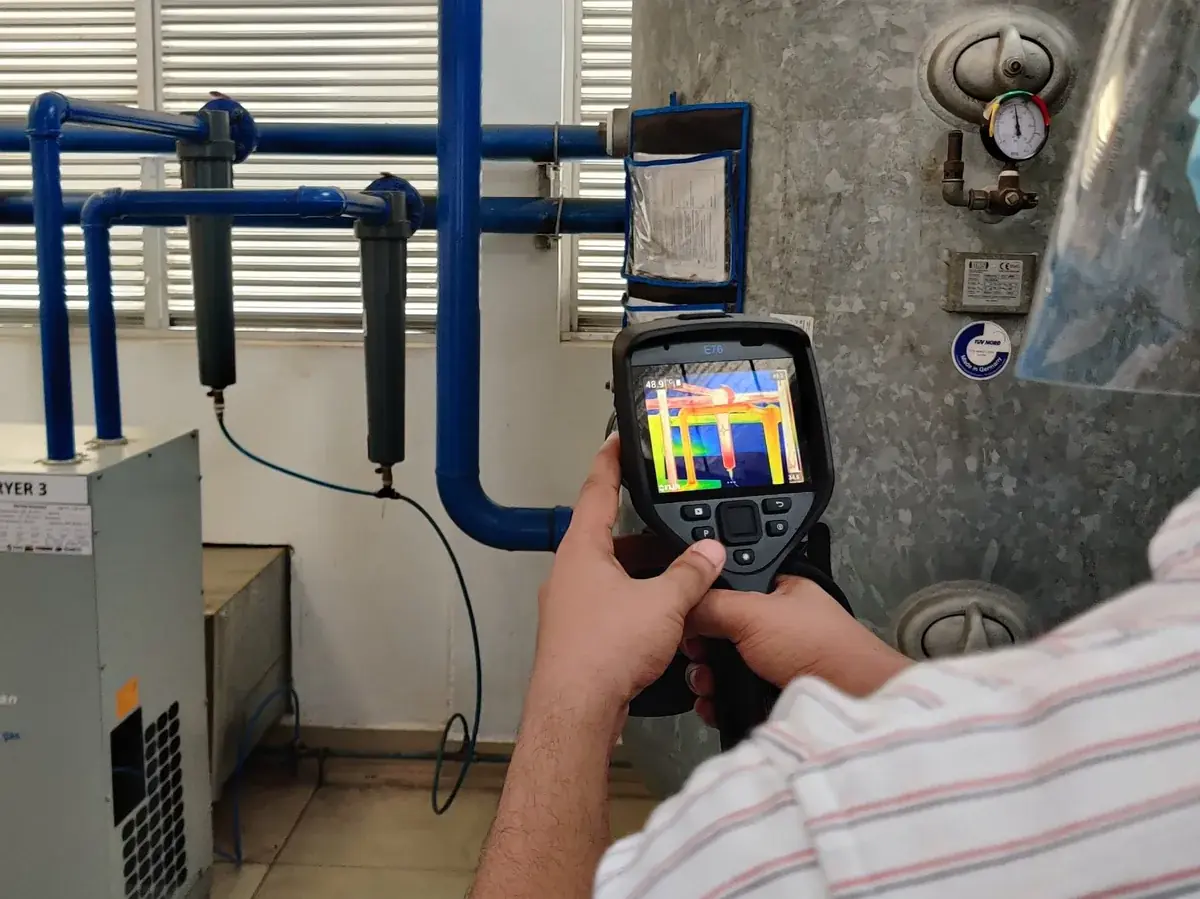
Vibhawa engineer using a thermal camera on the compressed air dryers and pipework of a factory compressor room during an energy audit
Compressed air plant under a thermal camera during a factory energy audit — dryers, filters and the air receiver.
SLSEA-registered ESCOEnergy Services Company
33 kV · 11 kV · 6 kV · LVlogged and analysed at every voltage on site
Level III and Level IIcertified thermographers in-house
Apparel, dairy, cement, gasenergy audits and loss studies since 2019

Energy audit services: what we do

Measurement first. The scope depends on the site, its voltage levels and what the audit result needs to support.

Detailed energy audits — industrial and commercialA walk-through of the site and its bills first, then measurement: load profiles on the main incomers and the big consumers, motor and drive loading, compressed air, chillers and HVAC, lighting, and the power factor and harmonic picture of the whole installation. Every saving is costed, ranked by payback and tied to a measurement, so the plant engineer can defend it to finance. Factories, office towers, hotels and commercial buildings.
Loss studies on 33 kV, 11 kV and 6 kV systemsLarge sites lose energy before it reaches a machine: in transformers running lightly loaded, long cables, poor power factor and harmonic heating. We log at the medium-voltage intake and at each transformer secondary at the same time, and work out the losses in the distribution system itself. We did this on the 33 kV side at Fonterra Brands and on the 6 kV network at MAS Fabric Park, Thulhiriya.
Is your EMS balanced?Most large factories now run an energy management system fed by dozens of sub-meters. If the sub-meters do not add up to the main meter, every report built on them is wrong. We reconcile the meter hierarchy from the utility meter down, find the unmetered loads, the double-counted feeders and the meters with the wrong CT ratio, and give you a balance you can trust. We have done this in major industrial facilities.
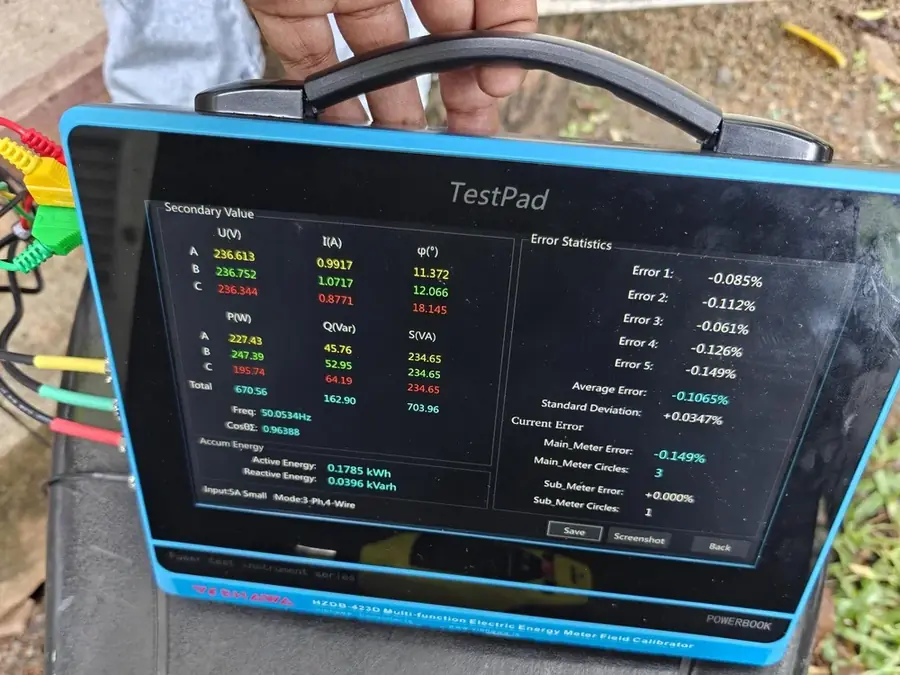
Energy meter field verificationWe test CT-operated energy meters on site against a calibrated reference, under real load, without taking them out. The check covers the meter's own error and the parts that cause most of the trouble: CT ratio and polarity, phase sequence, voltage connections and the multiplier programmed into the meter or the EMS. Use it before you rely on sub-meter data for cost allocation, an ESCO contract or a solar savings claim.
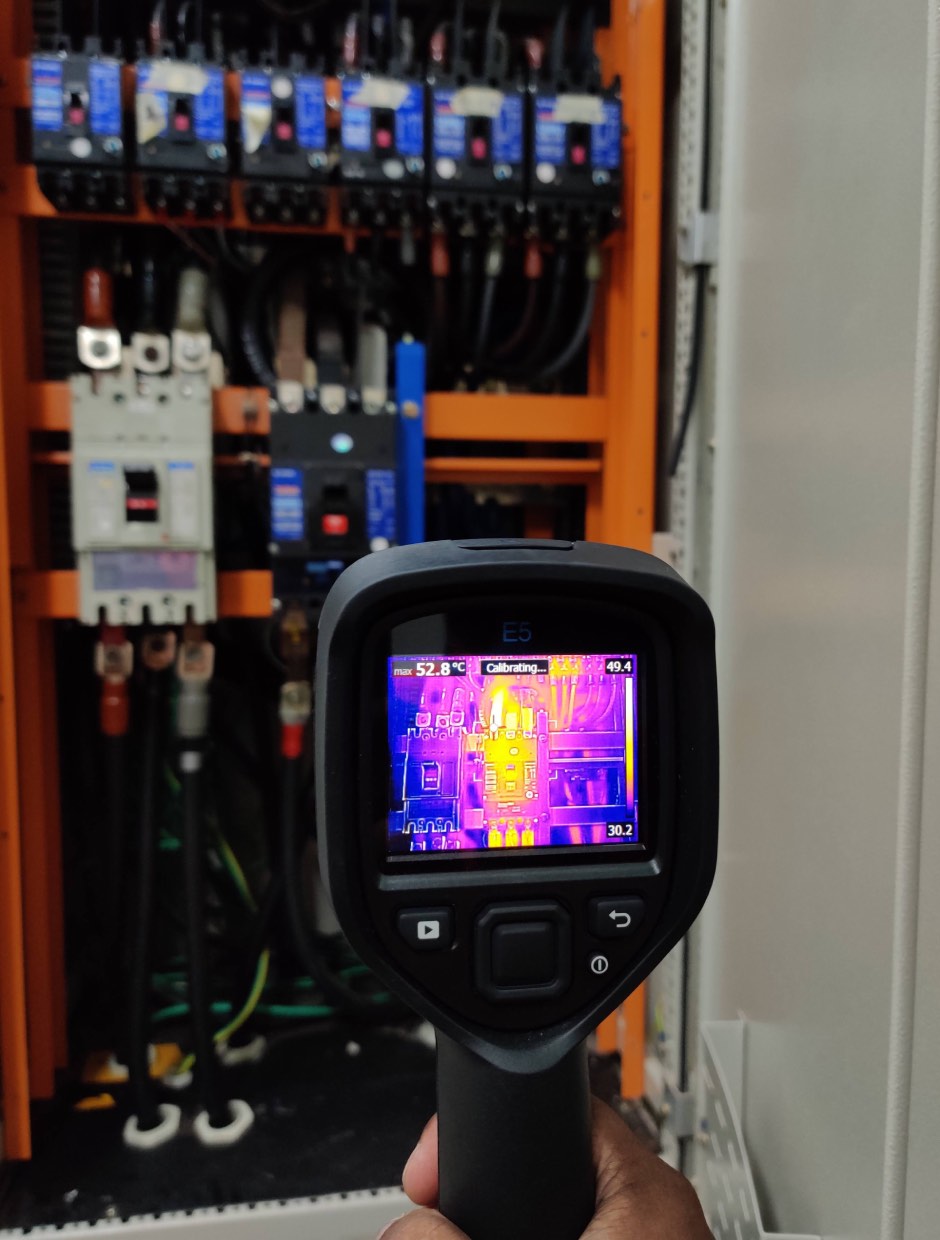
Thermography as an energy toolA loose termination or an overloaded busbar is a safety problem and an energy loss at the same time. Our audits include a thermal scan of the distribution system by certified thermographers, so the hot joints are found in the same visit and reported with the rest of the losses.
Compressed air auditsCompressed air is the most expensive utility in most factories. We measure compressor loading, leaks and pressure drop, and size the savings from leak repair, pressure reduction and controls. MAS Fabrics Intimo, Thulhiriya and MAS Linea Intimo, Biyagama are two of these.
Power quality analysisClass A and three-phase power quality analysers left on site for a week or more: voltage, current, power factor, harmonics, flicker and events. It explains tripping and overheating as well as energy cost. Recent examples include the chiller system at Quantum Clothing, Horana and the 3.3 kV mill motor at Siam City Cement's Galle plant.
Energy management training and EMS implementationTraining for your engineering team and help setting up an energy management system that keeps the savings after the audit is over.

On site

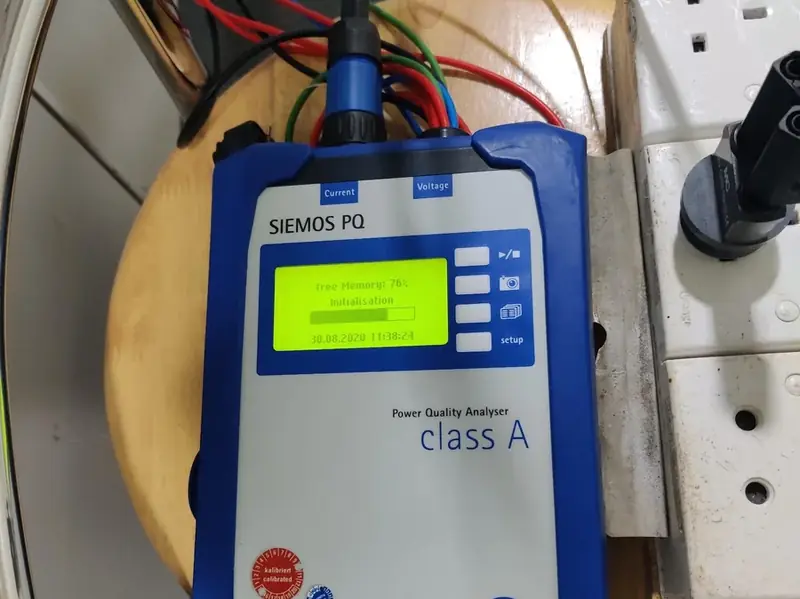
Siemos PQ Class A power quality analyser connected on site with voltage and current leads
Class A logging. A Class A power quality analyser set to log a supply for a week or more.
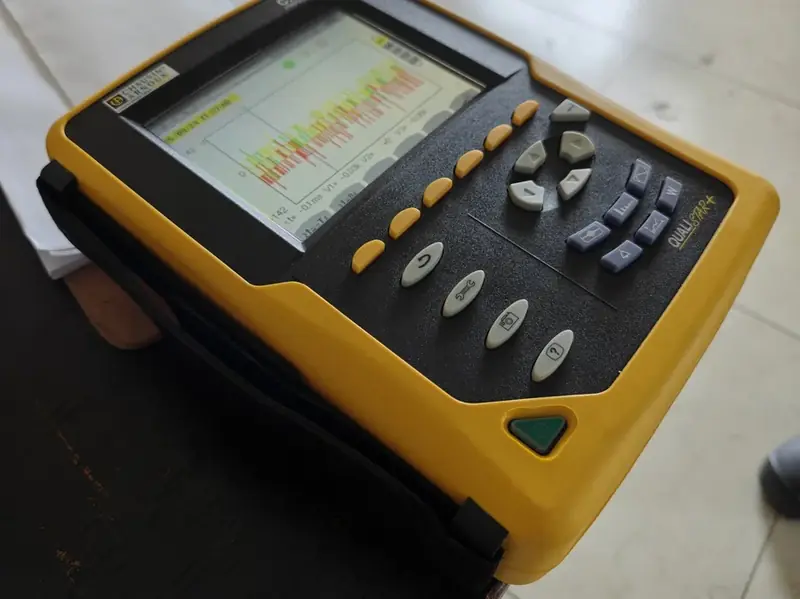
Chauvin Arnoux C.A 8333 power quality analyser displaying a recorded harmonic and transient trace
Power quality. Three-phase power and harmonics on a C.A 8333 analyser.
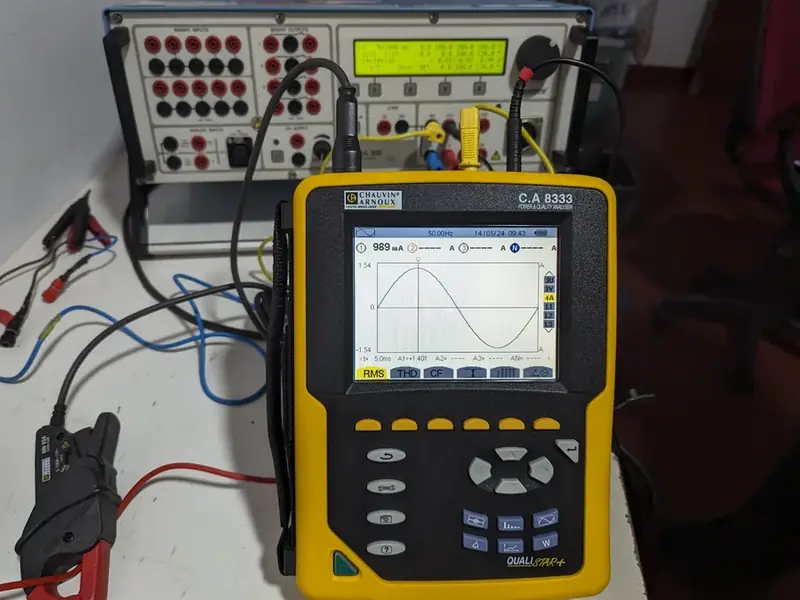
C.A 8333 power quality analyser with current clamp checked against a secondary injection test set
Checked first. Analyser and current clamps checked against an injected reference before going to site.
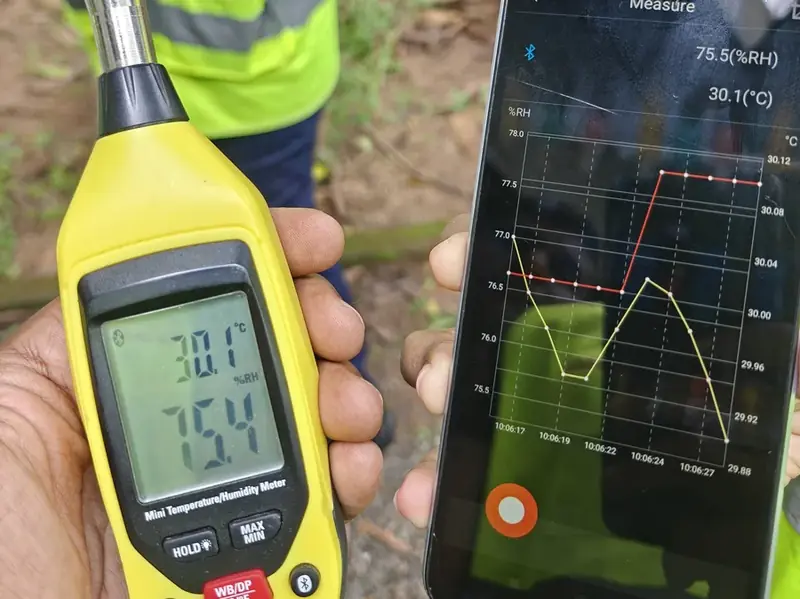
Handheld temperature and humidity meter streaming a live trend to a phone during an energy audit
Ambient. Temperature and humidity logged alongside the electrical data, for HVAC and chiller loads.
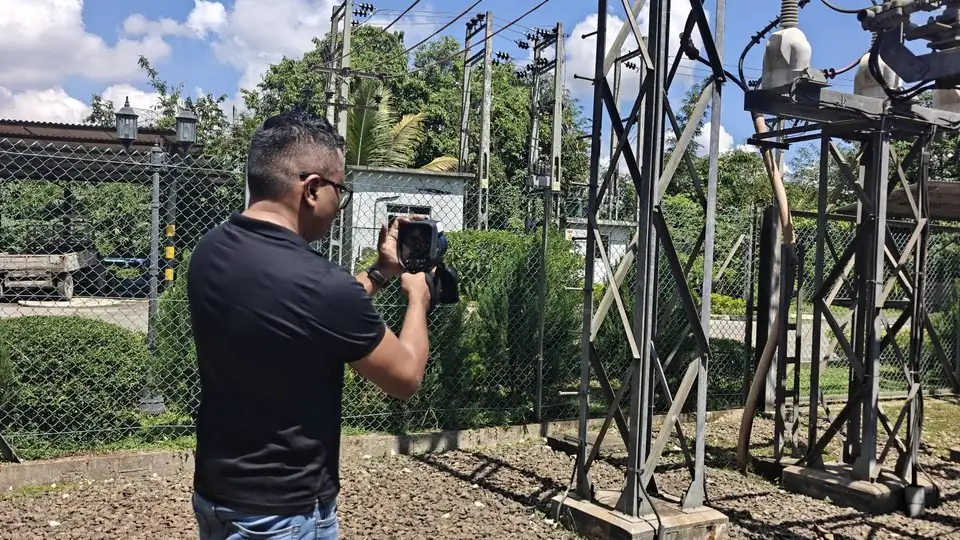
Vibhawa engineer carrying out an infrared survey of an outdoor substation
Intake. Outdoor substation — terminations and switchgear under the thermal camera.
Handheld thermal camera showing a hot breaker in a distribution panel
Losses. A hot breaker in a distribution board. Heat here is lost energy.
Why the meters matter

An energy report is only as good as its meters

Energy meter field calibrator showing three-phase secondary values and a meter error of minus 0.149 percent
Field verification of a CT-operated meter under real load: the calibrator reads the same CTs and voltages and reports the meter's error, here −0.149%.

A factory decides where to spend its efficiency budget from its energy management system. The EMS takes its numbers from sub-meters that were installed by different contractors, at different times, through CTs that may not match what was programmed. In the sites we have balanced, it is common to find a feeder counted twice, a large load that no meter sees, or a meter reading a fraction of the real consumption because its CT ratio was set wrong.

None of this shows up on the screen. The total still looks plausible. It only shows when somebody adds the sub-meters and compares them with the utility bill.

That is the first thing we do. We log the main incomer, add up every sub-meter over the same period, find the gap, and trace it to the meter or the missing load that causes it. Then we verify the meters that matter most in the field against a calibrated reference. The result is a balanced metering hierarchy, a list of meters to fix, and EMS data you can use to make decisions.
Where we have done it

Energy audits, loss studies and power quality work across apparel, dairy, cement and gas.

ClientWorkYear
Fonterra Brands, BiyagamaLoss study of the electricity distribution system; power quality logging and analysis on the 33 kV side2022
MAS Fabric Park, ThulhiriyaPower quality logging and analysis of the 6 kV distribution network2024
MAS Fabrics MatrixEnergy audit2023
MAS Fabrics Intimo, Thulhiriya · MAS Linea Intimo, BiyagamaCompressed air audits2023–24
Noble Key — Sierra head office, Browns Industrial ParkEnergy audits2022–25
Laugfs Gas terminal and filling plant, HambantotaElectricity consumption modelling and forecasting before operations started2019
Quantum Clothing, Horana · Siam City Cement, GallePower quality analysis of a chiller system and a 3.3 kV mill motor2020

These are from our project records. All projects →

How an audit runs

01

Bills and drawings

Twelve months of utility bills, the single-line diagram, the EMS meter list and what the result is for. We agree the scope and the logging points.

02

Measure

Loggers on the intake and the main feeders for a representative week, sub-meters read over the same period, thermal scan and spot measurements on the large loads.

03

Analyse

Energy balance, losses by part of the system, load profiles, power factor and harmonics. Each saving sized in kWh and money with its cost and payback.

04

Report and verify

A report signed by a Chartered Electrical Engineer. After the changes are made, we can measure again so the saving is proven.

Related

Energy work often leads into one of these.

Solar PV consultancy

Feasibility, design and performance assessment of rooftop and ground-mounted PV.

Explore →

Electrical Safety Audits

The same visit can cover a classified C1/C2/C3 safety audit to BS 7671.

Explore →

Power System Studies

ETAP load flow, short circuit and harmonic studies when the audit needs a model.

Explore →

Infrared thermography

Ground-based thermography programmes, run by our specialist arm thermography.lk.

Visit thermography.lk →

Frequently asked

Open a question to read the answer. If yours is not here, ask us — the scope call is free.

What does an industrial energy audit include?

A review of your bills and drawings, a site survey, and measurement: load logging on the incomers and major loads, power factor and harmonics, compressed air, chillers, motors and lighting, and a thermal scan of the distribution system. The report lists each saving with its energy and money value, cost and payback, ranked so you can decide what to do first.

How long does an energy audit take?

For a typical factory, one to two days on site to install loggers and survey, a week of logging, then the analysis and report. Large multi-building sites or audits that include medium-voltage loss studies take longer. We confirm the logging period when we scope the job.

Can you audit the medium-voltage side as well?

Yes. We log at 33 kV, 11 kV and 6 kV through the existing CTs and VTs, and at transformer secondaries at the same time, so the losses in transformers and cables are measured, not estimated.

What is an EMS energy balance?

A comparison of the utility meter with the sum of your sub-meters over the same period. If they do not agree, something is wrong: a load that no meter sees, a feeder counted twice, or a meter with the wrong CT ratio or multiplier. We find the gap and trace it to its cause.

How do you verify an energy meter on site?

We connect a calibrated reference to the same CTs and voltage supply as the meter and compare the two under real load, without removing the meter. We also check the CT ratio, polarity, phase sequence and the multiplier programmed into the meter or EMS, which cause more errors than the meters themselves. The service covers CT-operated meters.

Is Vibhawa a registered ESCO?

Yes. Vibhawa is registered with the Sri Lanka Sustainable Energy Authority (SLSEA) as an Energy Services Company.

Want to know where your energy goes?

Send us twelve months of bills and your single-line diagram. We will scope the audit, tell you how long logging takes and quote.

Request a quote

At Vibhawa, we offer state-of-the-art Electrical Consultancy, Testing, Condition Monitoring and Engineering Services designed for the needs of tomorrow’s world.

Services

Electrical Testing

Infrared Thermography

Electrical Consultancy

Electrical Design

Compliance Monitoring

Other Services

Recent news

  • All Post
  • Blog
  • News & Insights
  • work

© 2025 Vibhawa Consultants. Site By Remnis Global

Scroll to Top