Vibhawa Adds the DJI Matrice 4T to Its Drone Thermography Fleet
By Vibhawa Editorial Team · Vibhawa Consultants
Key takeaways
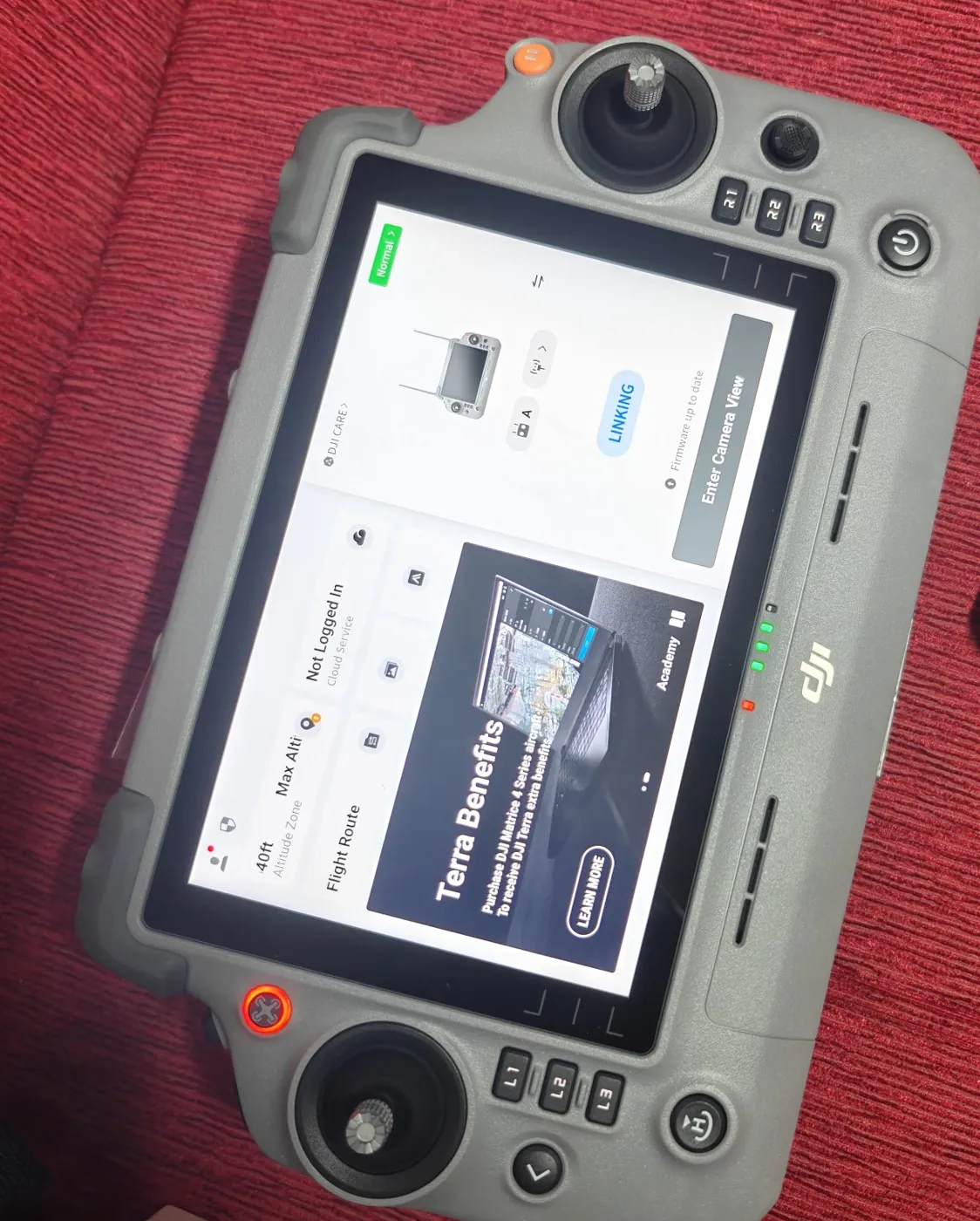
- Vibhawa now flies two DJI enterprise drones for thermography: the new Matrice 4T and the Matrice 350 RTK with the H20T payload. Both are registered with the Civil Aviation Authority of Sri Lanka.
- Both carry a 640 × 512 radiometric thermal camera with ≤50 mK sensitivity. The 4T adds a 1280 × 1024 Super Resolution mode and three 48 MP visual cameras.
- The 350 RTK is the better choice for harsh weather and hot sites (IP55, up to 50 °C). The 4T is the better choice for quick deployment and tight access.
- Our completed drone jobs, at Piramal Glass and Ansell Lanka, were flown on the 350 RTK. The 4T is newly added.
- Every survey is analysed in-house by a certified Level II or Level III thermographer, not by the pilot.
What is the DJI Matrice 4T?
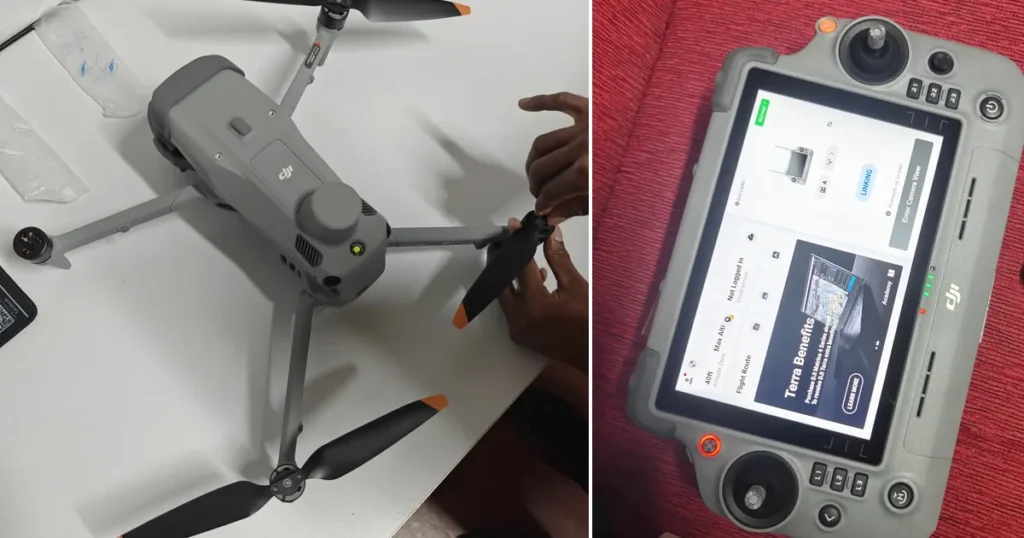
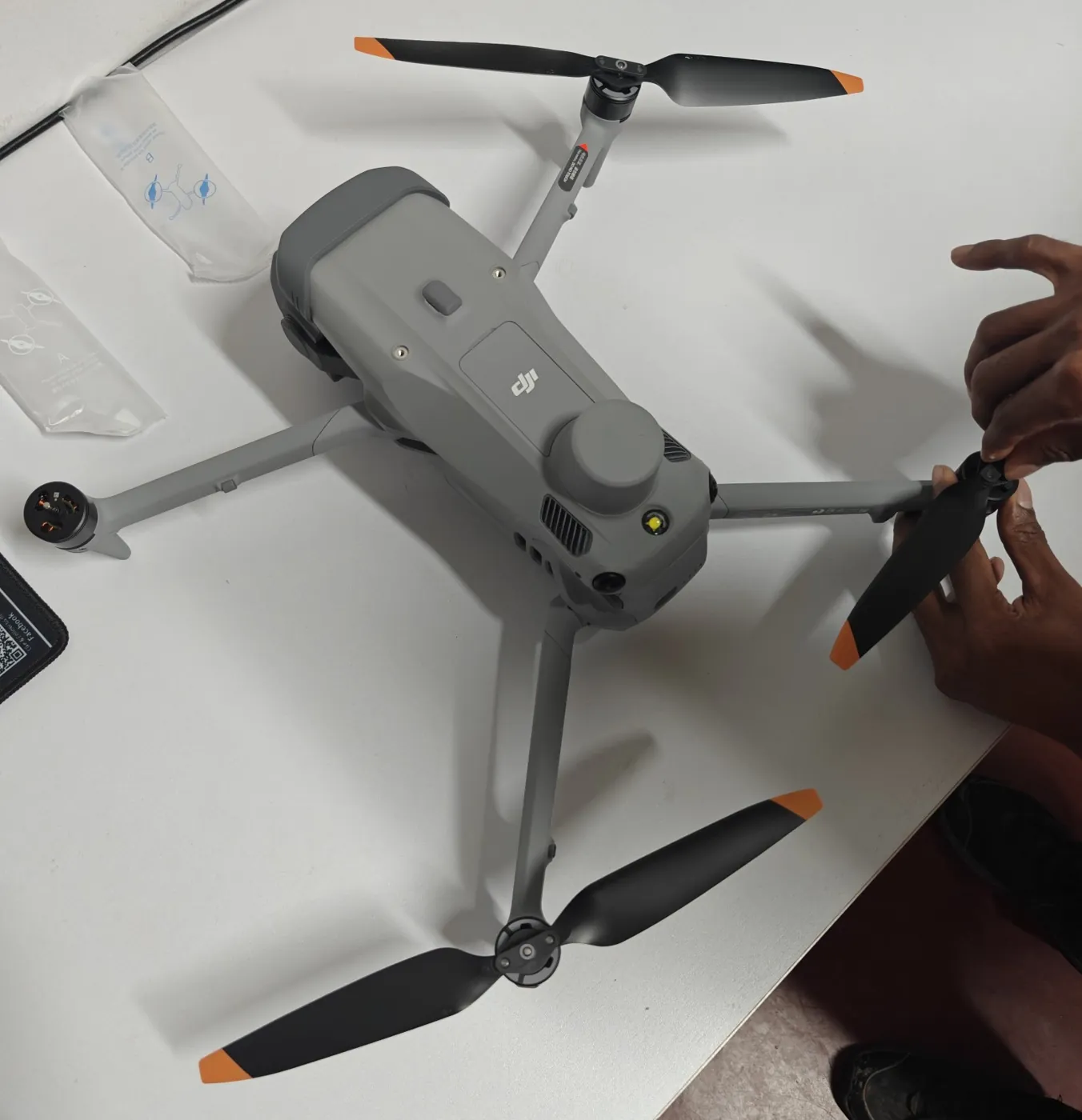
The DJI Matrice 4T is a compact enterprise drone, launched in January 2025, with a thermal camera built into its gimbal rather than fitted as a separate payload. According to DJI’s published specifications:
- Weight: 1,219 g with battery, and it folds for transport
- Flight time: up to 49 minutes (no wind)
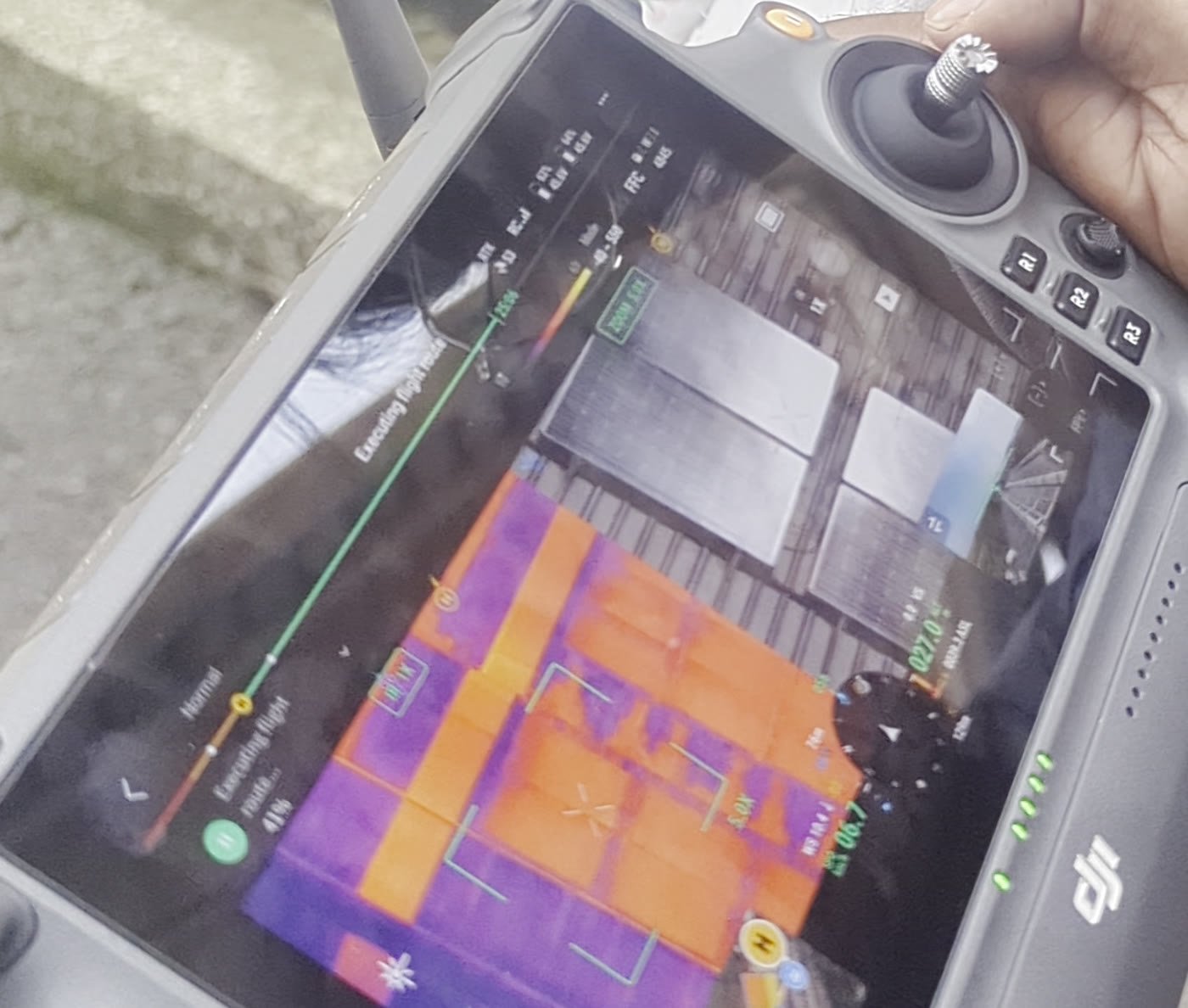
- Thermal camera: 640 × 512, with a 1280 × 1024 Super Resolution mode for still images; sensitivity ≤50 mK
- Visual cameras: wide-angle, medium telephoto and telephoto, each 48 MP
- Laser rangefinder: measures distance to a target up to 1,800 m away
- Operating temperature: −10 °C to 40 °C
Because everything is in one airframe, there is no payload to fit or swap before a flight. That saves time on sites where access is tight or the survey has to fit a short window.
Matrice 4T vs Matrice 350 RTK with H20T
The 4T does not replace the 350 RTK. Here is how they compare on the points that matter for a thermography survey:
| Matrice 350 RTK + Zenmuse H20T | Matrice 4T | |
|---|---|---|
| Thermal camera | 640 × 512, ≤50 mK (H20T) | 640 × 512, ≤50 mK; 1280 × 1024 Super Resolution stills |
| Visual cameras | 12 MP wide, 20 MP zoom (H20T) | 48 MP wide, 48 MP medium tele, 48 MP tele |
| Laser rangefinder | 3 to 1,200 m | up to 1,800 m |
| Max flight time | 55 min without payload (less with the H20T fitted) | 49 min |
| Weather protection | IP55 | No IP rating published |
| Operating temperature | −20 °C to 50 °C | −10 °C to 40 °C |
| Best suited to | Large sites, longer missions, rain, heat and wind | Fast deployment, tight access, smaller sites |
| At Vibhawa | Used on all our completed drone jobs | Newly added |
Figures from DJI’s published specifications for the Matrice 4 series, Matrice 350 RTK and Zenmuse H20 series.
Why temperature matters here. Solar PV thermography under IEC TS 62446-3 is flown in strong sunlight, with irradiance of at least 600 W/m², so that faults show up clearly. On a Sri Lankan rooftop at midday the air can approach the 4T’s 40 °C limit. The 350 RTK, rated to 50 °C and IP55, is our choice for long missions in that heat or in unsettled monsoon weather.
Our drone thermography work so far
Before the 4T arrived, our team had completed these aerial jobs on the Matrice 350 RTK with the H20T:
For scale: a few megawatts of rooftop PV is about half a day on site.
Why the aircraft is only half the job
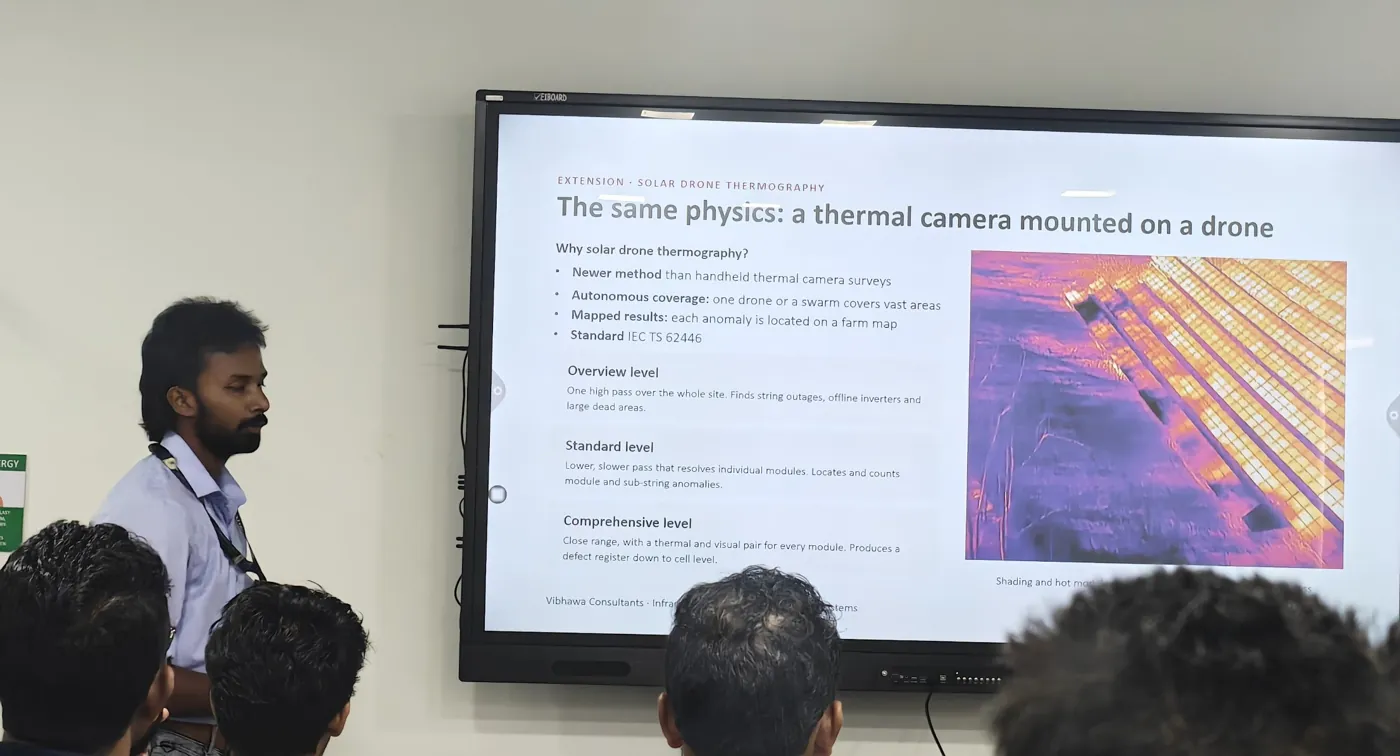
The drone decides how the thermal and visual data is captured. It does not decide whether that data is read correctly. Flying and interpreting are separate skills:
- The pilot flies the mission safely and captures complete, usable data. Our pilots are registered with the Civil Aviation Authority of Sri Lanka.
- The thermographer reads the images: separating a real fault from a reflection or shading, rating its severity, and weighing it against the load and conditions at the time of the flight.
Thermographer competence is set out in ISO 18436-7. Level I collects data under supervision, Level II interprets findings and writes the report, and Level III sets procedures and handles the most complex or disputed readings. Vibhawa’s in-house team includes a Level III thermographer certified by the Infraspection Institute and a Level II thermographer certified by IRISS, and every drone survey is analysed by them. For ground-based thermography of switchboards and plant rooms, see our specialist arm, thermography.lk.
What drone thermography finds in electrical assets
For solar PV in detail, see how drone thermography catches solar panel faults.
A raised temperature is not a diagnosis on its own. The thermographer weighs it against ambient conditions, the load at the time of the flight and the type of asset, and the report then says what should happen next: repair, further electrical testing, or repeat monitoring.
Standards we work to
- IEC TS 62446-3 for outdoor infrared thermography of PV modules and plants, including the irradiance and reporting requirements
- NFPA 70B and IEC maintenance guidance for substations and transmission structures
- ISO 18436-7 for the qualification of the thermographer analysing the results
The standard depends on the asset being surveyed, not on which aircraft captured the data. Both aircraft are flown and reported to the same standards.
Which aircraft for which site?
- Matrice 350 RTK: large ground-mounted or multi-roof PV, substations and gantries, long missions, and days with heat, wind or rain.
- Matrice 4T: single rooftops, sites with tight launch space, quick checks after a fault alarm, and jobs where the 1280 × 1024 Super Resolution thermal stills help.
You do not need to choose. Tell us about the site and what you need to find, and we will plan the flight. See our aerial inspection and survey services and aerial thermography for the full scope.
Planning a drone thermography survey?
Tell us the site, the asset and the capacity. We’ll recommend the aircraft, the survey level and a timeline.
Frequently asked questions
What drones does Vibhawa use for drone thermography?
Vibhawa flies two DJI enterprise aircraft: the Matrice 350 RTK carrying the Zenmuse H20T thermal payload, and the Matrice 4T, a compact aircraft with its thermal camera built in. Both are registered with the Civil Aviation Authority of Sri Lanka (CAASL).
Is Vibhawa a registered drone operator in Sri Lanka?
Yes. Vibhawa is a CAASL-registered drone operator, and its surveys are flown by CAASL-registered pilots.
Has the Matrice 4T been used on a completed project yet?
Not yet. It is a new addition to the fleet. Our completed drone jobs so far, at Piramal Glass and Ansell Lanka, were flown on the Matrice 350 RTK with the H20T payload.
Which is better for thermography, the Matrice 4T or the Matrice 350 RTK?
Neither is better for every site. Both have a 640 × 512 thermal camera with ≤50 mK sensitivity. The Matrice 350 RTK is rated IP55 and operates up to 50 °C, so it suits long missions in harsh weather. The Matrice 4T is compact, quick to deploy and offers 1280 × 1024 Super Resolution thermal images, but is rated only to 40 °C. We choose the aircraft for the site.
Who analyses the thermal images from a Vibhawa drone survey?
Every survey is analysed in-house by a certified thermographer, not by the pilot. Vibhawa’s thermography team includes a Level III thermographer (Infraspection Institute) and a Level II thermographer (IRISS), qualified in line with ISO 18436-7.