Services → Electrical Safety Audits

Electrical safety audit

An electrical safety audit finds the things that cause fires, failures and injuries before they do: degraded insulation, overloaded circuits, missing earths, breakers that will not trip, installations nobody has drawings for. Vibhawa's audits are led by Chartered Electrical Engineers and carried out with in-house certified thermographers, so the visual inspection is backed by measurement — and every finding comes back classified by how dangerous it is, not as a list.

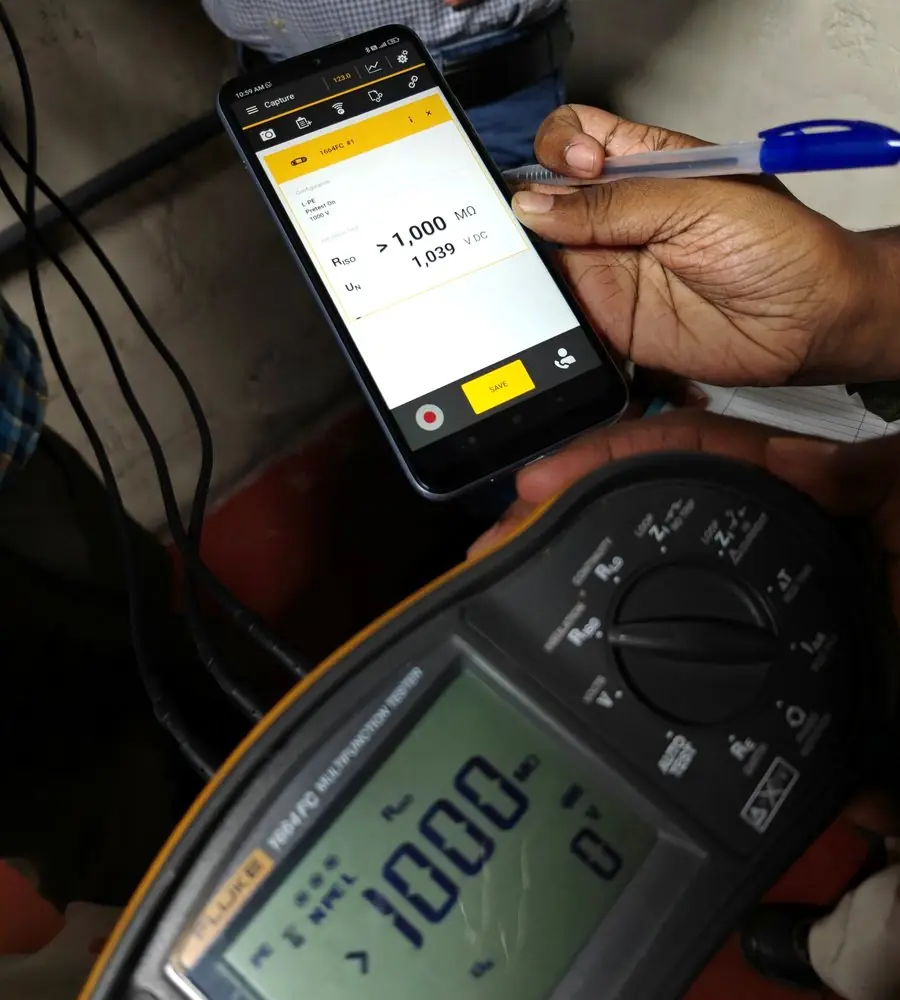
Electrical safety audit in progress: Vibhawa engineer recording an insulation resistance test on a calibrated Fluke multifunction tester
Chartered Electrical Engineerswith in-house Level II and III thermographers
Findings classified C1 / C2 / C3danger present, potentially dangerous, improvement
Calibrated test instrumentsloop impedance, PEFC and PSCC to 50 kA
ISO 9001:2015 certifiedSGS / UKAS, valid to 2029

What the audit covers

Scoped to the facility and the risk, not read off a generic checklist. A resort on a diesel island and a cement plant on a 33 kV intake do not need the same audit.

Visual inspectionDistribution boards, panels, cable management, terminations, labelling, access and clearances, signs of overheating or water ingress, and whether what is installed matches what the drawings say.
Insulation resistance testingOn circuits and equipment where the condition is in doubt — the measurement that separates "looks old" from "about to fail".
Earthing, bonding and earth fault loop impedanceEarth electrode resistance (see also lightning protection and earthing testing), continuity of protective conductors and bonding of extraneous metalwork, plus earth fault loop impedance (Zs) testing to confirm each protective device disconnects in time. Prospective earth fault current (PEFC) and prospective short-circuit current (PSCC) measured up to 50 kA with calibrated testers — the figure every breaker's breaking capacity has to exceed. Earthing faults are the most common serious finding in buildings over fifteen years old.
Protective device checksCircuit breaker and RCD operation, rating against the cable it protects, and whether the device will actually clear a fault where it is installed.
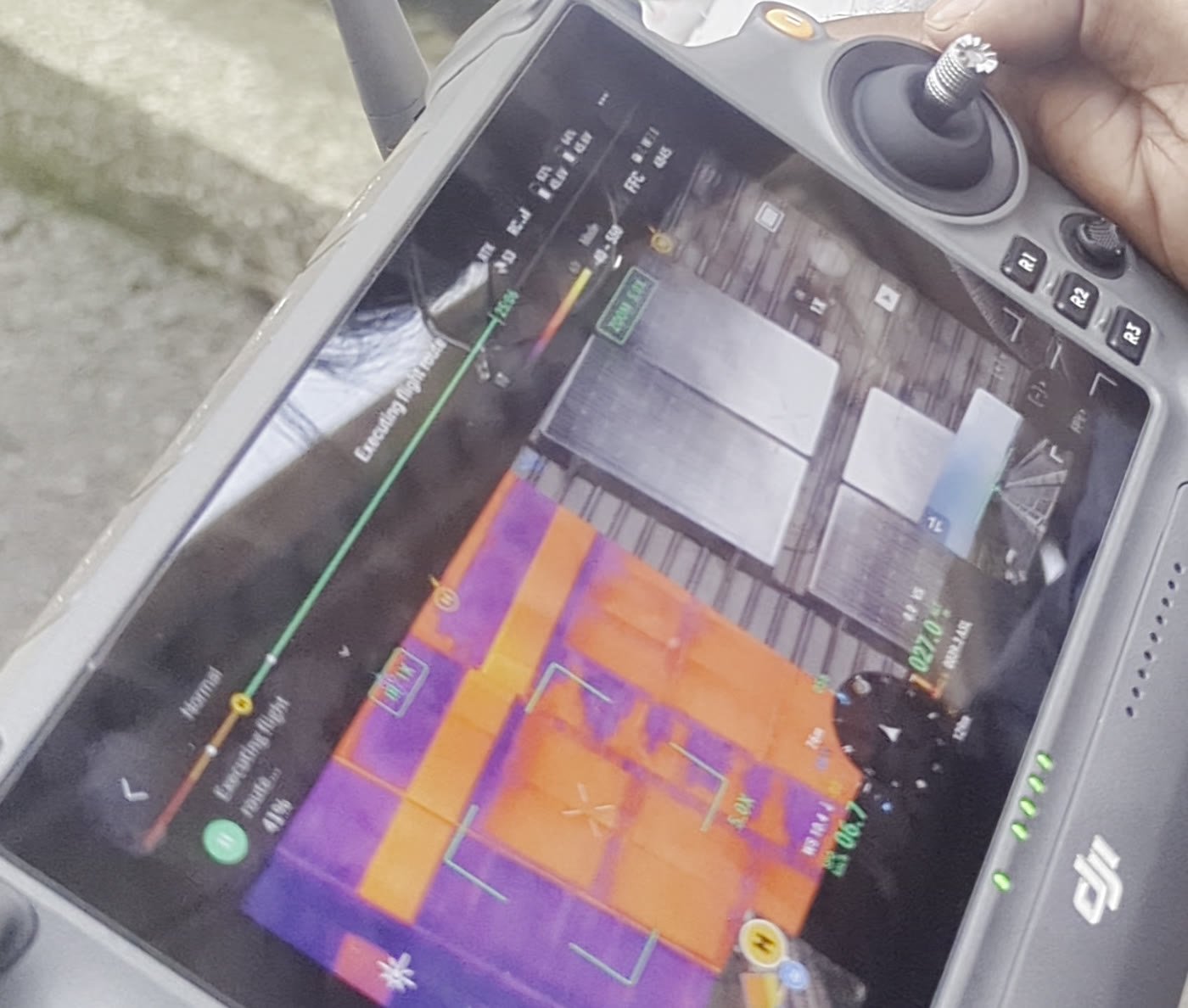
Thermographic surveyLive switchboards, busbars and terminations imaged under load by a certified thermographer, to find the loose connection or overloaded phase that a visual inspection cannot. Ground-based thermography is our specialist arm's trade: thermography.lk.
Arc flash and PPE provisionWhether labels exist, whether they are current, and whether the PPE on site matches them. Where no study exists, the audit says so and scopes an arc flash study.

Measured, not just looked at

Every test is made with calibrated instruments and recorded on the schedule that goes into the report — earth fault loop impedance, prospective fault current up to 50 kA, insulation resistance up to 5 kV, RCD trip times, earth electrode and bonding resistance. Where the audit is structured as an EICR to BS 7671, these are the readings it is built on.

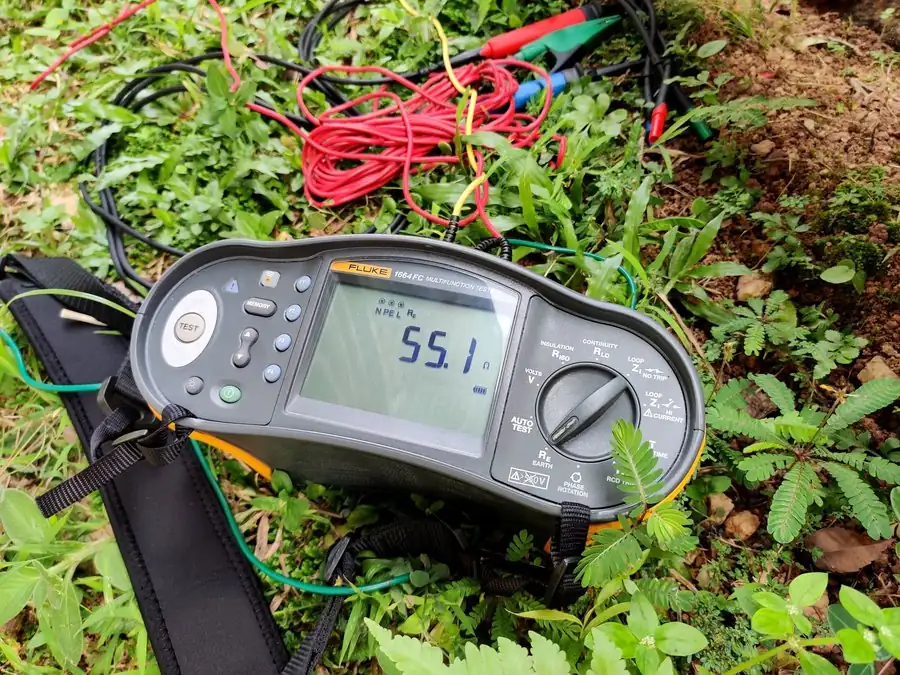
Earth electrode resistance measured with a calibrated Fluke multifunction tester
Earth electrode resistance. Measured at the electrode, with a calibrated multifunction tester.
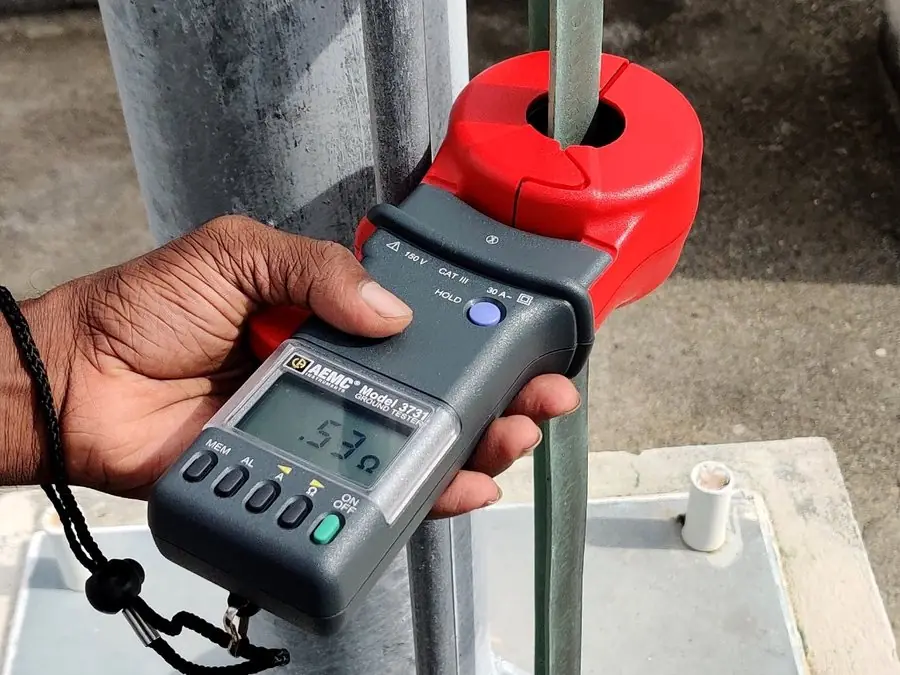
Clamp-on earth resistance test on a lightning protection down conductor
Clamp-on earth testing. Earth resistance on a lightning protection down conductor, without disconnecting it.
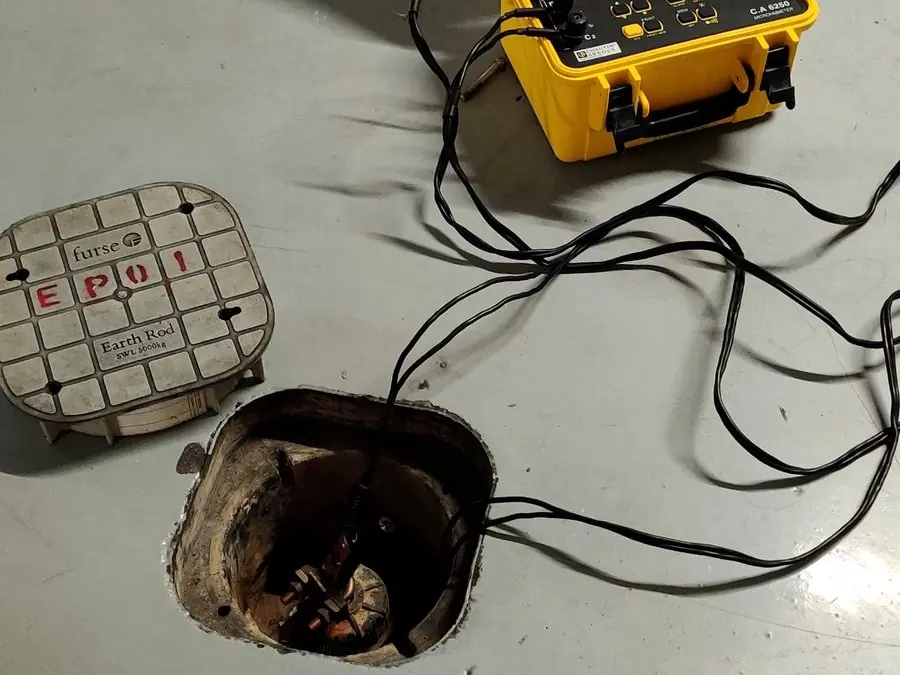
Micro-ohmmeter connected at an earth pit to measure bonding and connection resistance
Bonding and connections. Micro-ohm measurement at an earth pit — the joints a visual check cannot judge.
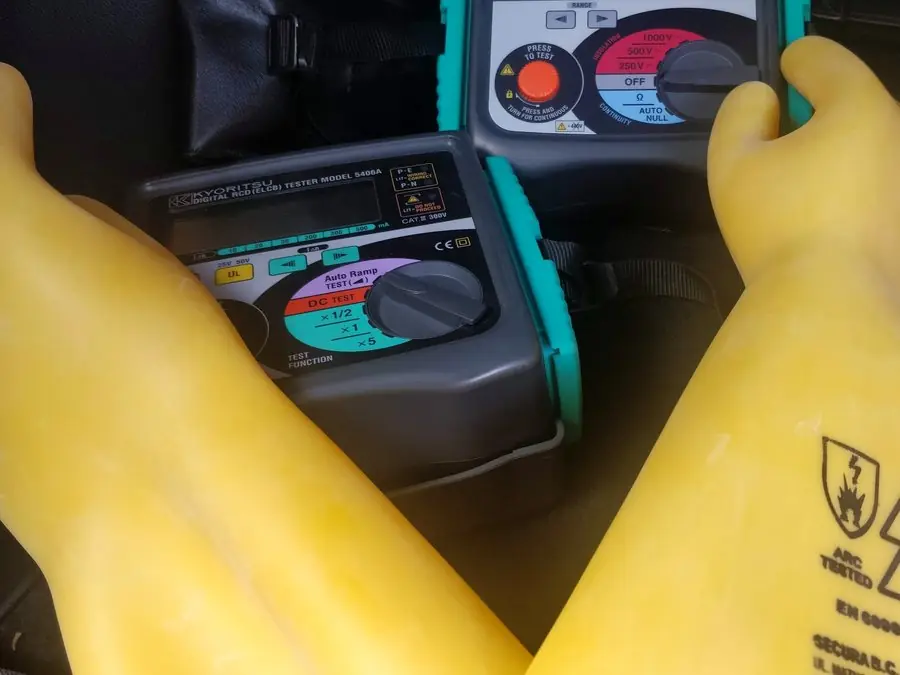
RCD tester and insulation tester with Class 0 insulating gloves
RCDs and insulation. RCD trip-time and insulation testing, with rated insulating gloves on live work.
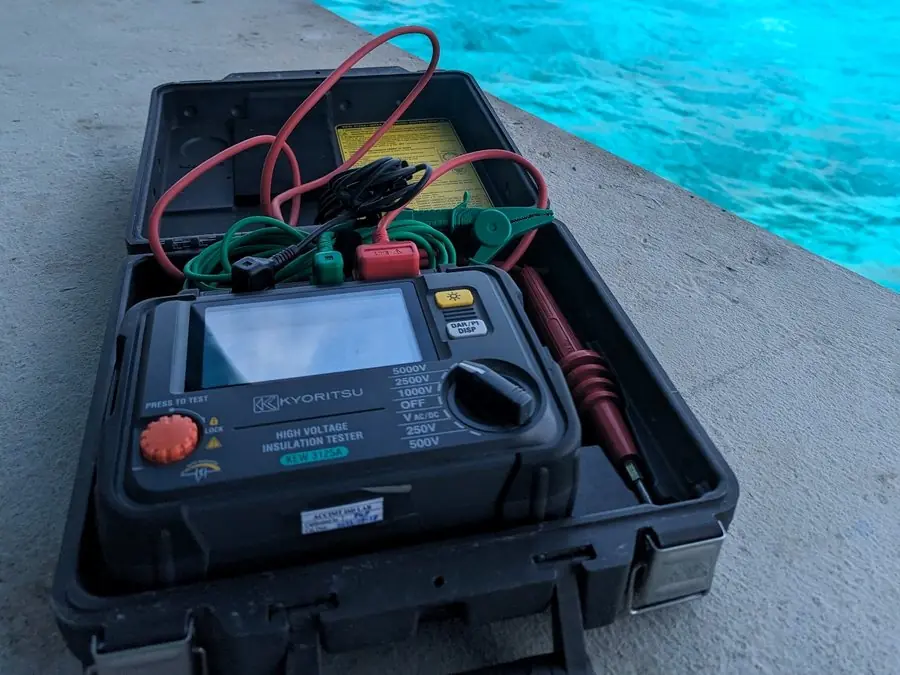
5 kV insulation resistance tester on site at a Maldives resort
Up to 5 kV insulation. High-voltage insulation resistance testing on site in the Maldives.
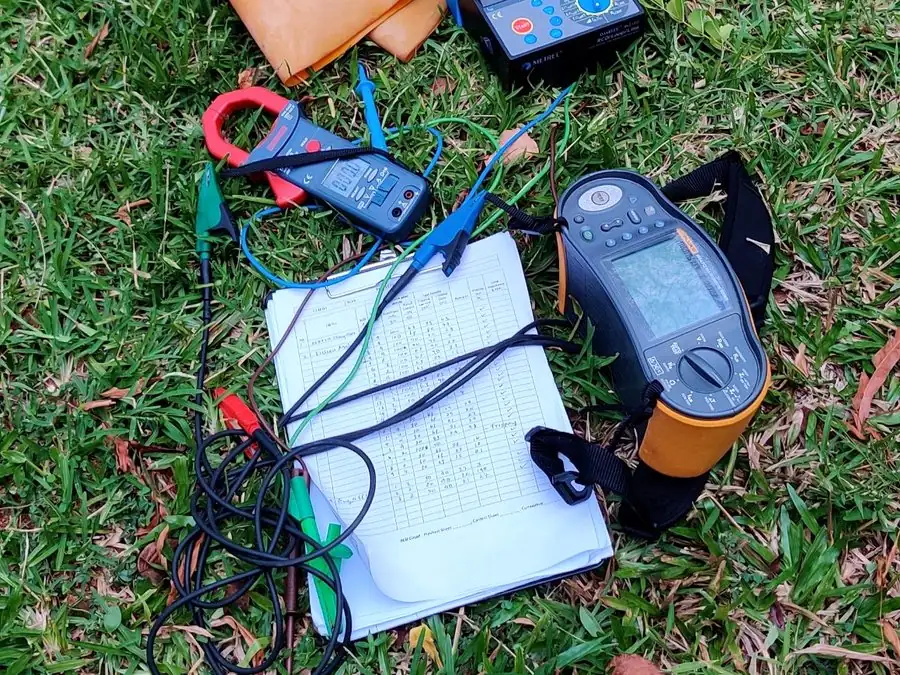
EICR test kit on site: multifunction and earth testers, clamp meter, thermal camera, insulating gloves and the test schedule
The EICR kit. Multifunction and earth testers, clamp meter, thermal camera and the test schedule — every reading recorded.

Why facilities commission one

Almost never because the law says so. Usually because someone with leverage asked.

There is no blanket statutory requirement for a periodic electrical safety audit in Sri Lanka or the Maldives. The requirement arrives through other doors: an insurer's renewal conditions, a multinational parent's group HSE standard, a brand standard for a hotel flag, a lender's due diligence, a certification audit in an apparel or food supply chain — or an incident that made the risk real.

On NFPA 70B. In 2023 NFPA 70B was elevated from a recommended practice to a standard, with defined inspection intervals for electrical equipment. It is not law here — nothing makes it mandatory in Sri Lanka or the Maldives — but it is the document an American or European parent company's HSE function will hold you to, and it is the framework our audits are referenced to. For installations assessed to the British model, the audit is structured as an EICR to BS 7671.

Whichever door it comes through, the audit has to satisfy the person who asked for it. Tell us who that is and we scope to what they will accept.

What you get back

Classified findings, not a list of observations.

A report with every finding photographed, located, and classified: C1 — danger present, immediate action; C2 — potentially dangerous, urgent remedial action; C3 — improvement recommended. Plus a schedule of the tests carried out and their results, the thermographic images with severity ratings, and a prioritised action list your maintenance team can work through in order.

The classification is the point. A list of forty observations gets filed. A report that says "these three are C1, fix them this week" gets acted on — and it gives the person who asked for the audit the one-page answer they wanted.

Signed by a Chartered Electrical Engineer. Where remedial work follows, we are available to specify it, and to re-inspect and close the findings out.

Where we have done it

Manufacturing: MAS Fabric Park, Thulhiriya, and five consecutive annual audits for Fonterra's Sri Lankan operation — where we also carried out the arc flash study.

Hospitality: Taj Bentota, Taj Exotica Resort & Spa Maldives, Sheraton Kosgoda, Weligama Bay Marriott, and resort properties in the Maldives under our Resort Electrical Assurance Programme.

Plus industrial, commercial and infrastructure sites across Sri Lanka. All projects →

How it runs

01

Scope

Who asked for it, what they will accept, what the facility is, and what records exist. Half a day's conversation and a look at the drawings.

02

On site

Walkthrough, inspection, testing and the thermographic survey — under load, during normal operation where possible, so what we see is what the plant actually does.

03

Report

Classified findings, test schedule, thermal images, action list. Signed by a Chartered Electrical Engineer. Typically within two weeks of leaving site.

04

Close-out

Specification of remedial work if you want it, and re-inspection to close findings — which is what the insurer or the parent actually wants to see.

4.9★★★★★
Average rating from our Google reviews — clients across Sri Lanka and the Maldives. Read them on Google →

Frequently asked

How often should an electrical safety audit be done?

It depends on the facility, the age and loading of the installation, and who is asking. NFPA 70B and BS 7671 both set intervals by equipment and occupancy type — typically one to five years. Many of our industrial clients run an annual cycle; hotels commonly align it with the brand audit. We will recommend an interval for your installation rather than apply a generic one.

Is an electrical safety audit the same as an EICR?

An EICR — Electrical Installation Condition Report — is the British-model inspection to BS 7671, with its defined C1/C2/C3 coding. A safety audit can be scoped more broadly: thermography, arc flash provision, operational practice. We structure the audit as an EICR where that is what the client or the insurer expects, and use the same classification in either case so the findings are comparable. Our guide, What is an EICR, and does your business need one?, explains the report in detail.

What happens if you find something dangerous?

A C1 finding is reported to you on the day, not at the end of the engagement. The report then sets out what it is, where, why it is dangerous and what should be done. We do not carry out the remedial work ourselves — that independence is the reason the audit is worth having — but we specify it and re-inspect.

Do you audit hotels and resorts?

Yes, in Sri Lanka and the Maldives. Resorts on their own generation have a particular profile — changeover, generator protection, island earthing — and guest-facing areas have an occupancy risk a factory does not. The audit is scoped for both, and in the Maldives it is one tier of our Resort Electrical Assurance Programme.

Do you test earth fault loop impedance and prospective fault current?

Yes. We measure earth fault loop impedance (Zs) at distribution boards and final circuits to confirm each protective device will disconnect within the required time, and measure prospective earth fault current (PEFC) and prospective short-circuit current (PSCC) up to 50 kA — the value every device's breaking capacity must exceed. All test instruments are calibrated, and the readings are recorded in the test schedule.

Is thermal imaging included?

Where it is relevant to the scope, yes, carried out by our own certified thermographers under load. It is the only part of the audit that finds a loose or overloaded connection before it fails, and it is why an audit with thermography finds more than one without.

Can you audit a facility we are about to buy or lease?

Yes. A condition audit before an acquisition or a new operating agreement is one of the better uses of it — the findings become a negotiating position rather than a surprise.


Who asked for the audit?

Tell us whether it is the insurer, the parent company, a brand standard or your own judgement — that tells us what the report has to satisfy, and we scope and quote from there.

Request a quote

At Vibhawa, we offer state-of-the-art Electrical Consultancy, Testing, Condition Monitoring and Engineering Services designed for the needs of tomorrow’s world.

Services

Electrical Testing

Infrared Thermography

Electrical Consultancy

Electrical Design

Compliance Monitoring

Other Services

Recent news

  • All Post
  • Blog
  • News & Insights
  • work

© 2025 Vibhawa Consultants. Site By Remnis Global

Scroll to Top