
Lightning protection and earthing systems
Risk assessment, design and testing of lightning protection and earthing systems to IEC 62305 and NFC 17-102 — for high-rises, hotels, factories, substations and resort islands in Sri Lanka and the Maldives. We design new systems — including the earthing of an offshore substation standing in open sea — and we measure the ones already standing: air terminals, down conductors, test joints, earth pits and the soil they sit in, with calibrated instruments and Chartered Electrical Engineers reading the results.
Behind Colombo's skyline
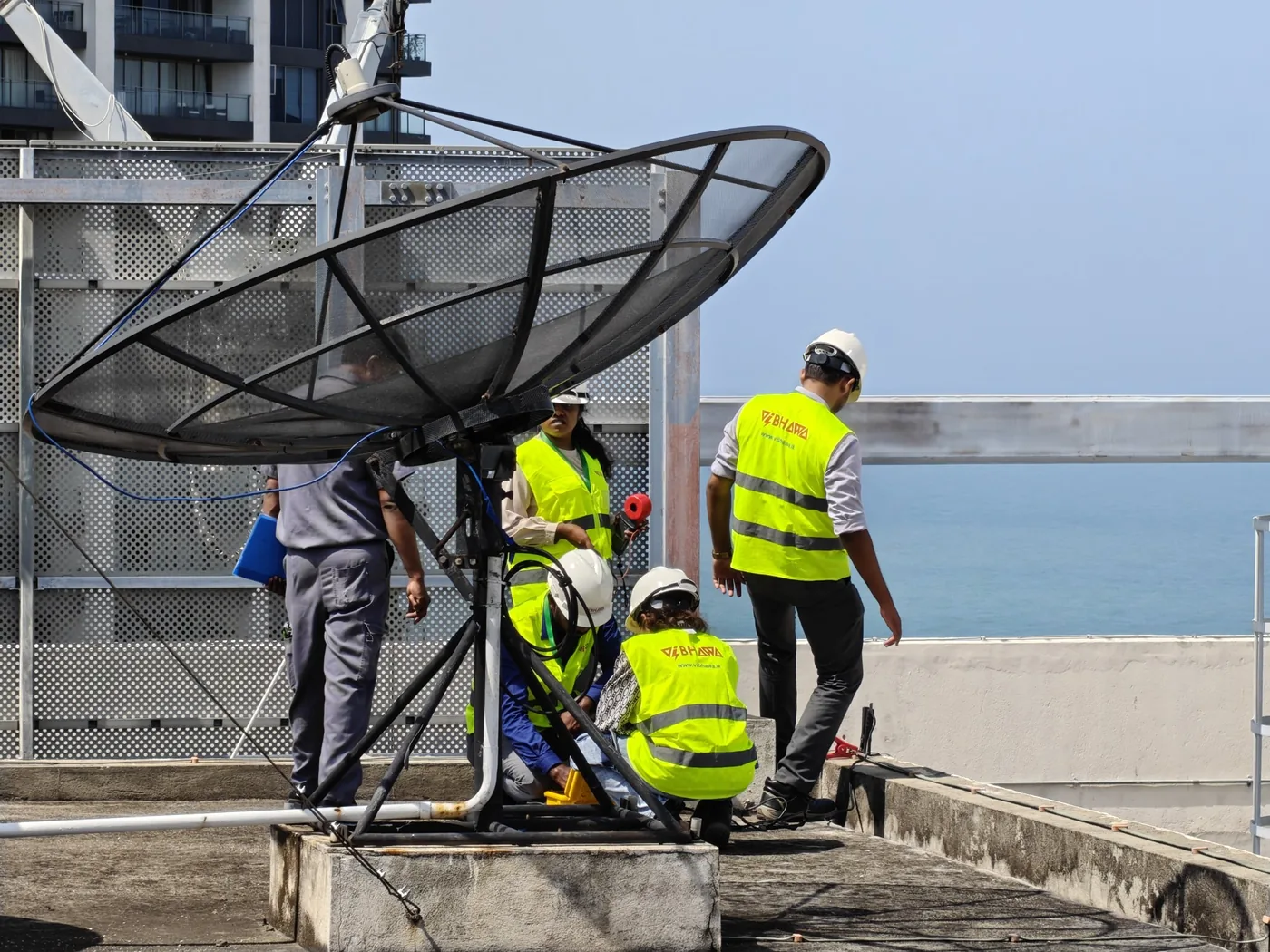
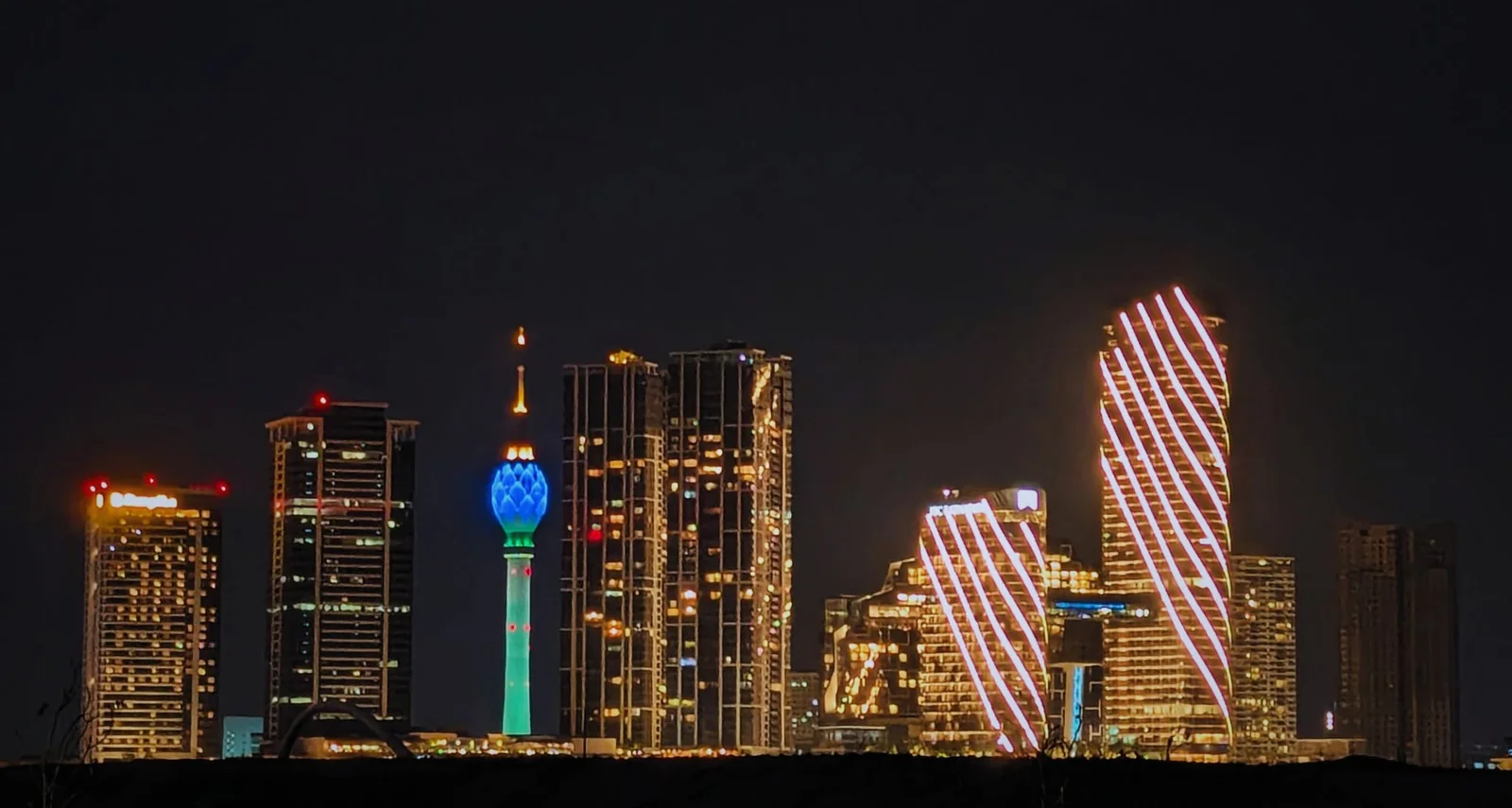
The towers along Galle Face are the most photographed structures in Sri Lanka. Many of them are also under Vibhawa's care. For more than three years we have provided condition monitoring of the lightning protection systems and the structural earthing systems of these high-rises — the air terminals and down conductors on the roof, the test joints on every riser, the earth pits at the base, and the bonding that ties them together.
Several of those agreements have since been renewed for the years ahead. For a service whose value is only proven on the night lightning actually strikes, a renewed contract is the clearest endorsement a building owner can give.
A tower on the Colombo seafront is the tallest object for kilometres in every direction. It will be struck. The question the owner needs answered every year is whether the current will go where the designer intended.
What we do
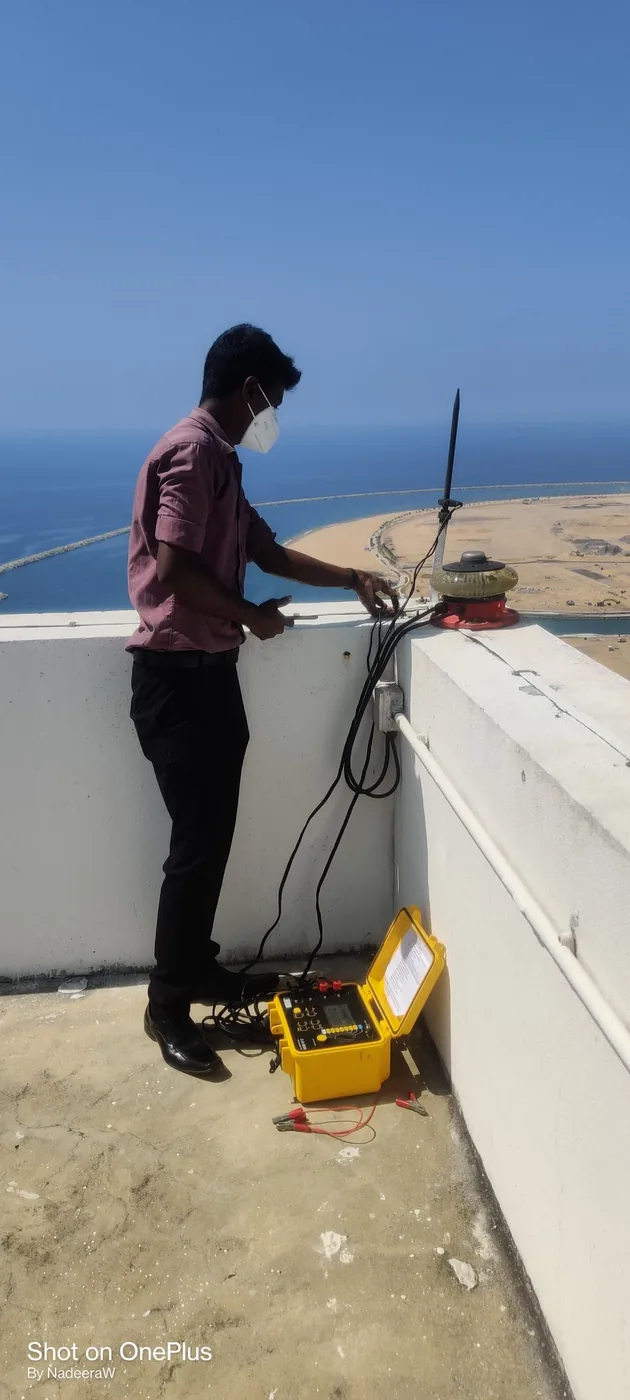
Design for new buildings and plant; assessment and testing for the ones already standing. The scope is set by the structure, its exposure and what you need the result to prove.
On site


Earthing a substation that stands in the sea
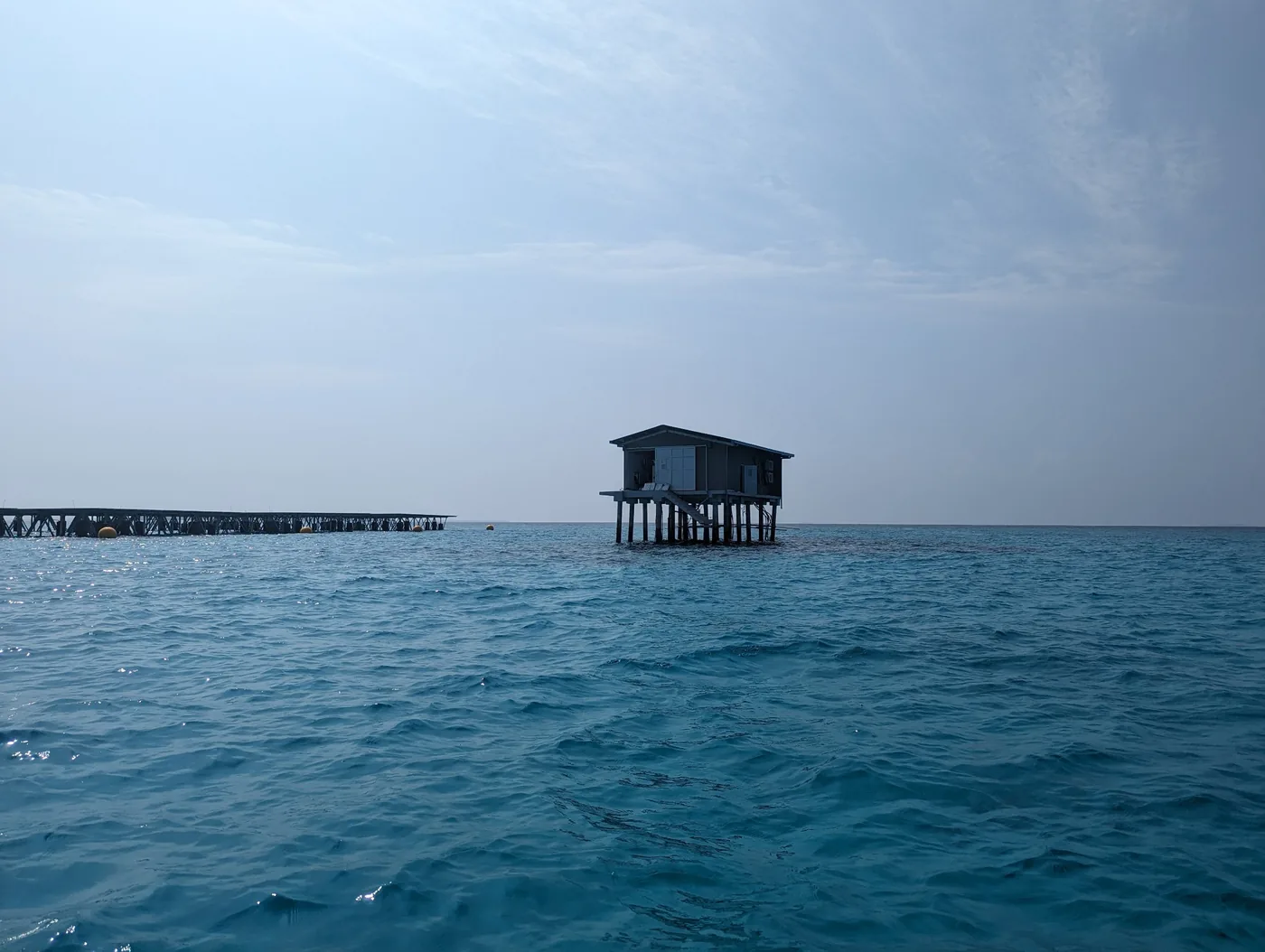
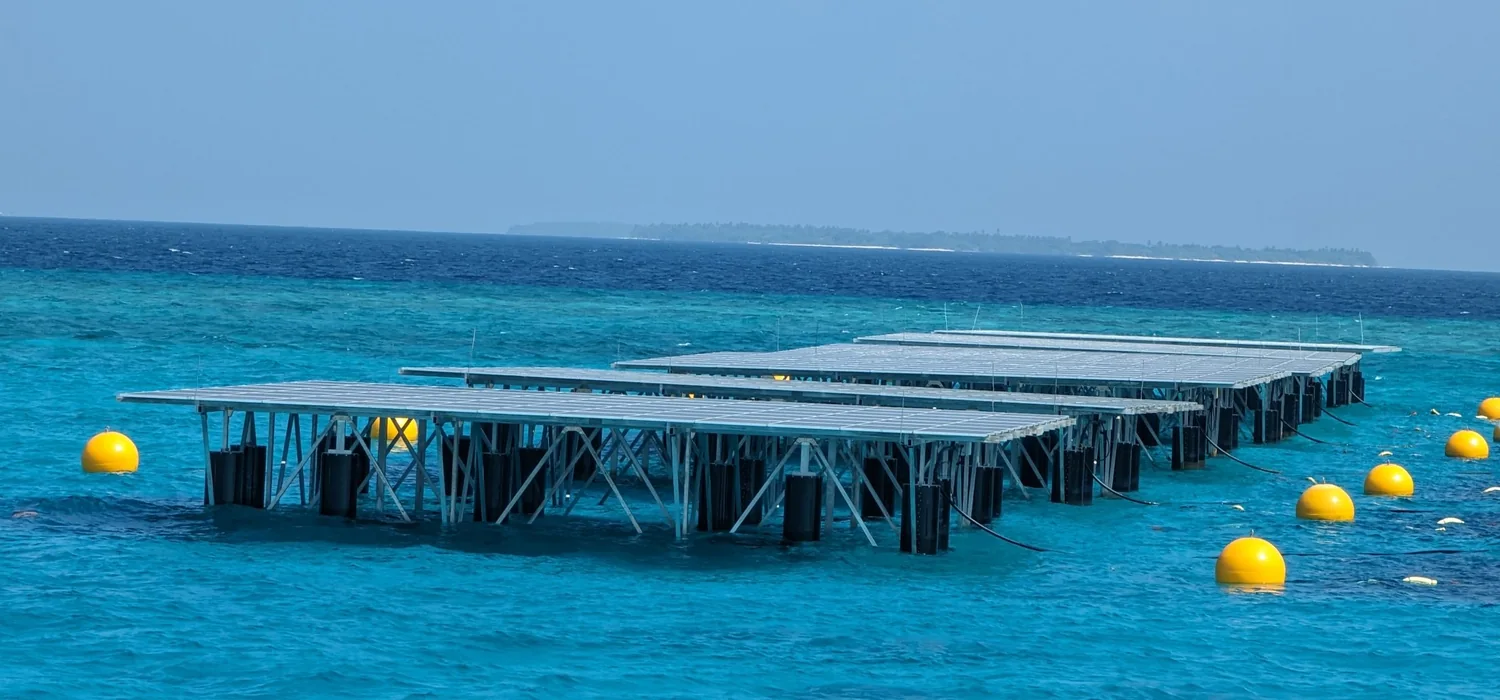
The 3 MW floating solar plant at Cheval Blanc Randheli is the largest open-sea floating PV installation in the region: piled platforms in the lagoon, an offshore 11 kV / 400 V substation on piles among them, and a subsea cable to the onshore substation and the resort's network. Vibhawa designed both substations and modelled, protected and commissioned the system — and the earthing was the part with no precedent to copy.
There is no soil. The offshore substation's earth is the steel of its own piles and the seawater around them — electrically a very good conductor, chemically a very hostile one. The design had to give fault current and lightning current a defined path through a structure that is also a corrosion cell, keep touch voltages on a platform people walk on within limits, and tie the offshore and onshore earths together across the subsea cable without creating a circulating current that would eat the installation from the inside. Every element of it — electrodes, bonding, the lightning and system earths and how they relate — was designed for that environment rather than copied from a land-based template.
Neutral voltage displacement protection. On a network earthed this way a single earth fault on the 11 kV side does not draw the large current a conventional earth-fault relay is waiting for; it shifts the neutral instead. Vibhawa specified a neutral voltage displacement (NVD) earth-fault protection scheme — detection on the residual voltage rather than on fault current — so that an earth fault anywhere on the offshore network is detected and cleared selectively, and set it in the ETAP protection coordination study alongside the rest of the scheme. The relays were then tested on site before energisation.
The result is a floating solar plant energised safely into a live luxury-resort network, with an earthing and earth-fault protection design that exists for one site in open sea. More on our Maldives work →
Earthing a plant that floats
You cannot drive a standard earth electrode into a lake. A floating solar array has its inverters, transformers and switchgear on the bank and its modules and combiner boxes on the water, and the earthing that ties the two together cannot be designed or tested the way a rooftop plant or a substation is.
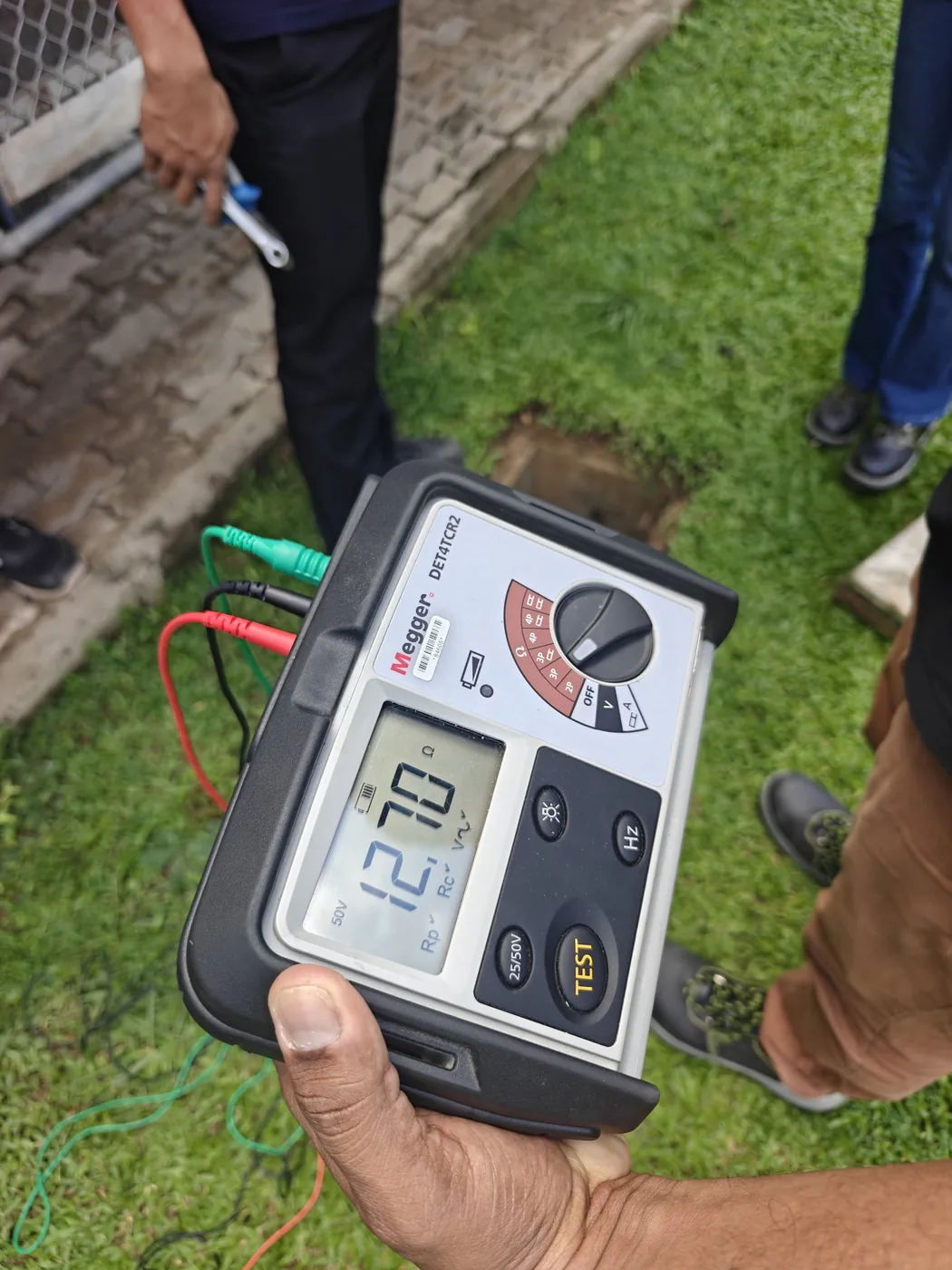
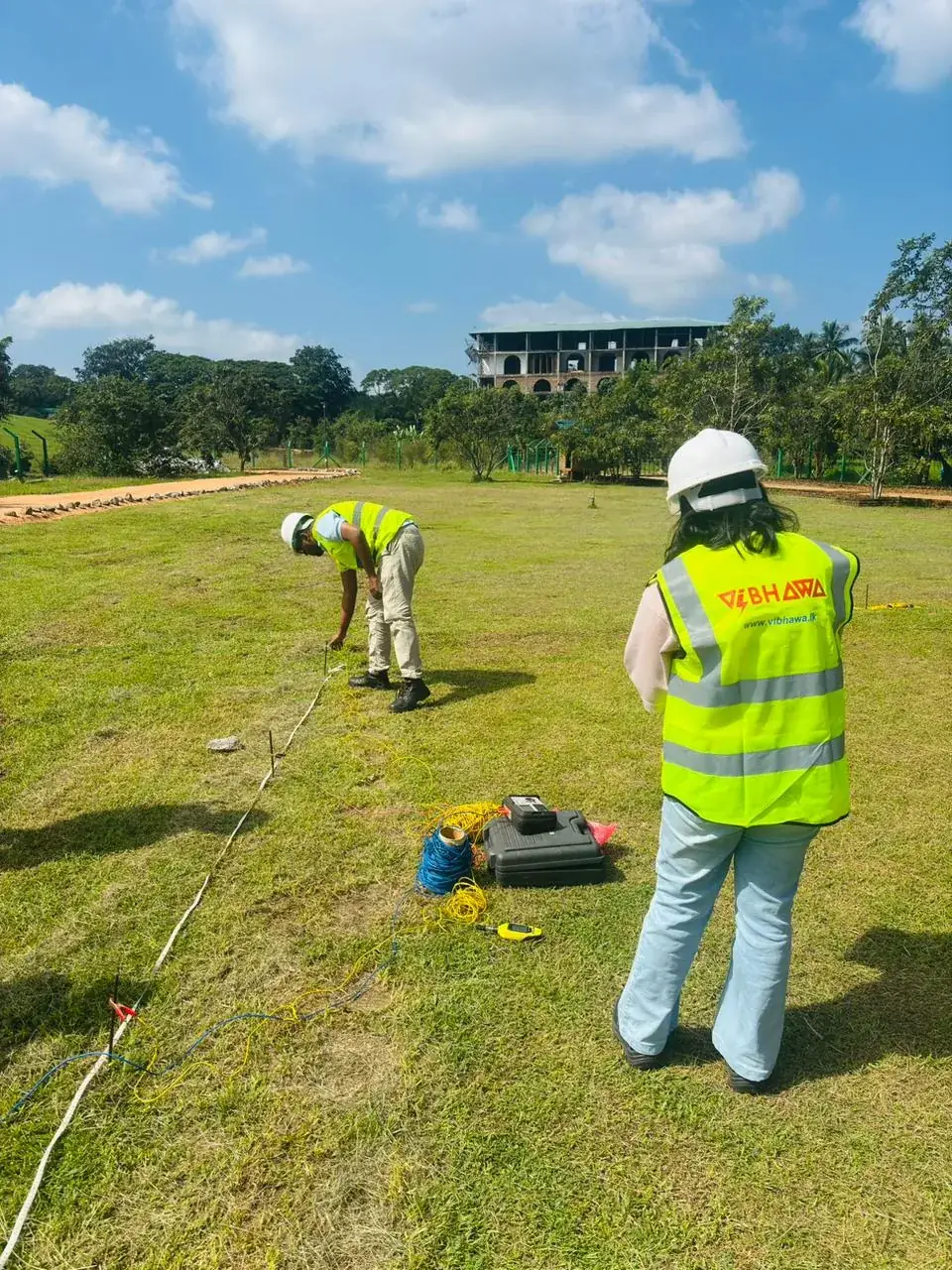
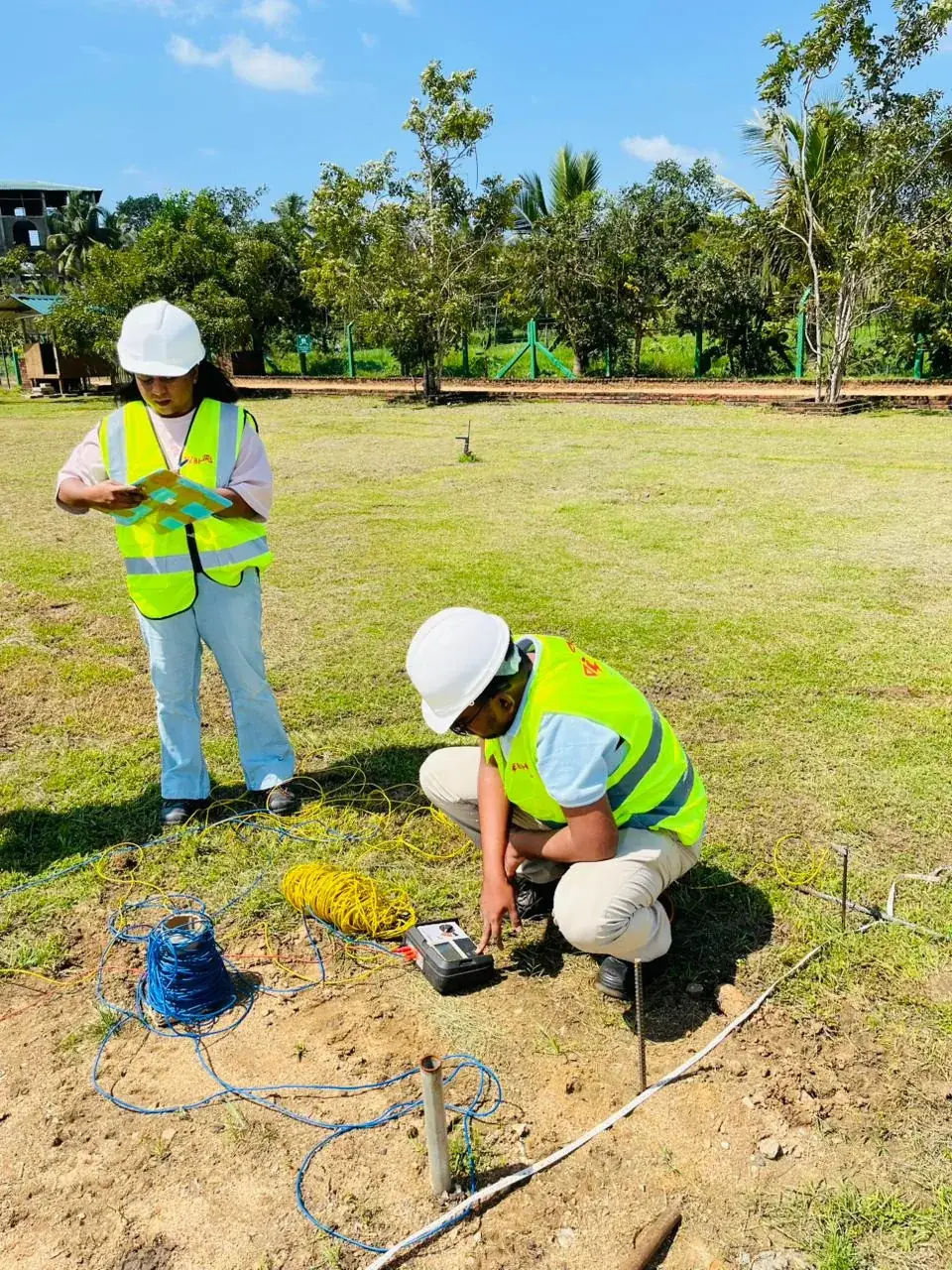
Vibhawa's involvement at the Diyajanani floating solar power plant began at the planning stage, with four-pin soil resistivity surveys on the shore of Ibbankatuwa Tank — the layered soil model the earthing system was then designed from. When the plant was built we returned for the earthing-related electrical testing of the completed installation, adapting the conventional test methods to a site where the reference points are not where the textbook puts them.
It is a small example of a general rule: renewable plants are built in the places nobody built before — reservoirs, reclaimed land, coral islands, hilltops — and the earthing has to be measured for the site it is on, not copied from the last one.
Measured, not assumed
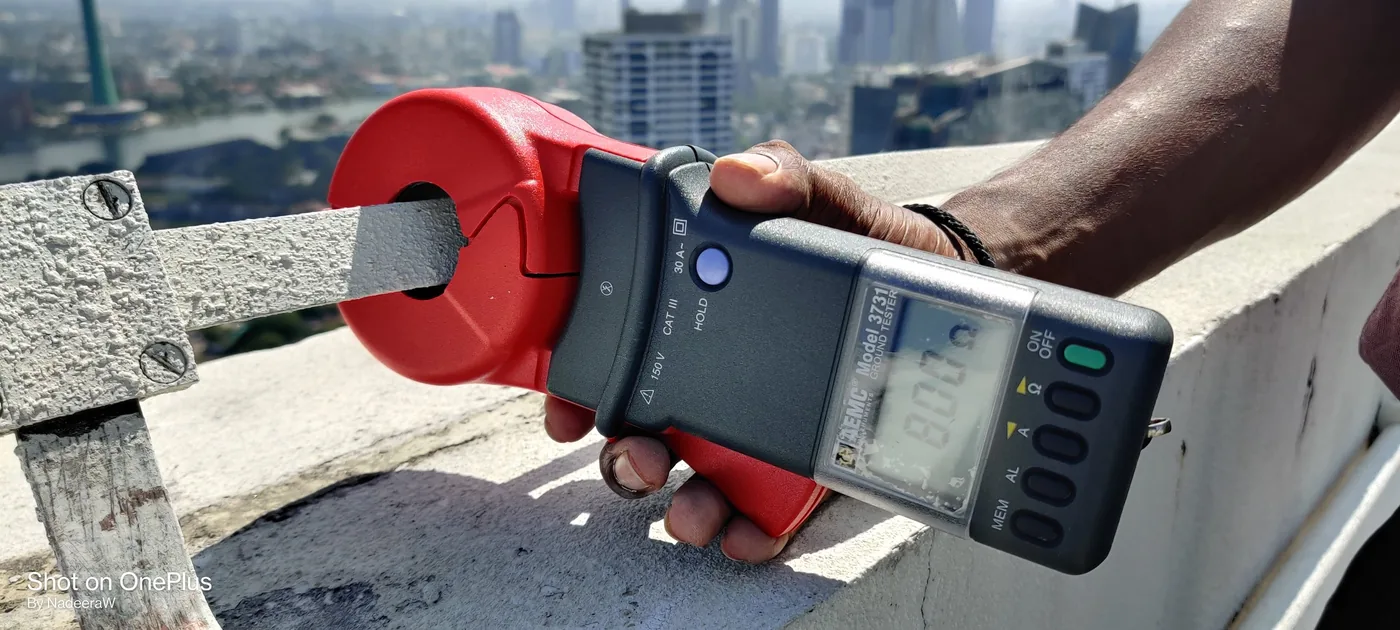
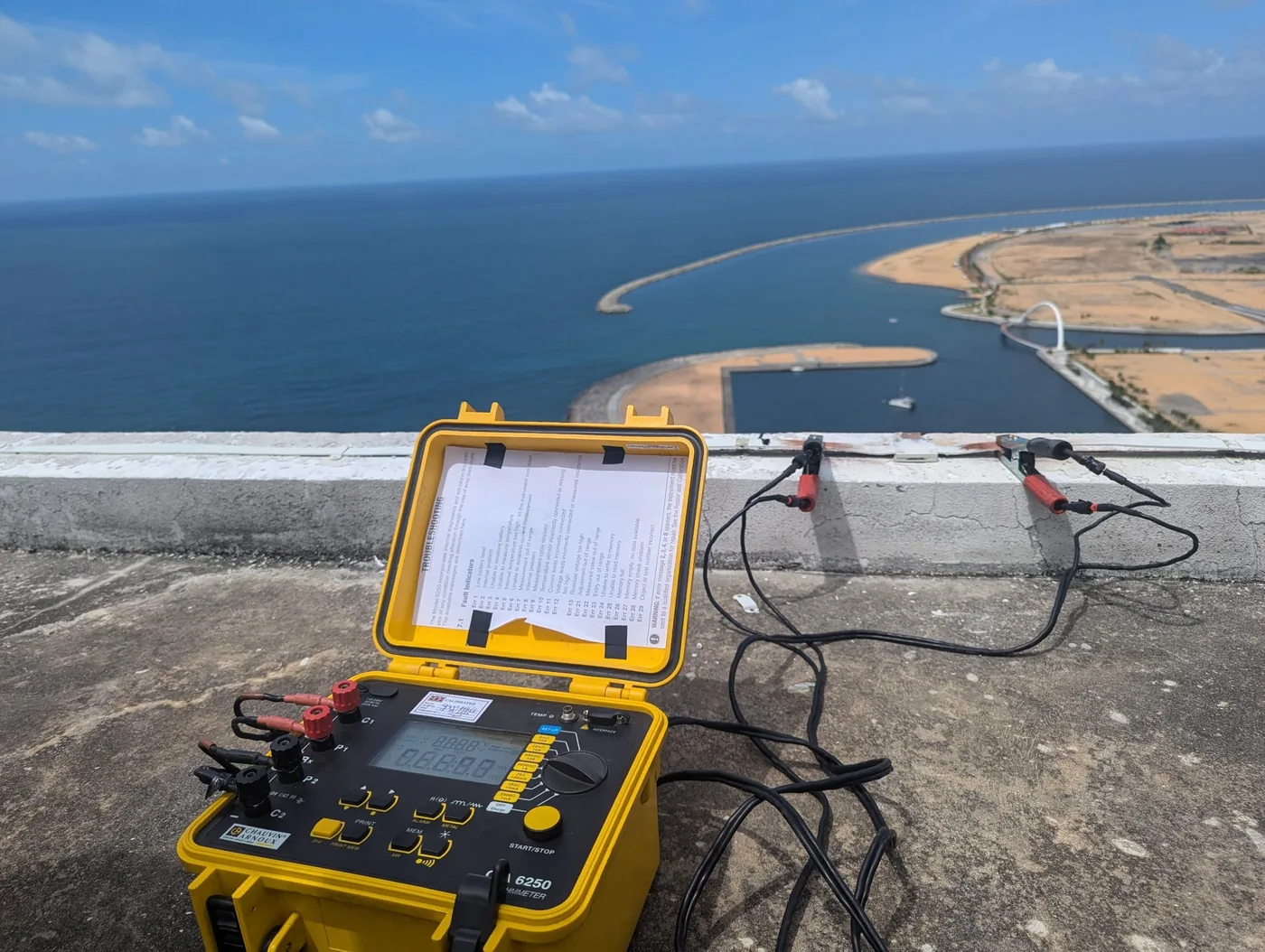
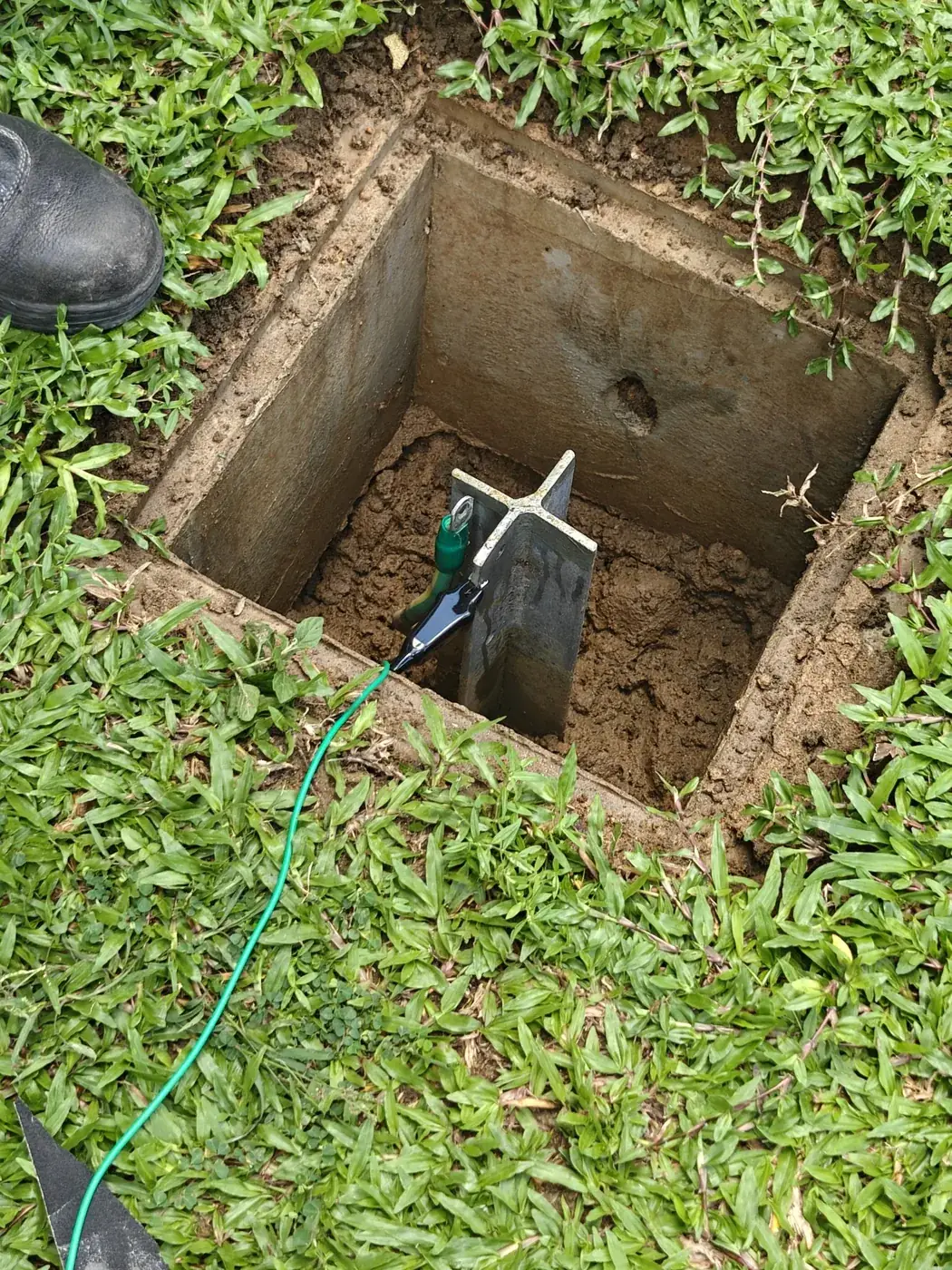
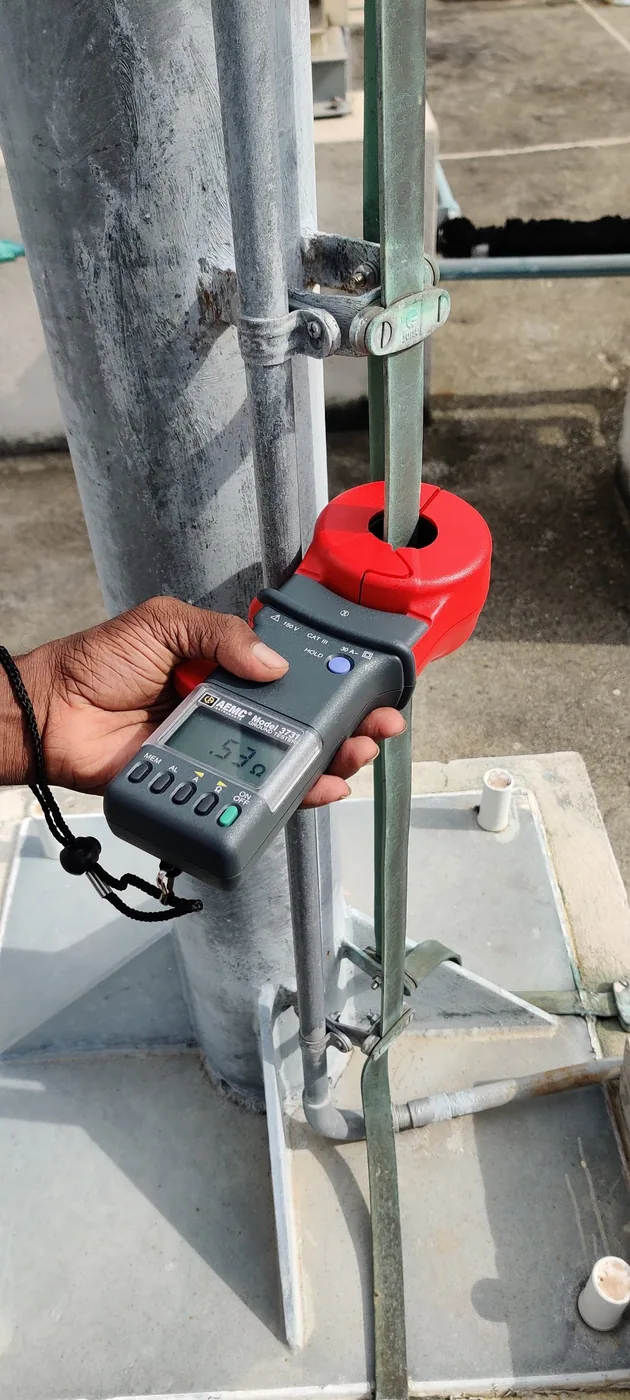
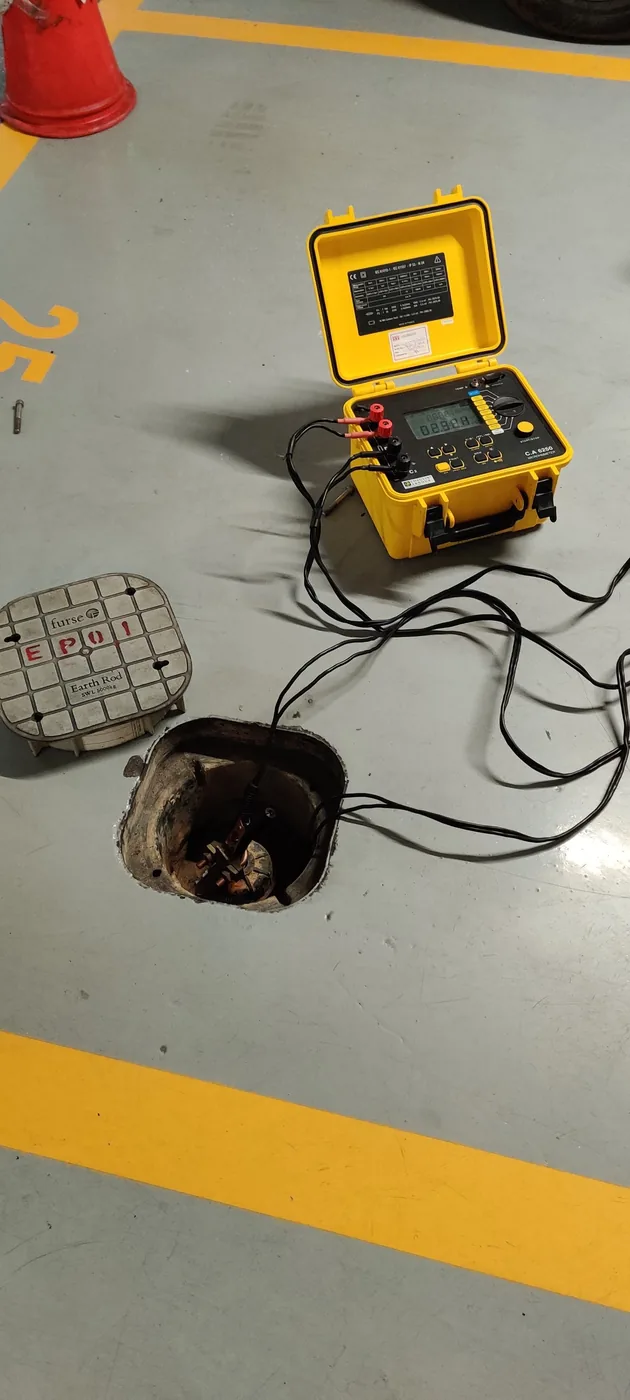
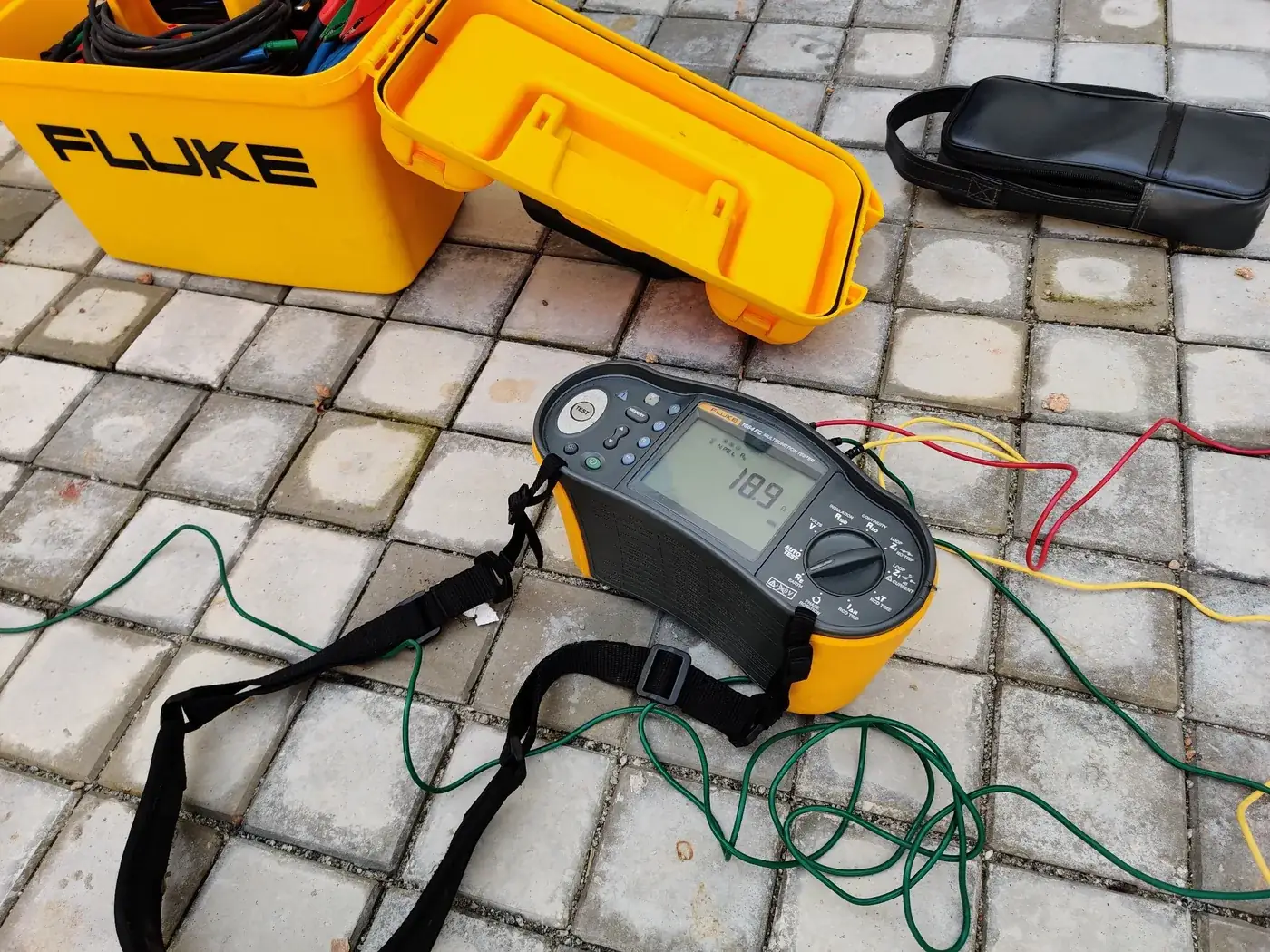
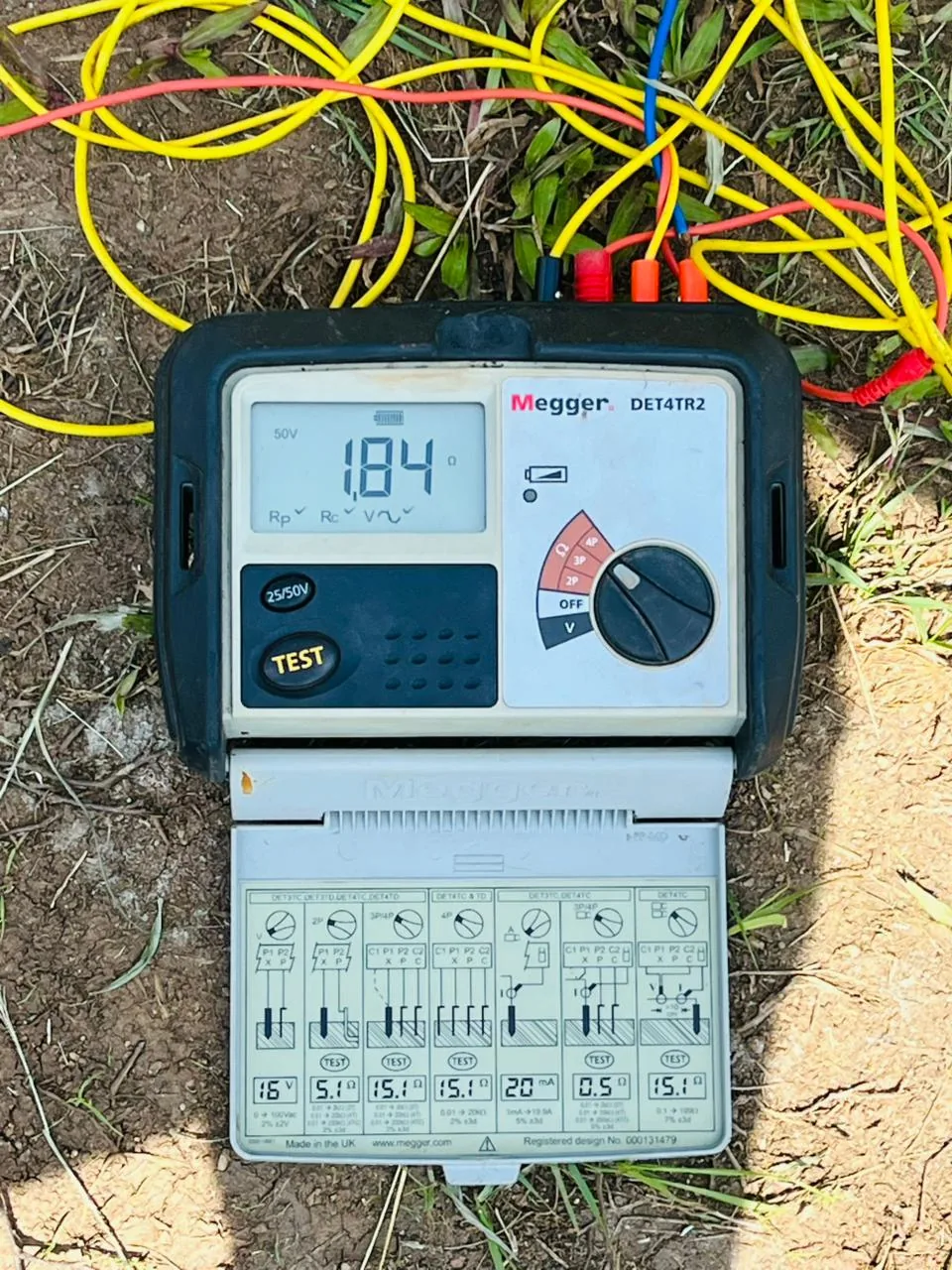
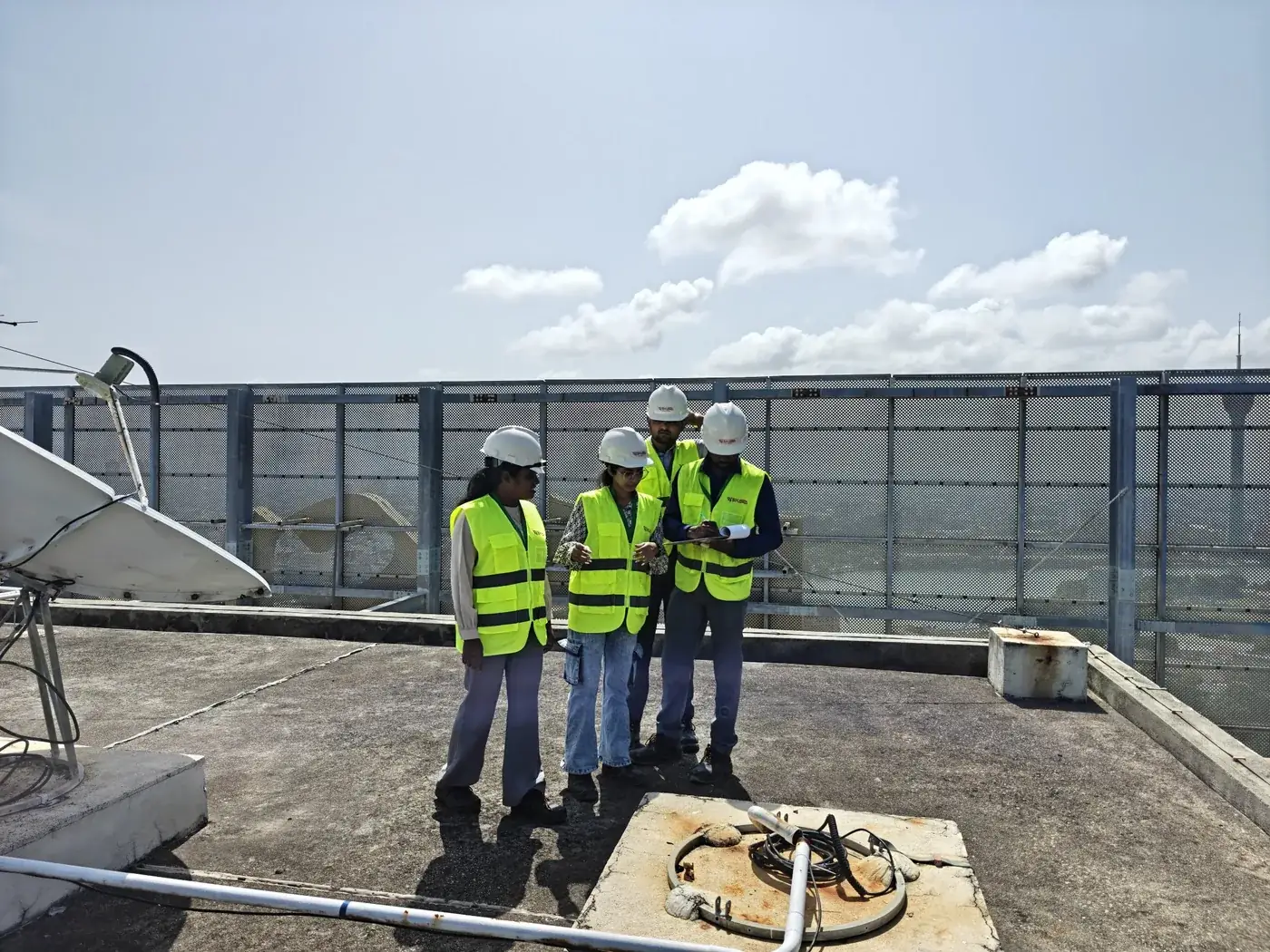
Every figure in our reports comes from a calibrated instrument chosen for the measurement: a four-terminal earth tester for fall-of-potential and soil resistivity, a 10 A micro-ohmmeter for joints and bonds, a clamp-on earth tester for stakeless measurement on rooftops and live systems, and a multifunction tester for loop impedance where the earthing system meets the electrical installation. Calibration is by an accredited laboratory and the certificates travel with the report.
Readings are reported against the design value, against IEC 62305-3's recommendation that a lightning protection earth termination measure below 10 Ω, and against the previous test. A single number tells you whether a system passes today. The trend tells you when it will stop passing.
The report is signed by a Chartered Electrical Engineer. Where the lightning protection survey is part of a wider electrical safety audit, the earthing results feed into the same C1/C2/C3 classification.
Where we have done it

Cheval Blanc Randheli, Maldives (with SWIMSOL) — earthing system design for the onshore and offshore substations of the region's largest open-sea floating solar plant, with neutral voltage displacement earth-fault protection on the 11 kV network. See the case above.
Shangri-La Colombo — lightning risk assessment of one of the tallest hotel buildings in Colombo, and lightning protection and earthing testing for six consecutive years.
INSEE Cement, Puttalam — lightning risk assessment and lightning protection system design for Sri Lanka's only integrated cement plant, quarry to bag: kilns, silos, conveyors and a 33 kV network, each with its own exposure.
Colombo International Container Terminal — lightning protection and earthing for the terminal's new electric prime-mover charging area and its two compact substations, designed, tested and commissioned by Vibhawa. The substations' arc flash study →
Conrad Maldives Rangali Island (Hilton) — lightning protection and earthing systems across the resort's three islands. Maldives programme →
The Galle Face towers — more than three years of lightning protection and structural earthing condition monitoring under multi-year agreements, including One Galle Face.
Diyajanani floating solar power plant, Ibbankatuwa Tank — soil resistivity surveys at the planning and design stage, and earthing-related electrical testing of the completed floating installation.
Also: JAT Holdings and Lanka Walltiles, among industrial and commercial sites across Sri Lanka. All projects →
Why it matters here
Lightning, soil and salt — and the people who ask for the certificate.
Sri Lanka sits in one of the more lightning-prone regions of the world, and the two inter-monsoon periods — roughly March to May and October to November — bring the thunderstorms that do most of the damage: to roofs and façades, to lift controllers, BMS, CCTV and telecoms, and to people. A high-rise on the coast, a cement kiln stack, a telecom mast on a factory roof or a resort water villa on an open lagoon is the tallest object for a long way around.
Most of the damage, though, is not from the direct strike. It is from the surge the strike induces in cabling, and from current taking a path the designer did not intend because a joint corroded or a bond was never made. That is why a complete design covers surge protection and bonding, not just the rod on the roof — and why the test programme measures every joint, not just the earth pit.
In the Maldives the problem is as much earthing as lightning. A resort island is coral sand over saline groundwater, with its own diesel generation and a long low-voltage network through guest areas. The earthing design that works on the mainland does not transfer, and the only way to know what will is to measure the soil first.
Whichever market, the request usually arrives through someone else's requirement: an insurer's renewal conditions, a hotel brand standard, a parent company's HSE audit, a lender, or an incident. Tell us who is asking and we scope the work to what they will accept.
How an engagement runs
Scope
New structure or existing system; drawings, previous test records, the authority or insurer the result is for. Half a day's conversation.
Survey and measure
Roof to earth pit: air terminals, down conductors, test joints, bonds, electrodes, soil resistivity where design is needed. Tagged and photographed so the next visit measures the same points.
Assess or design
Risk assessment to IEC 62305-2; LPS and earthing design to IEC 62305-3 / NFC 17-102 with drawings, specification and BOQ; or a condition report on what is installed.
Report and re-test
Results against design values, the standard and the previous test, signed by a Chartered Electrical Engineer. Verification testing after installation or repair, and the periodic programme after that.
Related services
Electrical Safety Audits
Earthing, bonding and loop impedance as part of a classified C1/C2/C3 audit.
Explore →MV & LV Systems Testing
Medium voltage to 33 kV and LV distribution testing — substation earthing is usually within scope.
Explore →Electrical Design Services
Substation and distribution design, where the earthing system is designed with the rest of the plant.
Explore →Frequently asked
Open a question to read the answer. If yours is not here, ask us — the scope call is free.
What is the difference between IEC 62305 and NFC 17-102?
IEC 62305 is the international standard for lightning protection: risk assessment (part 2), the conventional system of air terminals, down conductors and earth termination (part 3), and surge protection for the electrical and electronic systems inside (part 4). NFC 17-102 is the French standard for early streamer emission (ESE) terminals, which are widely installed in Sri Lanka and the Maldives. We assess, design and test to both. An ESE terminal still relies on the down conductors, earth termination, bonding and surge protection beneath it — and that is where most of the faults we find are.
What earth resistance value is acceptable for lightning protection?
IEC 62305-3 recommends that the lightning protection earth termination measure below 10 Ω at low frequency, and it is the figure most specifications and insurers quote. It is not the whole answer: the geometry of the electrode system matters as much as the number, substation earthing is governed by step and touch voltage limits rather than a single resistance, and an electrical installation's earth has to be low enough for its protective devices to operate. The report states which criterion applies and whether the measured value meets it.
How often should a lightning protection system be tested?
IEC 62305-3 sets the intervals by protection level: a visual inspection every year, a complete inspection and test every two years for LPL I and II and every four years for LPL III and IV, and a complete test every year for critical structures and systems in corrosive environments — which on this coastline is most of them. Many of our high-rise and hotel clients run an annual cycle; insurers increasingly expect it.
Can you test without disconnecting the earth?
Usually, yes. A clamp-on earth tester measures the resistance of an electrode through the loop it forms with the rest of the system, with nothing disconnected and no test spikes — which is how we test on rooftops, in plant rooms and on live systems. It needs a parallel return path to work, so an isolated single electrode is still measured by the fall-of-potential method. We carry both and use whichever the installation calls for.
Do you design new lightning protection systems, or only test existing ones?
Both. For a new building or plant we carry out the IEC 62305-2 risk assessment, design the lightning protection and earthing system, and issue drawings, specification and BOQ for your contractor — then test the installed system against the design. We design and verify; we do not supply or install the hardware, which is what keeps the verification independent. For an existing system we assess, test and report.
Do you issue a certificate for insurers or brand audits?
You receive a test and inspection report signed by a Chartered Electrical Engineer, with every measured point identified, the instrument calibration certificates, and the result stated against the applicable standard. It is written to be submitted to an insurer, a brand auditor or a parent company as it stands.
What is neutral voltage displacement protection and when is it needed?
On a solidly earthed network an earth fault draws a large current and an overcurrent earth-fault relay sees it. On a network that is unearthed or earthed through a high impedance — common on generator and island systems, and the case for the offshore network at Cheval Blanc — the fault current is small, but the voltage of the neutral point shifts away from earth. Neutral voltage displacement (NVD, ANSI 59N) protection measures that residual voltage, usually through a broken-delta VT winding, and trips on it. It is the earth-fault protection those networks need, and it has to be designed together with the earthing system, not added afterwards.
Do you work in the Maldives?
Yes, with our own engineers and instruments on site, under the same ISO 9001:2015 processes. Lightning protection and earthing is one strand of our resort assurance programme, alongside thermography, safety audits and ETAP studies for island-mode networks.
Can you test the earthing of a substation or a solar plant?
Yes. Substation earth grids, generator neutral earthing, transformer earthing and the earthing and bonding of PV arrays and inverters — on ground-mounted, rooftop and floating plants — are tested with the same instruments and reported against their own design criteria. For a new plant, the soil resistivity survey comes first, as it did at Diyajanani.
Designing a new system, or due for a test?
Send the drawings, or the last test report, and tell us who the result is for. We will scope the survey or the design, say how long it takes on site, and quote.