
Medium voltage and low voltage systems testing
Medium voltage testing and LV testing of electricity distribution systems — before a new installation is energised and at intervals once it is in service. Work is carried out to BS 7671 and the relevant IEC standards, with calibrated instruments, by Chartered Electrical Engineers under an ISO 9001:2015 quality system.
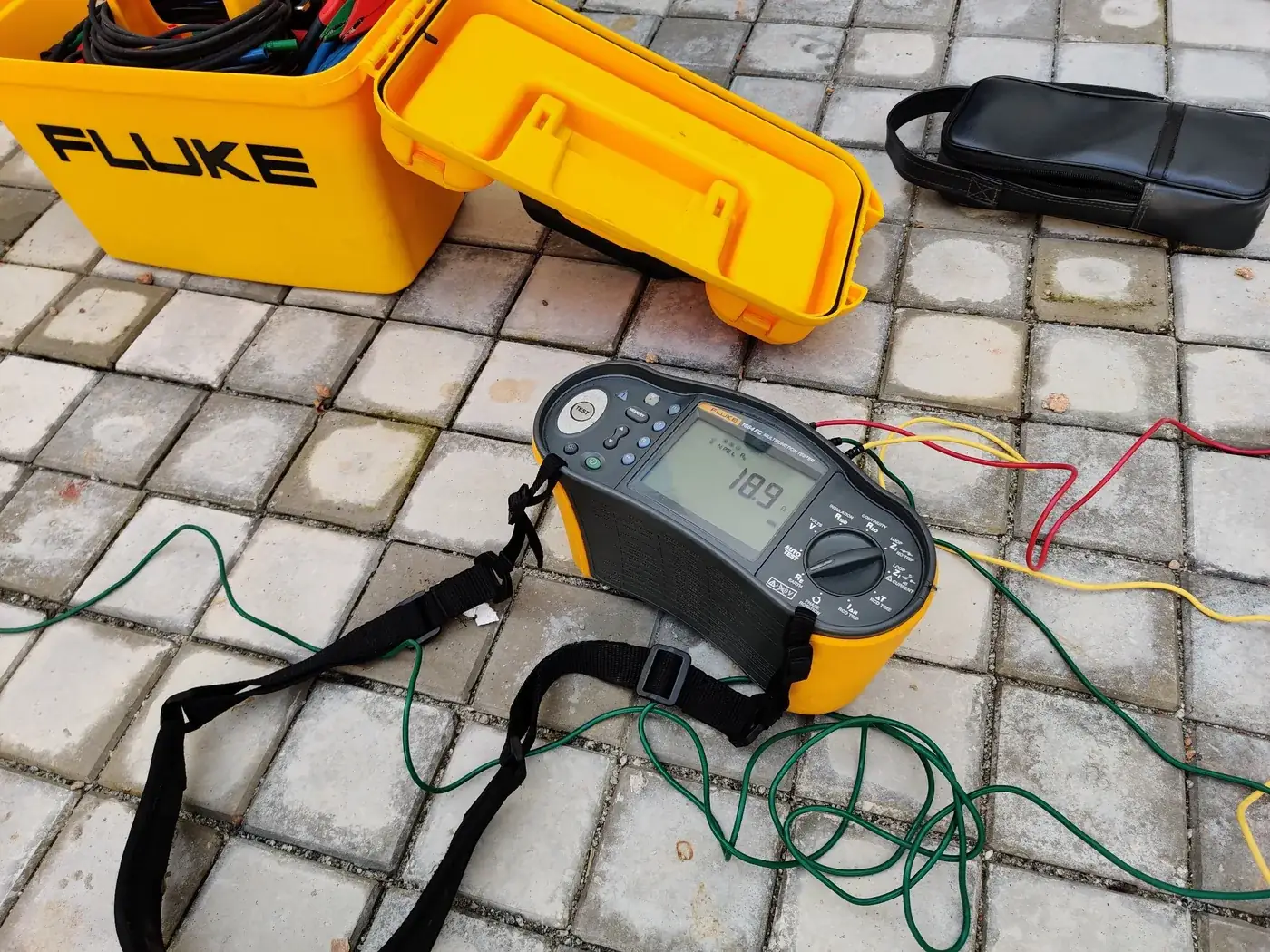
Medium voltage testing scope: what we test
Commissioning tests that prove a new installation is right, and periodic tests that prove an existing one has not drifted. Results are read on site — anything that fails is reported the same day.
Medium voltage systems
- Insulation resistance of MV cables, switchgear and transformers
- Contact resistance of circuit breakers, isolators and busbar joints
- DC winding resistance of power transformers
- CT and VT ratio, polarity and excitation checks
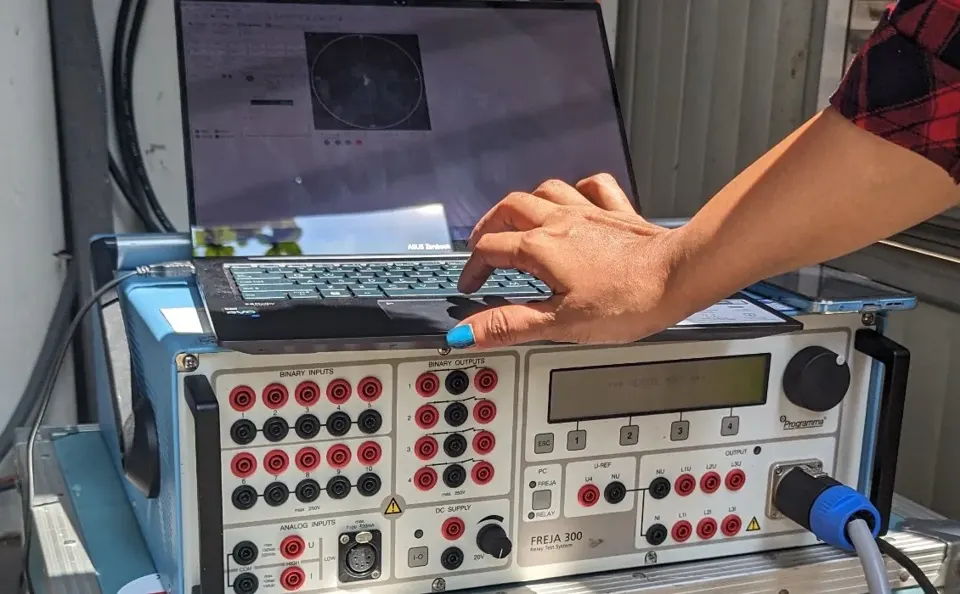
- Protection relay testing by secondary injection, with trip-circuit checks
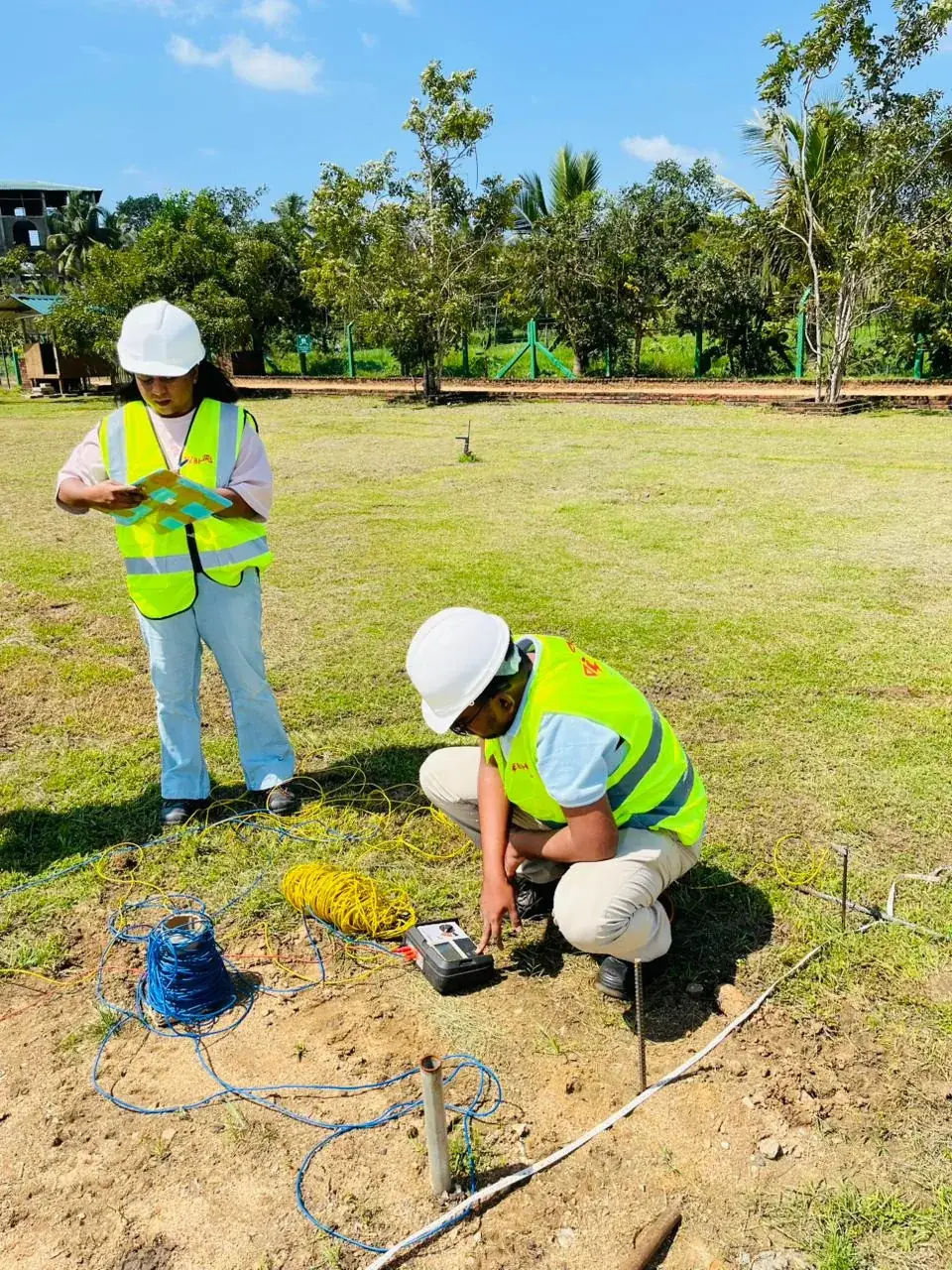
- Substation earthing and soil resistivity
Low voltage electricity distribution systems
- The full set of tests prescribed by BS 7671: continuity, insulation resistance, polarity, earth fault loop impedance, prospective fault current (to 50 kA), RCD operation and earth electrode resistance
- Insulation resistance of LV cables, switchboards and motors
- Contact resistance of ACBs, MCCBs and busbar joints
- Field accuracy verification of CT-operated energy meters
- Portable appliance testing
Commissioning a new MV or LV installation
A new installation is tested in a fixed order, so that nothing is energised until the tests before it have passed. We agree the sequence with your contractor at the start, and witness or carry out each stage.
Visual inspection before testing
Cable terminations, glands, labelling, clearances, busbar torque marks and earthing connections are checked against the drawings.
Insulation resistance
MV cables, switchgear and transformer windings, then LV cables and switchboards, each at the test voltage the standard sets for that equipment.
Contact resistance
Every breaker, isolator and bolted busbar joint, measured with a micro-ohmmeter, so a poorly made joint is found cold rather than by its heat later.
CT and VT checks
Ratio, polarity and excitation, so that meters and protection see what the drawings say they should.
Protection and trip circuits
Relays are tested by secondary injection against the approved settings, and every trip circuit is proved to open its breaker.
Earthing
Earth electrode resistance and, for substations, the earth grid, measured before the system is energised.
Energisation and on-load checks
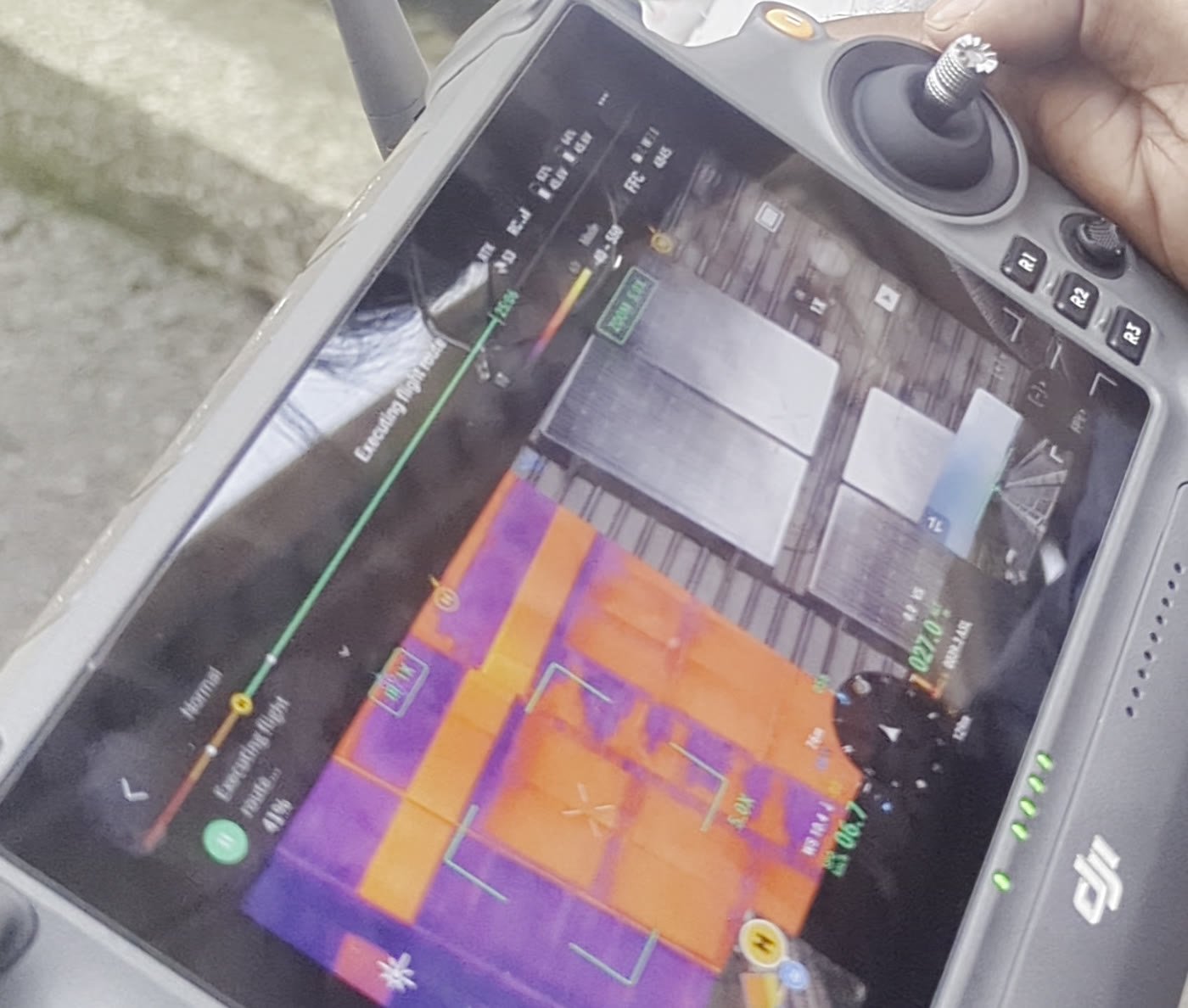
Phase rotation, voltages and current balance once the system is live, then an infrared survey under load to catch any connection that is running hot.
What you receive
A commissioning report with every result against its acceptance limit and the standard behind it, instrument calibration certificates, and a clear list of anything that must be fixed before the installation is accepted.
Our test equipment
Our own instruments, calibrated, and operated by the engineers who interpret the results.
BS 7671 multifunction testers
Every test BS 7671 prescribes for LV installations, including fault current up to 50 kA.
Micro-ohmmeters
Contact resistance of breakers and joints; DC winding resistance of transformers.
CT / VT analyser
Ratio, polarity and excitation of current and voltage transformers.
Protection relay test sets
Secondary injection testing of protection relays and schemes.
LV and MV insulation resistance testers
Insulation resistance and polarisation index, LV to MV.
Soil resistivity tester
Four-pole (Wenner) soil resistivity and earth electrode resistance.
Energy meter field test set
Accuracy of CT-operated energy meters verified in place, under real load.
Portable appliance tester
In-service testing of portable electrical equipment.
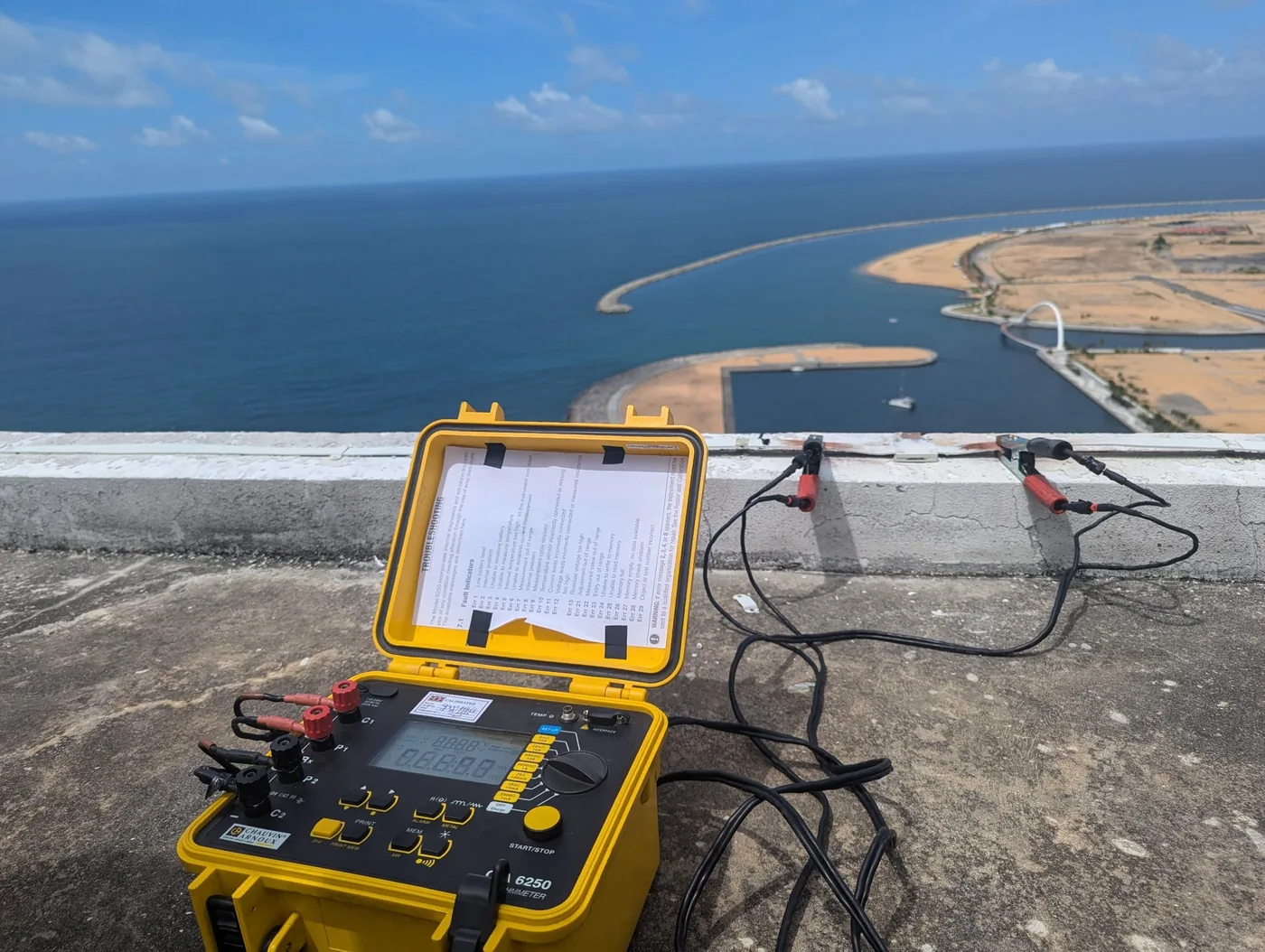


Where we have done it
Commissioning and periodic testing for industrial plants, power plants, utilities, commercial buildings and resorts across Sri Lanka and the Maldives.
Frequently asked
Which standards do you test to?
BS 7671 for low voltage installations, and the relevant IEC standards for the equipment under test — switchgear, instrument transformers, protection relays, transformers and meters. The report states the standard behind each result.
Do you test new installations and existing systems?
Both. Commissioning tests before a new installation is energised, and periodic tests for systems in service. A commissioning test proves the installation is right; a periodic test proves it has not drifted.
How long does LV testing take?
On a typical site, around fifty LV panels a day. We plan the sequence around your outage window and tell you before we arrive how long each shutdown needs to be.
Why verify a CT-operated energy meter in the field?
A CT-operated meter that reads wrong bills wrong — on a bulk supply, to a tenant, or against a solar export agreement. Field verification checks the meter's error under the real load, in place, without removing it.
Energising something new, or testing something old?
Send the single-line diagram and tell us which. We will scope the tests, tell you the outage window they need, and quote.