What Is a Megger Test? Insulation Resistance Testing Explained
By Vibhawa Editorial Team · Vibhawa Consultants
The test every electrician calls “megging” has a proper name, a 130-year history, and clear pass values. Here is what it measures, how it is done safely, and what the readings mean.
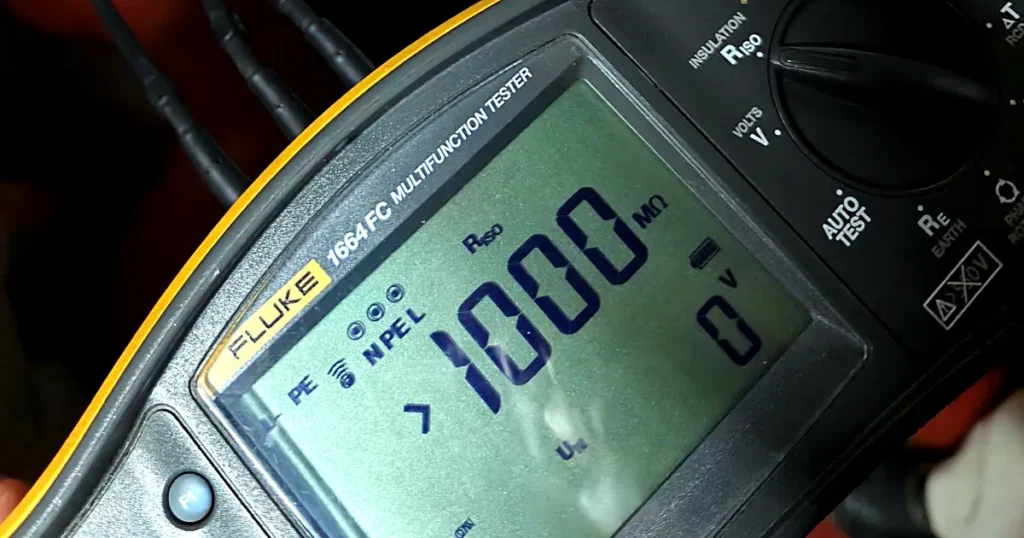
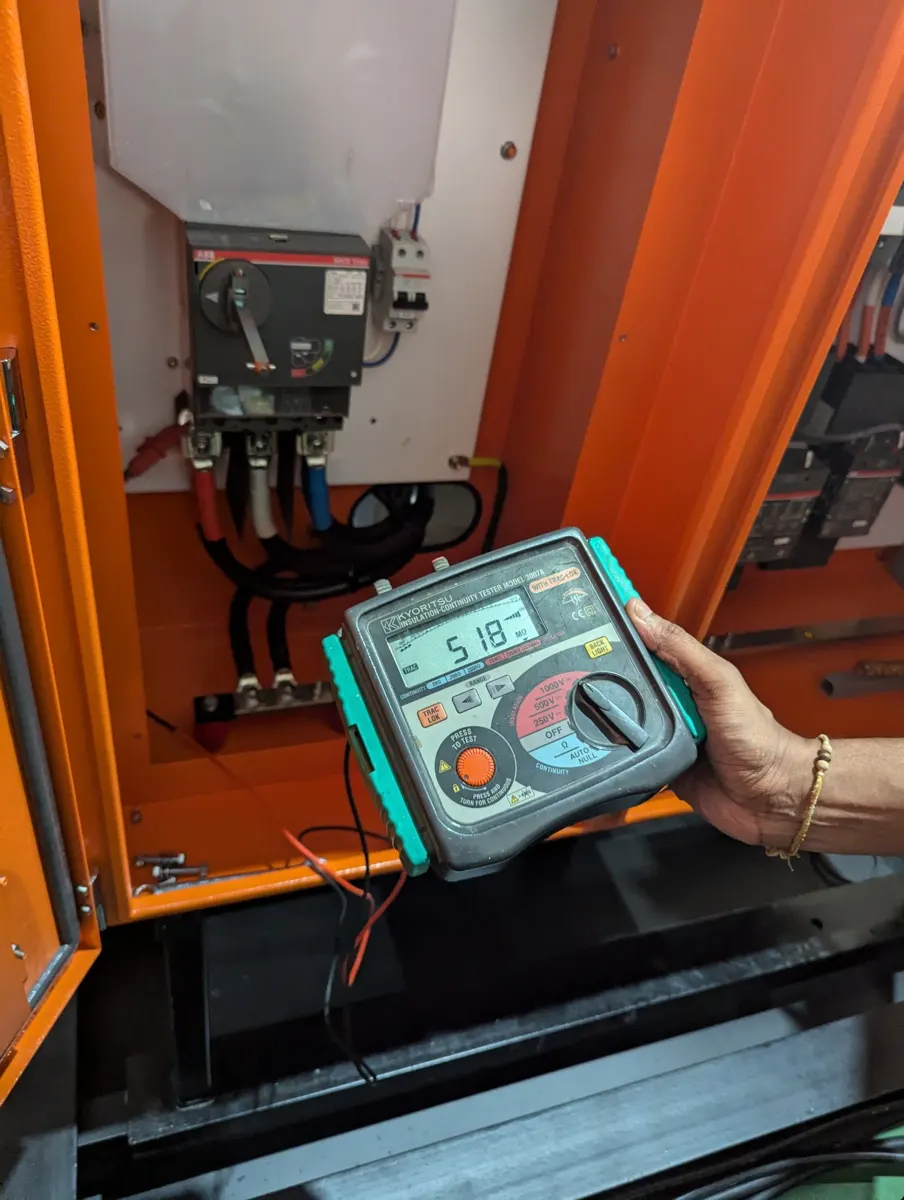
Commonly known as a Megger test, it is technically known as an insulation resistance (IR) test. It is the most widely known method of evaluating the condition of a cable’s insulation. A DC test voltage, typically 250 V to 5 kV, is applied between conductors, or between a conductor and earth, and the tiny leakage current is measured to give a resistance in megohms (MΩ). Under BS 7671, low voltage circuits up to 500 V are tested at 500 V DC and must read at least 1 MΩ. Higher readings mean healthier insulation.
The correct name: insulation resistance testing
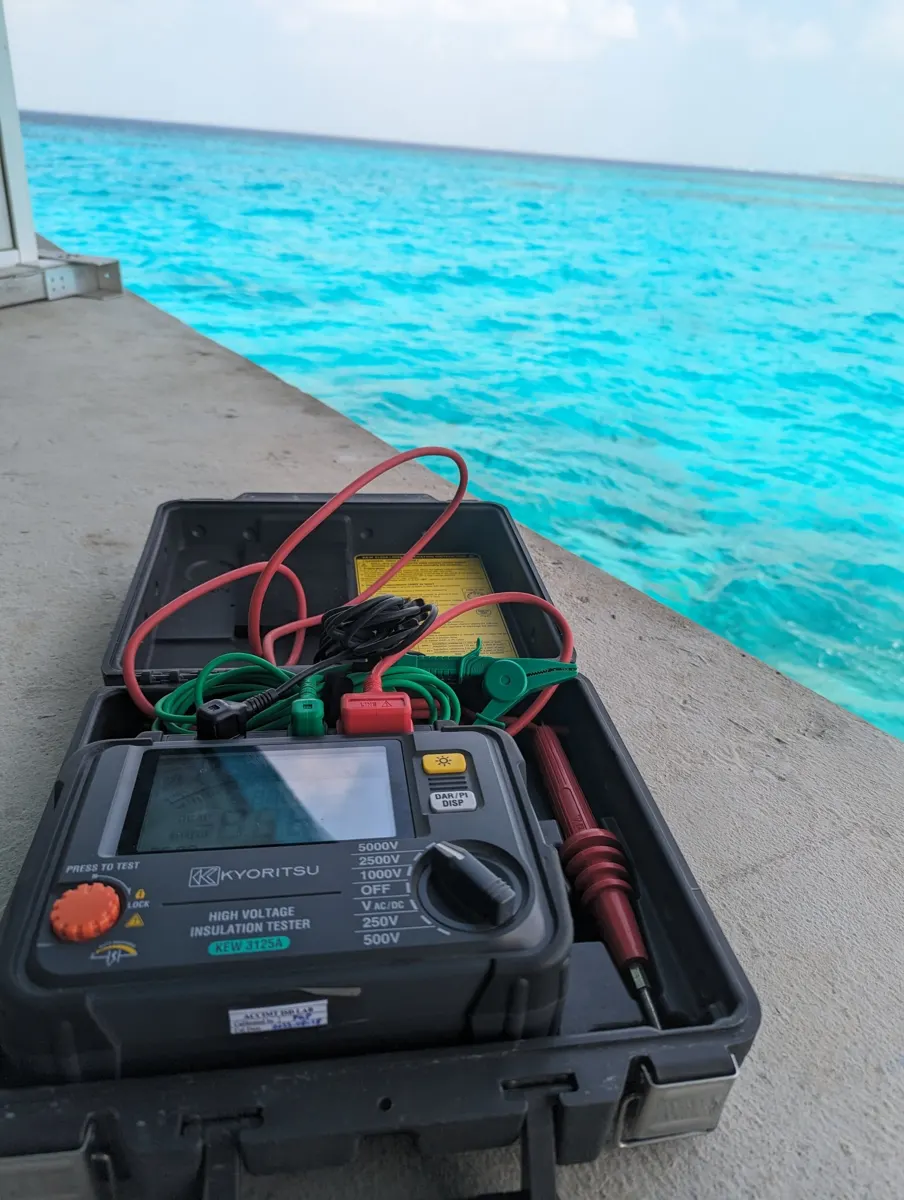
The test is commonly known as a Megger test. Its technical name is the insulation resistance test, often shortened to IR test, and it is the most widely known method of evaluating the condition of a cable. The instrument is an insulation resistance tester, also called a Megohmmeter because it measures resistance in megohms (millions of ohms). Turning the test into a verb, “megging” a cable, is site slang for the same thing.
Megger itself is a brand name: a registered trademark of Megger Group Limited, the British company descended from the firm that made the first practical portable insulation tester. Like Hoover for vacuum cleaners, the brand became the everyday name for the test. Any calibrated insulation resistance tester, from any manufacturer, performs a “Megger test”. Standards, test reports and certificates should always say insulation resistance.
A short history: how the “Megger” got its name
In the 1880s, engineers checked insulation by applying a low voltage and watching a sensitive galvanometer for leakage current. Sydney Evershed, an English engineer, saw that this missed faults that only appear under a voltage close to working voltage. His answer was a portable instrument with its own hand-cranked generator, able to measure resistance in the megohm range on site.
How an insulation resistance test works
Insulation is never perfect. When a DC voltage is applied across it, a small current flows. It has three parts: a capacitive charging current that dies away in seconds, an absorption current that falls more slowly as the insulation polarises, and a steady leakage current through and across the insulation. The tester divides the applied voltage by the current it measures and shows the result in megohms or gigohms.
Moisture, dirt, cracking and ageing all increase leakage current, so the reading falls. That is why one reading tells you whether insulation is acceptable today, and a series of readings over the years tells you whether it is deteriorating.
What test voltage to use
The test voltage depends on the equipment’s rated voltage. Testing too low may miss a weakness; testing too high can damage sound insulation.
| Equipment | Typical DC test voltage | Reference |
|---|---|---|
| SELV and PELV circuits (extra-low voltage) | 250 V | BS 7671 Table 64 |
| LV circuits up to 500 V (230 V and 400 V installations) | 500 V | BS 7671 Table 64 |
| Circuits above 500 V, up to 1 kV | 1,000 V | BS 7671 Table 64 |
| Motors and generators rated up to 1 kV | 500 V | IEEE 43 / IEC 60034-27-4 |
| Machines rated 1–2.5 kV | 500–1,000 V | IEEE 43 / IEC 60034-27-4 |
| Machines rated 2.5–5 kV | 1,000–2,500 V | IEEE 43 / IEC 60034-27-4 |
| Machines rated 5–12 kV | 2,500–5,000 V | IEEE 43 / IEC 60034-27-4 |
| MV cables and switchgear (11 kV and 33 kV) | 5 kV, or as the specification requires | Cable manufacturer and project specification |
Before any test, check the equipment manufacturer’s instructions. Electronic devices, surge protection and drives must be disconnected or protected first.
What reading passes
LV installations (BS 7671)
| Circuit | Test voltage | Minimum insulation resistance |
|---|---|---|
| SELV and PELV | 250 V DC | 0.5 MΩ |
| Up to and including 500 V | 500 V DC | 1.0 MΩ |
| Above 500 V | 1,000 V DC | 1.0 MΩ |
These are minimums, not targets. A healthy new installation usually reads hundreds of megohms, often above the tester’s range. A circuit that only just passes is worth investigating, and a value that has fallen since the last test matters more than the number on its own.
Motors, transformers and MV cables: PI and DAR
For larger equipment, a single reading is not enough, because insulation resistance depends heavily on temperature and on how long the voltage is applied. Two ratios remove most of that uncertainty:
- Polarisation index (PI) = the reading at 10 minutes ÷ the reading at 1 minute. IEEE 43 and IEC 60034-27-4 recommend a PI of at least 2.0 for modern (Class B, F and H) machine insulation. A PI near 1 suggests moisture or contamination.
- Dielectric absorption ratio (DAR) = the reading at 60 seconds ÷ the reading at 30 seconds. A quicker check, commonly taken as acceptable at 1.25 or more.
For machine windings, IEEE 43 also sets minimum 1-minute values corrected to 40 °C: 100 MΩ for most form-wound AC windings built after about 1970, and 5 MΩ for random-wound windings below 1 kV.
How the test is done safely
Insulation resistance testers produce voltages that can injure, and long cables store a charge after the test. The test is for competent, trained people working to a safe system of work.
- Isolate and lock off the circuit or equipment, and prove it dead.
- Disconnect or protect sensitive items: electronic equipment, surge protective devices, drives, RCDs with electronic parts and lamp controls.
- Discharge any stored charge, especially on long cables and capacitors.
- Select the test voltage from the equipment’s rating and the standard.
- Test between live conductors, and between each live conductor and earth. For MV equipment, test each phase to the others and earth.
- Record the reading, test voltage, duration, temperature and humidity, so later tests can be compared.
- Discharge again after the test, then reconnect everything that was removed.
Why readings fall
- Moisture: the most common cause, in cable joints, terminations, motor windings and outdoor equipment. Sri Lanka’s humidity and monsoon rain make this a regular finding.
- Temperature: insulation resistance falls as temperature rises, roughly halving for every 10 °C, so readings are corrected to a reference temperature before being compared.
- Contamination: dust, oil and salt build up on surfaces, which matters for coastal sites and resort islands.
- Ageing and heat: overheated insulation becomes brittle and cracks.
- Mechanical damage: nicks from installation, crushed cables, rodents.
Cable insulation testing up to 33 kV in Sri Lanka
Vibhawa tests LV and MV cables, switchgear, transformers and motors, from final circuits to 33 kV cables, the highest medium voltage on Sri Lanka’s distribution network. See our cable and insulation resistance testing service. Tests are carried out to BS 7671 and the relevant IEC standards with our own calibrated instruments, and every result is reported against its acceptance value.
Where we have done it
We have carried out insulation resistance testing at hundreds of locations across Sri Lanka and the Maldives, from factory and hotel LV installations to 33 kV cables, switchgear and transformers. See our projects page for the full list of work.
Frequently asked questions
Is a Megger test the same as an insulation resistance test?
Yes. “Megger test” is the everyday name, taken from the Megger brand of testers. The correct technical term is an insulation resistance (IR) test, and that is what standards and test certificates use.
Can a Megger test damage equipment?
It can, if electronic equipment, surge protective devices or drives are left connected, or if the test voltage is too high for the equipment. That is why sensitive items are disconnected first and the test voltage is chosen from the equipment’s rating.
What is the difference between a multimeter and an insulation resistance tester?
A multimeter measures resistance with a few volts, which cannot reveal insulation that breaks down under working voltage. An insulation resistance tester applies 250 V to 5 kV or more and reads into the gigohms.
How long does an insulation resistance test take?
A spot reading on an LV circuit takes about a minute once it is isolated. A polarisation index test takes 10 minutes per test. On a typical site, about fifty LV panels can be tested in a day.
How often should insulation resistance be tested?
It is part of every periodic inspection and test to BS 7671. For industrial premises, Vibhawa recommends periodic testing every year, and trending motor and MV cable readings over time.
Do you test MV cables?
Yes. Vibhawa carries out insulation resistance testing on LV and MV cables up to 33 kV, with results reported against acceptance values and a Chartered Electrical Engineer’s report where required.
Need cables tested, or the instrument?
Send us the single-line diagram and cable schedule and we will scope the tests, or hire a calibrated insulation resistance tester with or without an engineer.
Sources: Megger Group history and the 1903 trademark registration; BS 7671:2018+A4:2026 Table 64; IEEE Std 43-2013 (now inactive) and IEC 60034-27-4:2018 for rotating machines.