
Services → Electrical Testing → Cable & Insulation Resistance Testing

Cable testing and insulation resistance (Megger) testing up to 33 kV

Vibhawa tests the insulation of LV and MV cables, switchgear, transformers, motors and solar PV arrays in Sri Lanka and the Maldives, from final circuits to 33 kV cables. Commonly known as a Megger test, though the technically correct term is insulation resistance testing, it shows whether a cable is safe to energise and whether its insulation is deteriorating. We test with our own calibrated instruments up to 5 kV DC, measure polarisation index (PI) and dielectric absorption ratio (DAR), carry out AC and DC high-voltage (hipot) testing on request, and every report is signed by a Chartered Electrical Engineer.
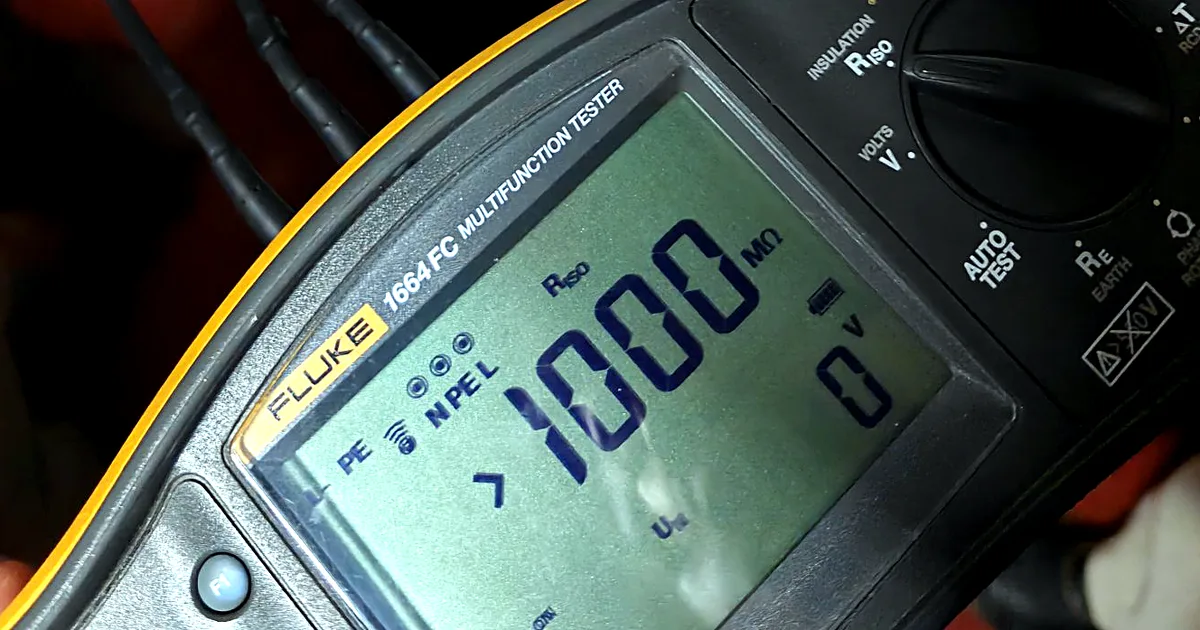
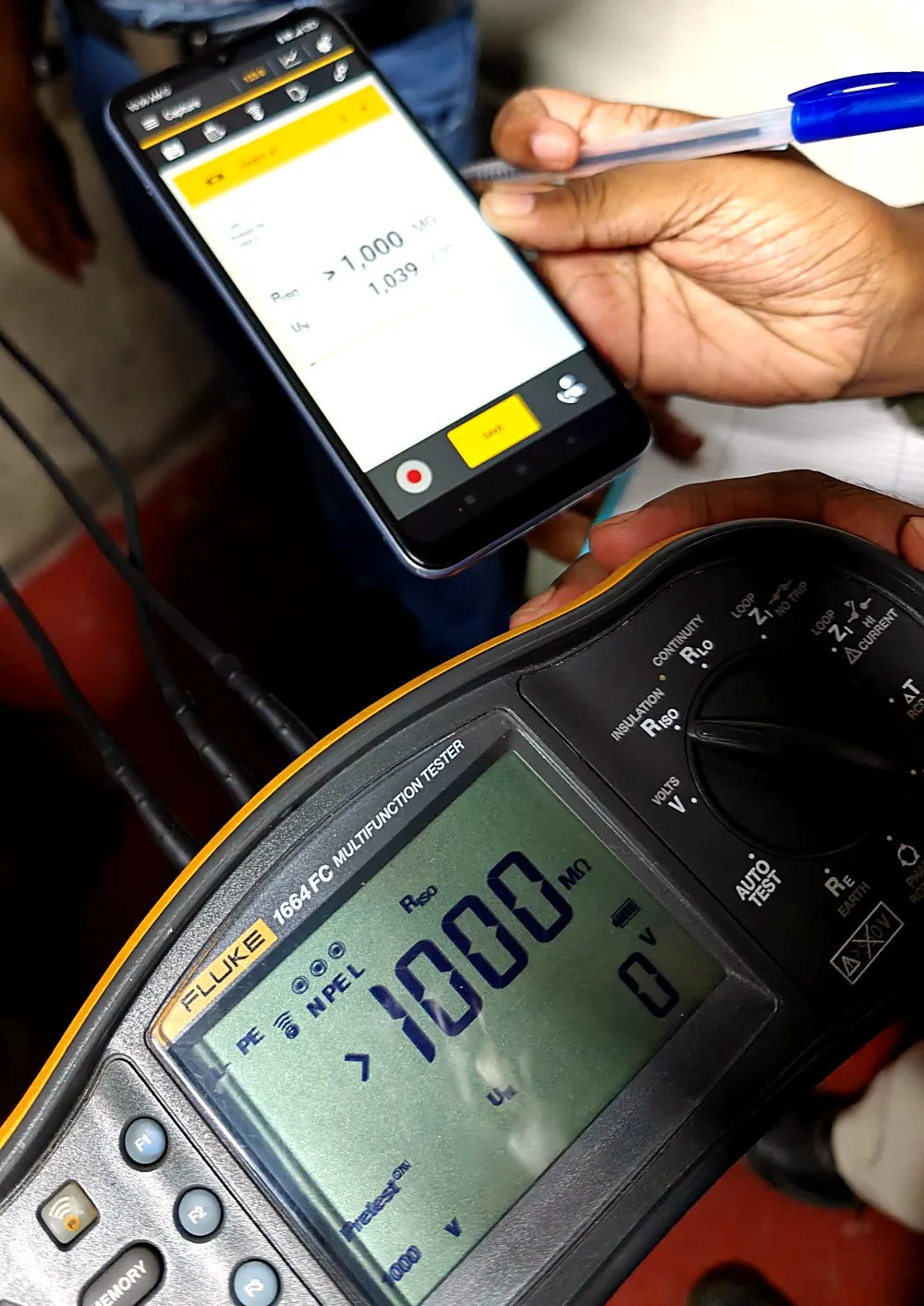
Multifunction tester showing an insulation resistance reading above 1000 megohms
An insulation resistance reading above the tester's 1,000 MΩ range at 1,000 V DC.
Up to 33 kVLV and MV cables, the highest MV level on Sri Lanka's distribution network
5 kV DC, PI and DARplus AC and DC hipot testing on request
Hundreds of sitesacross Sri Lanka and the Maldives
Chartered Engineer reportsevery result against its acceptance value

Megger test or insulation resistance test?

The same test. One is the name everyone uses on site; the other is the name in the standards.

The common name: Megger test"Megger" is a brand, a registered trademark of Megger Group Limited. Like Hoover for vacuum cleaners, it became the everyday name for the test, and "megging a cable" is site slang for doing it. Any calibrated tester from any maker performs a "Megger test".
The correct term: insulation resistance testingTechnically it is an insulation resistance (IR) test, carried out with an insulation resistance tester, or Megohmmeter. That is the name standards, test reports and certificates use, and the name on our reports.
Why "Megger"In 1889 the English engineer Sydney Evershed made the first practical portable insulation tester, with its own hand-cranked generator, at the London firm Goolden & Trotter. In 1895 he and Ernest Vignoles founded Evershed & Vignoles, and on 25 May 1903 "Megger" was registered as the trademark for their testers. The name stuck. The full story is in our guide.

What we test

Anything with insulation between a live conductor and earth, from a final circuit in an office to the 33 kV cable feeding a factory.

LV cables and final circuitsInsulation resistance of every circuit at 250 V, 500 V or 1,000 V DC to BS 7671, as part of an initial verification, a periodic inspection or a fault investigation.
MV cables, 11 kV and 33 kVEach core tested against the other cores and the screen at 5 kV DC, with polarisation index and dielectric absorption ratio, after laying, jointing and terminating and before energisation, and periodically after that.
Switchgear, ring main units and busbarsPhase to phase and phase to earth, with the circuit breakers open and closed, before commissioning and after maintenance.
Power transformersWinding to winding and winding to earth, with polarisation index, alongside winding resistance, turns ratio and oil breakdown voltage on our MV and transformer testing.
Polarisation index (PI) and dielectric absorption ratio (DAR)For MV cables, transformers and machines a single reading is not enough. PI (10-minute ÷ 1-minute reading) and DAR (60-second ÷ 30-second reading) show whether the insulation is dry and clean, and give a figure that can be trended year to year.
Motors and generatorsStator insulation resistance and polarisation index to IEEE 43 and IEC 60034-27-4, corrected to 40 °C so that this year's result can be compared with last year's.
Solar PV arraysInsulation resistance of PV strings and DC cables to IEC 62446-1, at commissioning and periodically, alongside string performance testing with our PV analysers. A low reading on a DC string is a safety risk that the inverter may only report as an earth-fault trip.
High-voltage (hipot) testing, AC and DC: on requestWhere a specification or a manufacturer asks for a withstand test, we carry out AC or DC high-voltage (hipot) testing on request, in addition to the insulation resistance test.

When to test

A cable that passed when it was laid can fail years later. These are the points where a test pays for itself.

Before first energisationAfter installation, jointing and termination, as part of testing and commissioning.
After a repair, a new joint or a faultTo prove the repair and the rest of the circuit before switching back on.
PeriodicallyAs part of a periodic inspection or a maintenance programme, so the readings become a trend.
After flooding, an incident or a long shutdownMoisture is the most common cause of low readings, and Sri Lanka's monsoons make it a regular finding.

Test voltages and pass values

The test voltage is set by the equipment's rated voltage. Readings are reported against the value that applies. Our guide What is a Megger test? explains each one.

EquipmentDC test voltageAcceptance
SELV and PELV circuits250 V≥ 0.5 MΩ (BS 7671)
LV circuits up to 500 V500 V≥ 1 MΩ (BS 7671)
Circuits above 500 V1,000 V≥ 1 MΩ (BS 7671)
Motors and generators500 V to 5 kV by ratingPI ≥ 2.0 and minimum IR (IEEE 43)
MV cables and switchgear, 11 kV and 33 kV5 kVManufacturer's or project specification; PI and trend

These are minimums. A healthy new installation usually reads hundreds of megohms or more, and a value that has fallen since the last test matters more than the number on its own.
On site

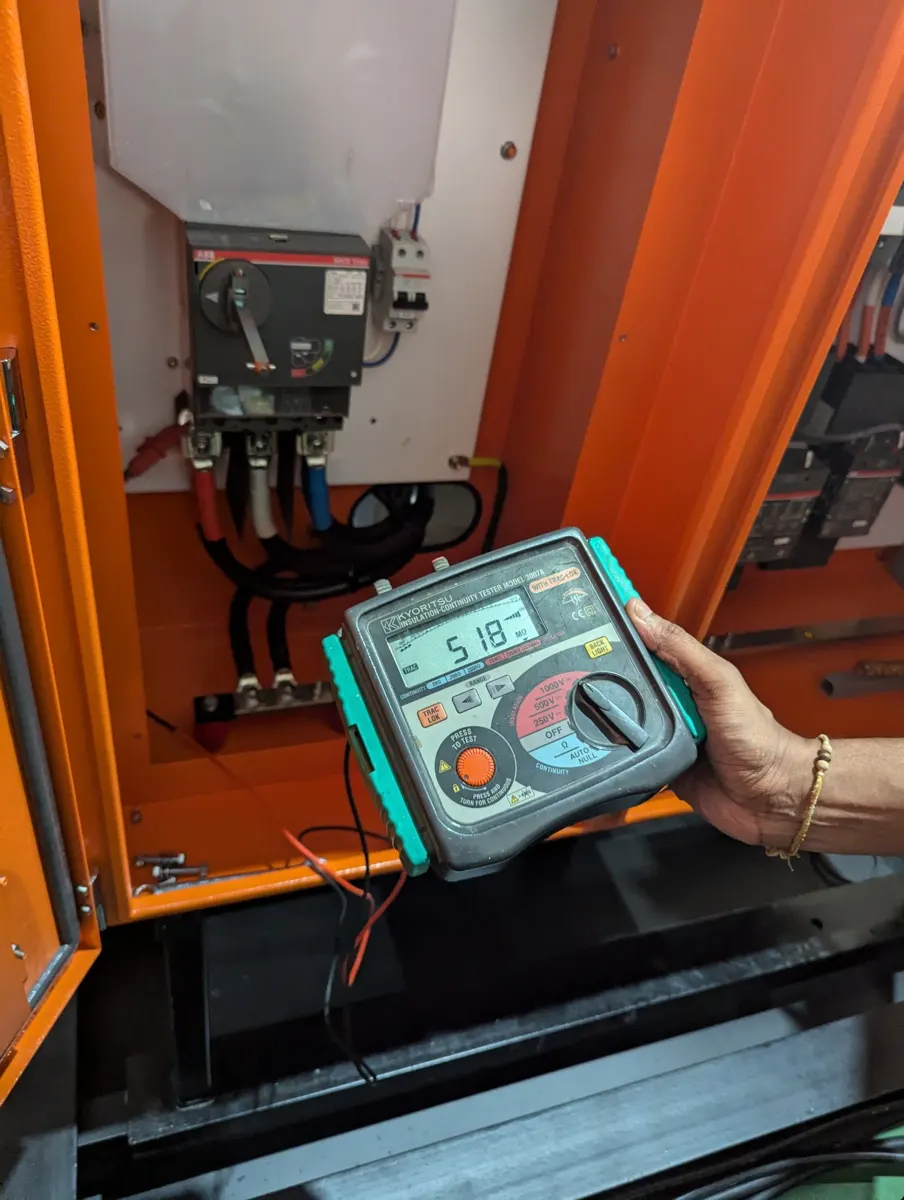
Engineer holding an insulation resistance tester reading 518 megohms in front of a switchboard moulded case circuit breaker
Switchboard. 518 MΩ on an outgoing circuit, far above the 1 MΩ minimum.
Multifunction tester showing an insulation resistance reading above 1000 megohms at a 1000 V DC test, with the result logged on a phone
Logged as it is measured. The reading goes straight to the test record.
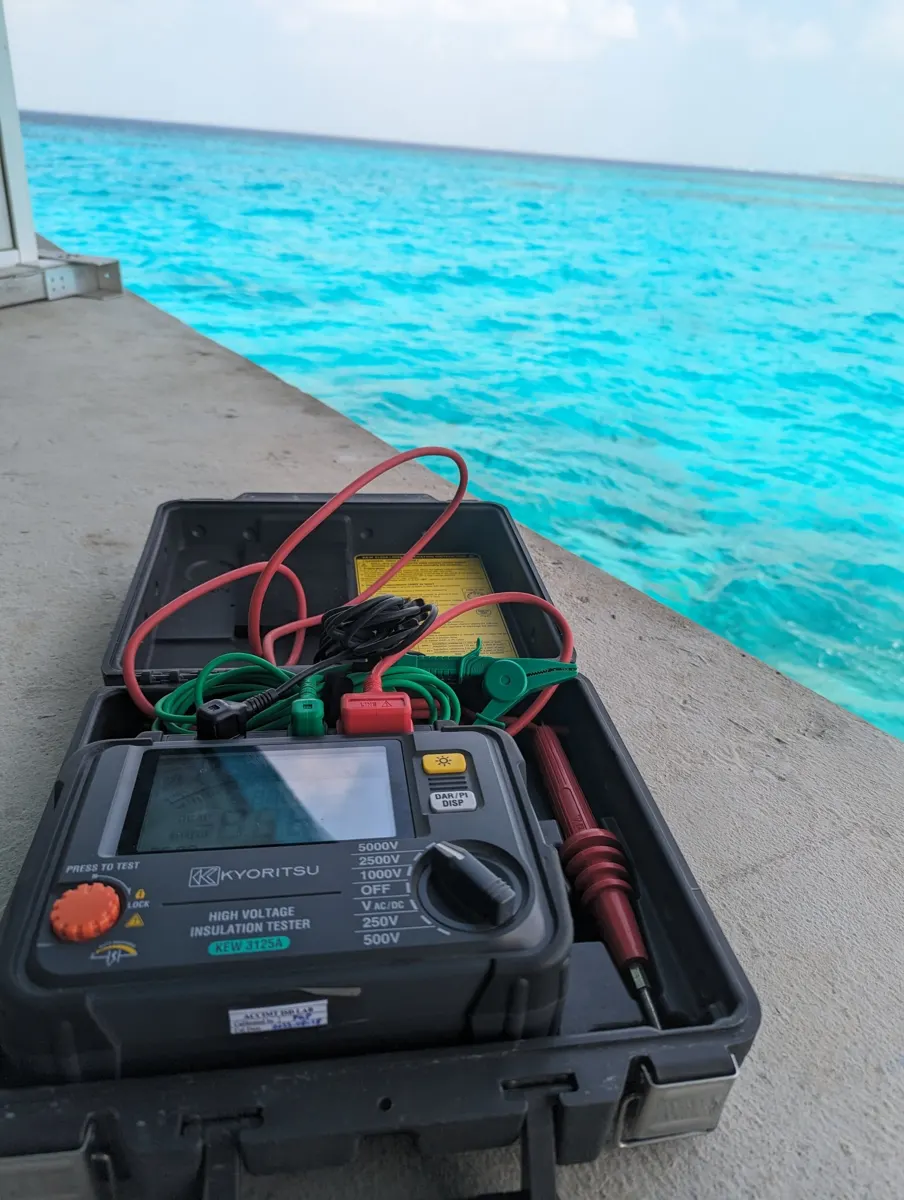
5 kV high voltage insulation tester with DAR and PI functions, set up for testing at a resort in the Maldives
5 kV, PI and DAR. Our MV insulation tester ready for testing at a resort in the Maldives.
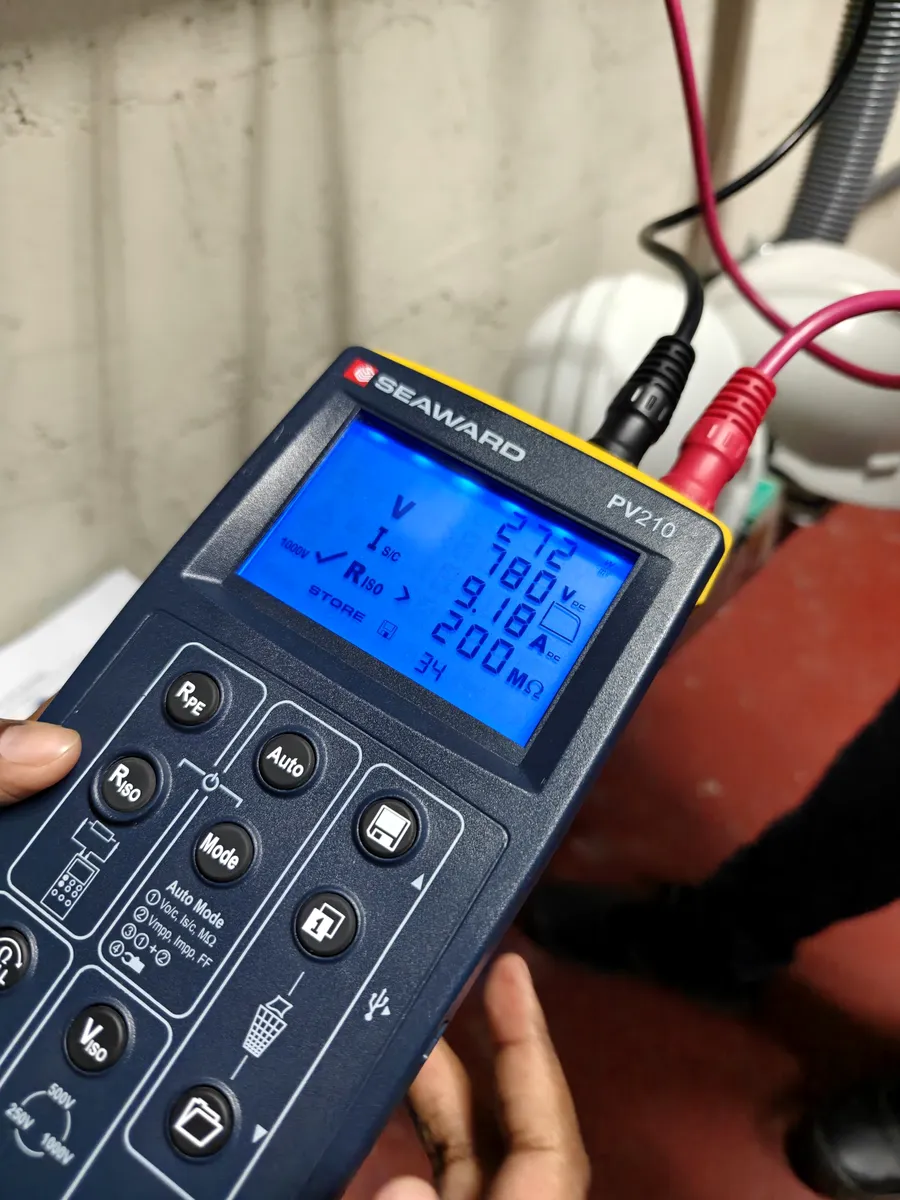
PV tester showing a 1000 V insulation resistance test on a solar PV string reading above 200 megohms, with open-circuit voltage 780 V and short-circuit current 9.18 A
Solar PV string. Above 200 MΩ at 1,000 V DC, with open-circuit voltage and short-circuit current recorded in the same test.

How a cable testing job runs

01

Scope

Send the single-line diagram and cable schedule. We confirm what is tested, at what voltage, and how long the outage needs to be.

02

Isolate safely

Isolation, lock-off, proving dead and discharge under a safe system of work, with sensitive equipment disconnected first.

03

Test and record

Every core and circuit, with the test voltage, duration, temperature and humidity recorded so the next test can be compared.

04

Report

Results against acceptance values, PI and trends, failed circuits identified, and recommendations, signed by a Chartered Electrical Engineer.

Where we have done it

We have carried out insulation resistance and cable testing at hundreds of locations across Sri Lanka and the Maldives: factories, hotels and resorts, commercial towers, solar plants and utility-connected substations, from LV final circuits to 33 kV cables, switchgear and transformers.

See the full list of projects →

Need only the instrument?

We hire calibrated LV and MV insulation resistance testers, with or without an engineer to run the test and write the report.

Equipment hire →

Frequently asked

If your question is not here, ask us. The scope call is free.

Is cable testing the same as a Megger test?

A Megger test, or more correctly an insulation resistance test, is the core of cable testing. For LV cables it is usually combined with continuity and polarity tests to BS 7671; for MV cables it is done at 5 kV DC with polarisation index, before energisation and periodically after.

What voltage do you use to test 11 kV and 33 kV cables?

Insulation resistance of MV cables is measured at 5 kV DC, each core against the other cores and the screen, unless the cable manufacturer or the project specification asks for something else.

Can you test a cable after a new joint or termination?

Yes. Testing after jointing and termination, and before the circuit is re-energised, is one of the most common requests we get.

How long does it take?

A spot reading on an LV circuit takes about a minute once it is isolated, and around fifty LV panels can be tested in a day. A polarisation index test takes ten minutes per test. We confirm the outage time when we scope the job.

Do you issue a test certificate?

You receive a test report with every result against its acceptance value, the instrument calibration certificates and the signature of a Chartered Electrical Engineer.

Do you do hipot (high-voltage withstand) testing?

Yes, on request. Where a specification or a manufacturer requires it, we carry out AC or DC hipot testing in addition to the insulation resistance test, with PI and DAR.

Do you test solar PV systems?

Yes. We test the insulation resistance of PV strings and DC cables to IEC 62446-1, and check string performance with our PV analysers, at commissioning and as periodic testing of rooftop and ground-mounted plants.

Do you work in the Maldives?

Yes, with our own engineers and instruments on site, under the same ISO 9001 processes as in Sri Lanka.

Cables to test before energisation, or due for a check?

Send the single-line diagram and cable schedule, and tell us the voltage and how long the outage can be. We will scope the tests and quote.

At Vibhawa, we offer state-of-the-art Electrical Consultancy, Testing, Condition Monitoring and Engineering Services designed for the needs of tomorrow’s world.

Services

Electrical Testing

Infrared Thermography

Electrical Consultancy

Electrical Design

Compliance Monitoring

Other Services

Recent news

  • All Post
  • Blog
  • News & Insights
  • work

© 2025 Vibhawa Consultants. Site By Remnis Global

Scroll to Top