
Services → Energy Efficiency & Renewables → Solar PV

Solar PV consultancy: feasibility, design and performance

Independent solar PV consultancy and engineering, from the first site visit to year ten of operation. We study whether a site works, design rooftop systems and utility-scale plants, map new sites with our own drones, and assess plants already running, including a 10 MW ground-mounted plant at Hambantota, to find out why they produce less than they should and what to do about it.
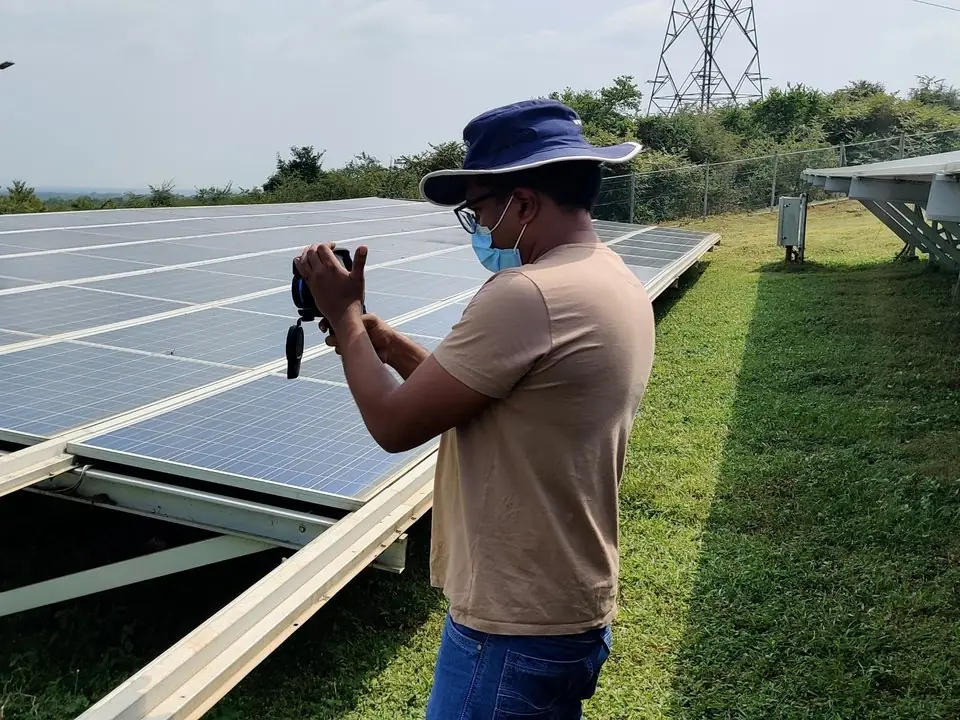
Vibhawa engineer carrying out an infrared inspection of a ground-mounted solar PV array for a solar PV consultancy project
Infrared inspection of a ground-mounted solar PV array.
10 MW ground-mountedperformance analysis, Saga Solar, Hambantota
3 MW in open seasubstations and protection, Cheval Blanc Randheli
Own drones, own pilotsCAASL-registered, Matrice 350 RTK and 4T
Level III and Level IIcertified thermographers read every image

Solar PV consultancy: what we do

One engineering team across the whole life of the plant. From feasibility to year ten of operation, the same engineers who model a plant can tell you why it underperforms.

Feasibility studies for rooftop systems and solar power plantsCan the site take the plant, what will it produce, and can the grid take the power? We look at roof structure and orientation or land and terrain, shading, the energy yield from a PVsyst simulation, the capacity of the existing connection or the nearest substation, and the utility's interconnection requirements. You get a yield estimate you can put in a financial model and a list of what has to be true for the project to work.
Aerial mapping of new plant sites with the DJI Matrice 4TBefore a ground-mounted plant is laid out, our CAASL-registered pilots fly the site and produce an orthomosaic and a terrain model. The designer gets the boundary, slopes, drainage paths, trees and obstructions, access roads and the line to the grid connection in one survey, without weeks of ground work.
Solar PV power plant designGround-mounted and floating plants: array layout, string and inverter sizing, DC and AC cabling, earthing and lightning protection, the MV substation and the single-line diagram, with the ETAP load flow, short circuit and protection coordination studies the utility needs for the grid connection. Drawings, specification and BOQ for tender.
Solar PV design for buildingsRooftop systems for offices, banks, hotels and factories, designed around the building's load and its existing switchboards. For the Standard Chartered Bank head office in Colombo we carried out the feasibility study, PVsyst simulation, detailed design, tender documents and BOQ, supervised the installation, and tested and commissioned the system. Read the project →
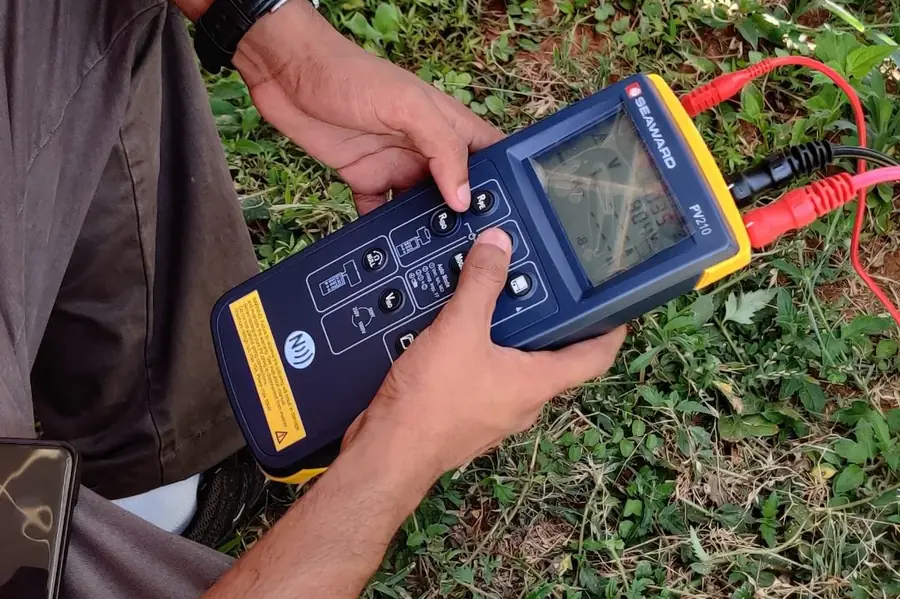
Testing and commissioningString insulation, open-circuit voltage and short-circuit current on every string, polarity and earth continuity, inverter protection settings, and the documentation the owner and the utility need at handover.
Performance assessment of operating plantsIs the plant producing what it should? We compare measured output with the expected yield for the irradiance it actually received, work out the performance ratio and availability, and break the gap down: soiling, shading, string faults, inverter clipping and downtime, mismatch, cable losses and module degradation. The report ends with ranked recommendations to recover yield, each with its expected gain.
Drone thermography of solar arraysOur own pilots fly the array and our certified thermographers read the images: hotspots, bypass-diode failures, cracked and delaminated modules, disconnected strings and soiling patterns. Each defect is located on the array map and classified so the O&M contractor knows which modules to change. A few megawatts of rooftop PV takes about half a day on site. Aerial thermography →
Power quality and grid complianceHarmonic, flicker and voltage measurements at the point of connection to show a PV system meets the utility's limits. For example, a power quality and flicker study of a solar PV system for ADS Solar.
Case · Saga Solar, Hambantota

Performance analysis of a 10 MW ground-mounted plant

A utility-scale plant that has been running for years rarely fails outright. It drifts. Output falls a little each season, availability slips when an inverter waits for spares, a block of strings goes dark without an alarm, and dust on the modules takes a few percent between monsoons. The owner sees a number on the monthly invoice that is lower than the bankers' model and has no way to tell which of these is to blame.

At the 10 MW Saga Solar plant in Hambantota, Vibhawa carried out a performance analysis to answer that question. We took the plant's own generation and irradiance records, checked them against the expected yield for the weather the site actually had, and calculated the performance ratio and availability over the period. Then we broke the gap down by cause.

The result was a breakdown of the losses by cause, and a ranked list of recommendations to bring the yield back up.
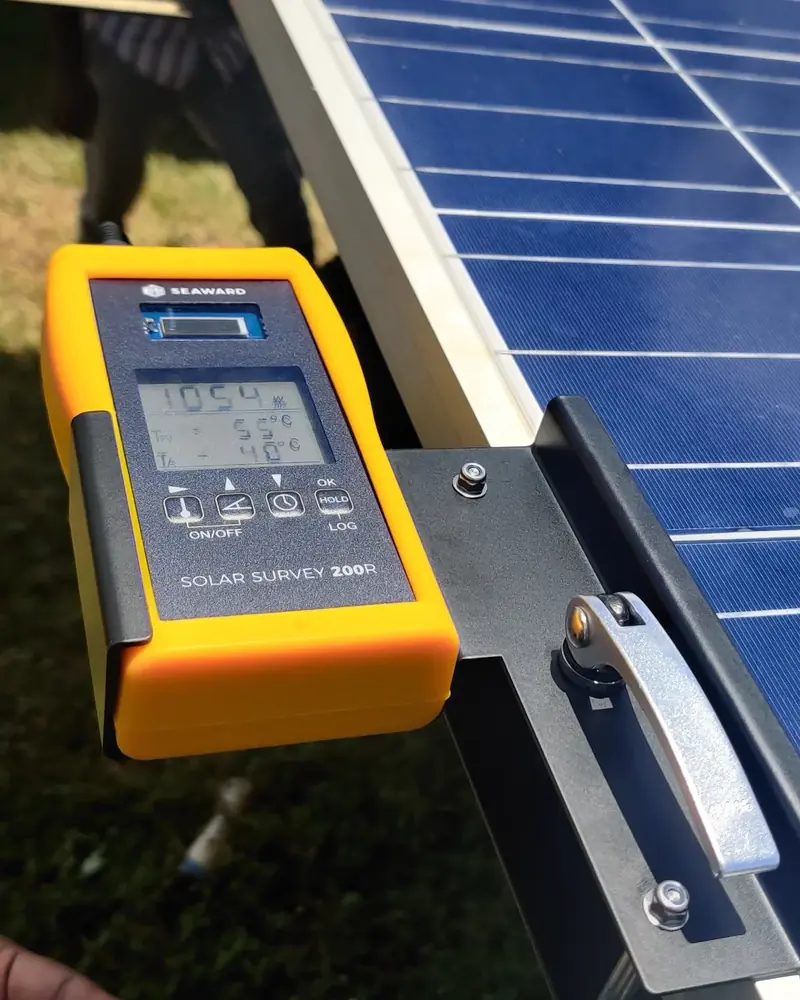
Seaward Solar Survey 200R irradiance meter clamped to a module frame, reading 1054 W/m2 with module temperature 55 C and ambient 40 C
Irradiance and module temperature measured in the plane of the array — the reference every performance figure is calculated against.
What we checkWhy it matters
Performance ratioOutput against the irradiance received — removes the weather from the comparison
AvailabilityEnergy lost to inverter and grid downtime
String currentsFinds dead or weak strings the SCADA does not flag
Thermal inspectionHotspots, diode failures and damaged modules
SoilingThe cleaning interval that pays for itself

From the air

Drones turn a week of walking the rows into half a day. We fly our own aircraft with CAASL-registered pilots and keep the images with certified thermographers.
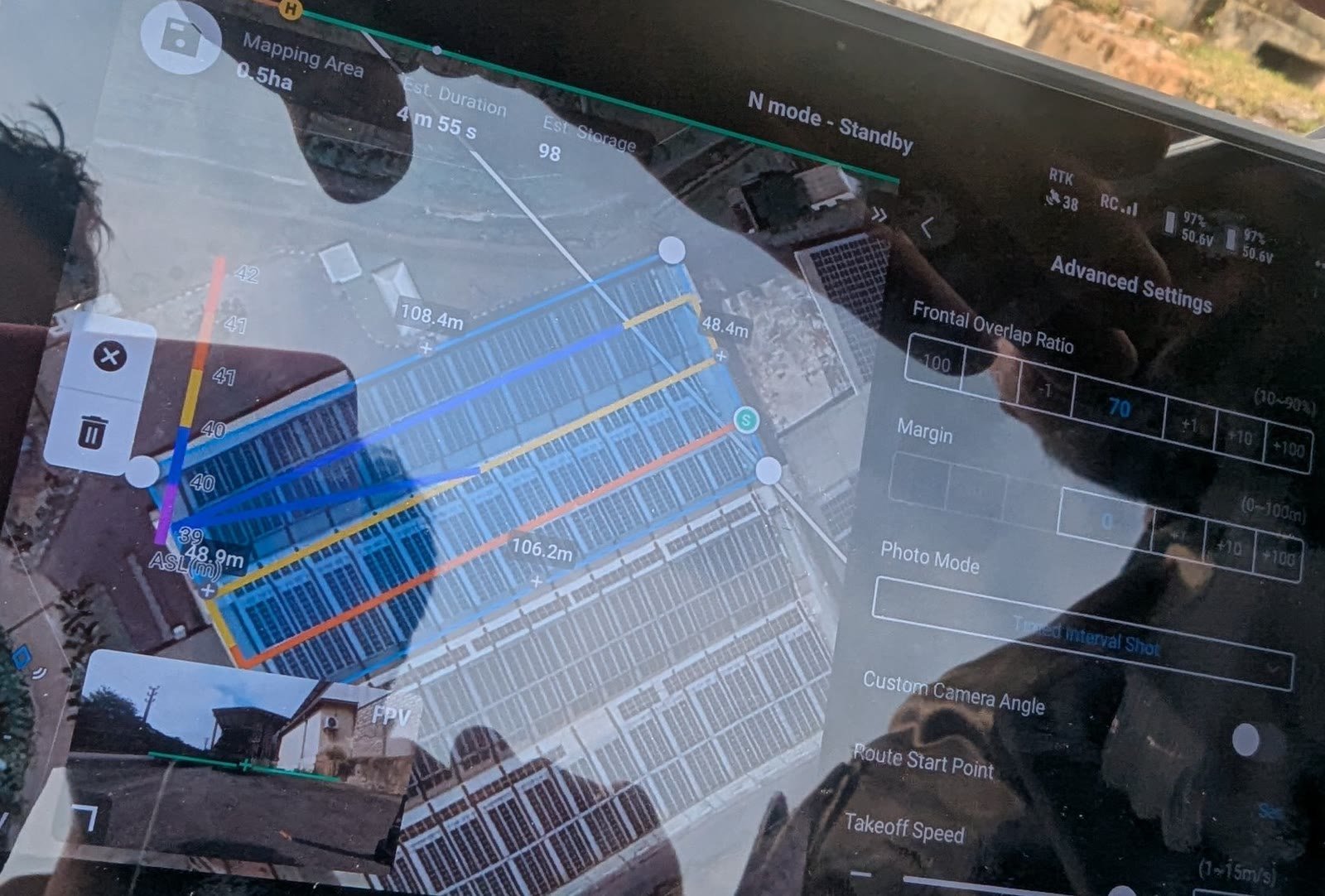
Drone mapping mission planned over a solar PV installation on the remote controller
Mapping. A mapping mission planned over a PV site: area, flight lines and overlap set before take-off.
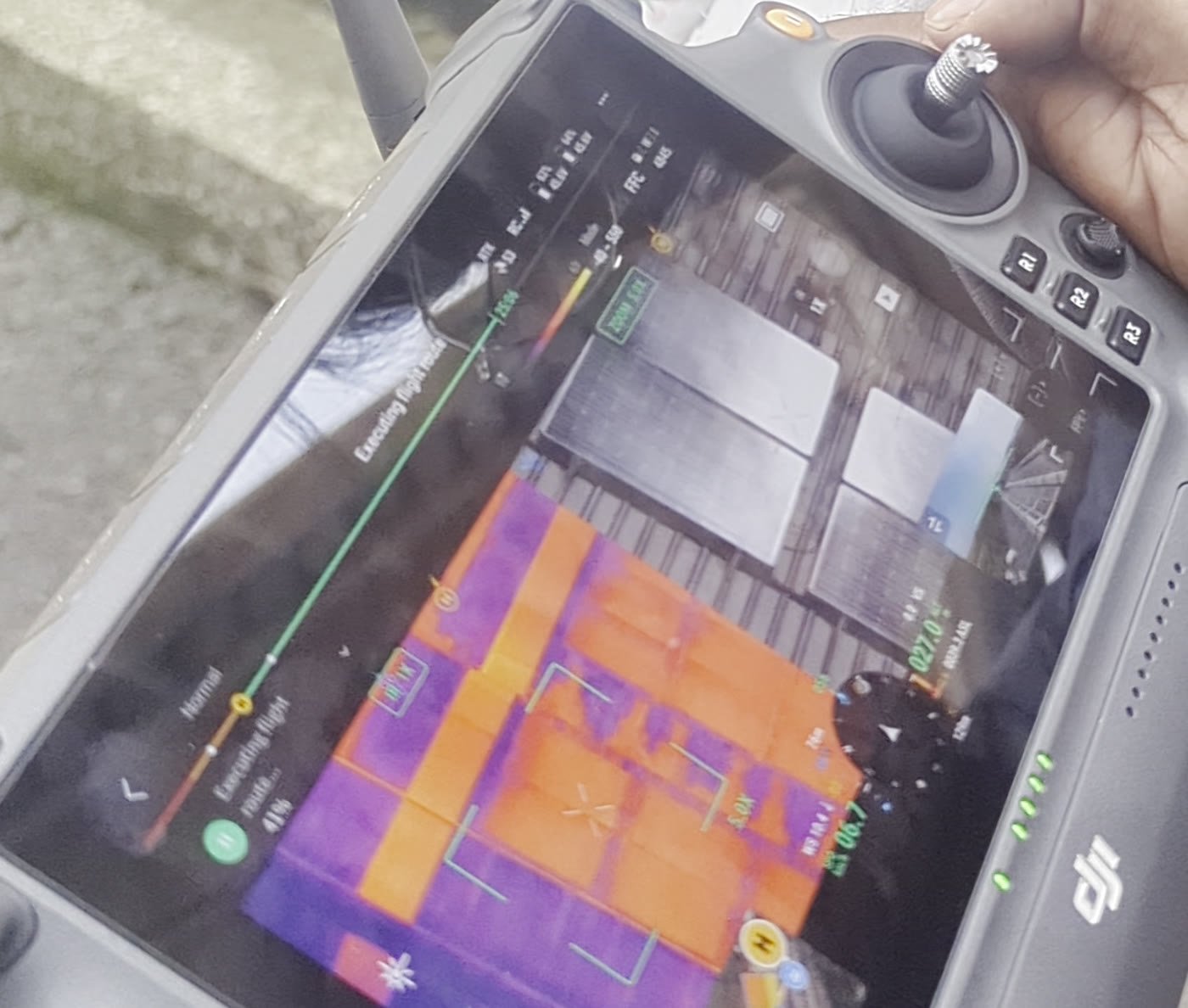
Live thermal feed of solar PV modules on a drone remote controller
Thermal. Live thermal view of modules during an automated flight.
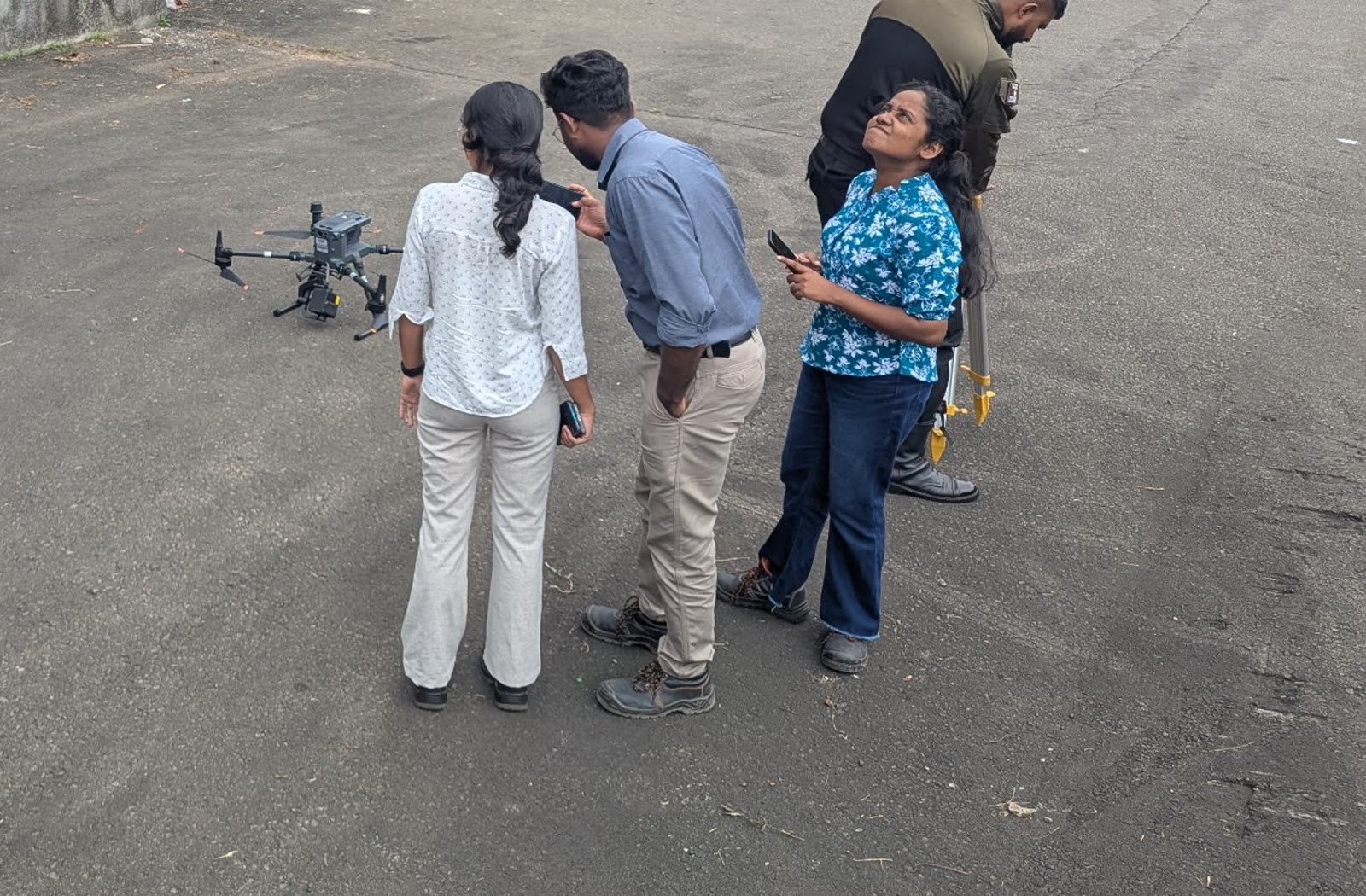
Vibhawa drone team preparing a DJI Matrice 350 RTK for flight
Team. Our team with the Matrice 350 RTK before a survey flight.

What a drone survey gives a solar project

The Matrice 4T carries wide, zoom and thermal cameras and a laser rangefinder. The Matrice 350 RTK flies with centimetre-level positioning for mapping.
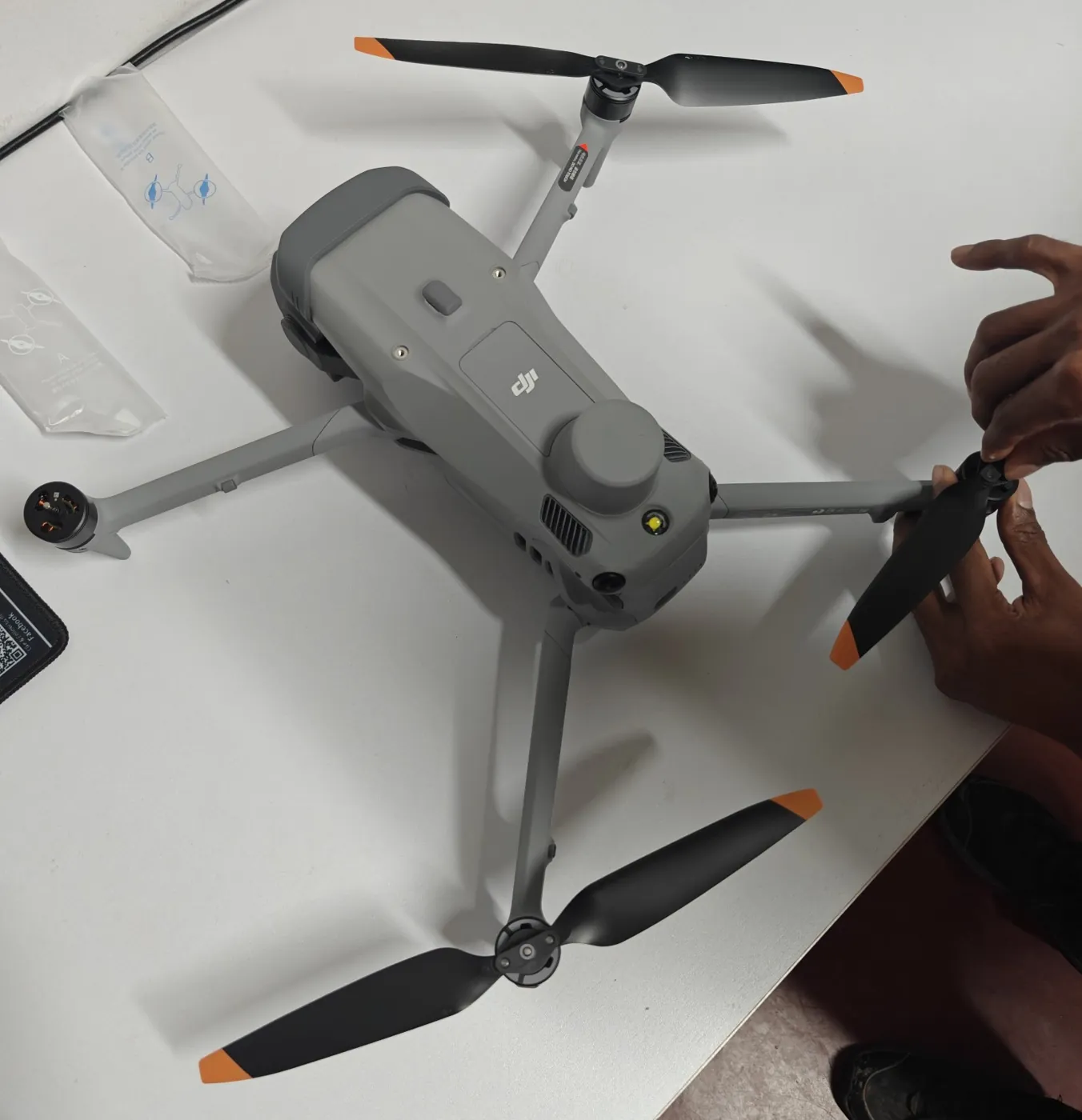
DJI Matrice 4T drone being prepared for its first flight on a workbench
The Matrice 4T, newly added to the fleet.
Before constructionOrthomosaic and terrain model of the site, boundary and obstruction survey, and a shading check from trees, buildings and terrain.
During constructionProgress flights against the layout, so the owner's engineer sees what has been built without walking every row.
At handoverAn as-built aerial record of the plant and a baseline thermal survey, so later surveys have something to compare with.
In operationPeriodic thermal surveys to IEC TS 62446-3, with every defective module located on the map; after storms, a visual damage survey of the array and its structures.

Where we have done it

Ground-mounted · 10 MW

Saga Solar, Hambantota

Performance analysis of an operating plant, with recommendations to improve the yield.

Rooftop · Colombo

Standard Chartered Bank head office

Feasibility, PVsyst simulation, design, tender and BOQ, supervision, testing and commissioning.

Project →
Floating · 3 MW · Maldives

Cheval Blanc Randheli, with SWIMSOL

Onshore and offshore 11 kV substation design, ETAP modelling and protection coordination, testing and commissioning.

Maldives →
Drone thermography · 2 MW

Piramal Glass, Horana

Aerial thermal inspection of the rooftop PV system.

Drone thermography · 3 arrays

Ansell Lanka, Biyagama

Aerial thermal inspection of three rooftop arrays of 1.3 MW, 0.9 MW and 0.22 MW.

Floating · earthing

Diyajanani, Ibbankatuwa Tank

Soil resistivity survey for the earthing design and earthing tests of the completed floating plant.

Earthing →
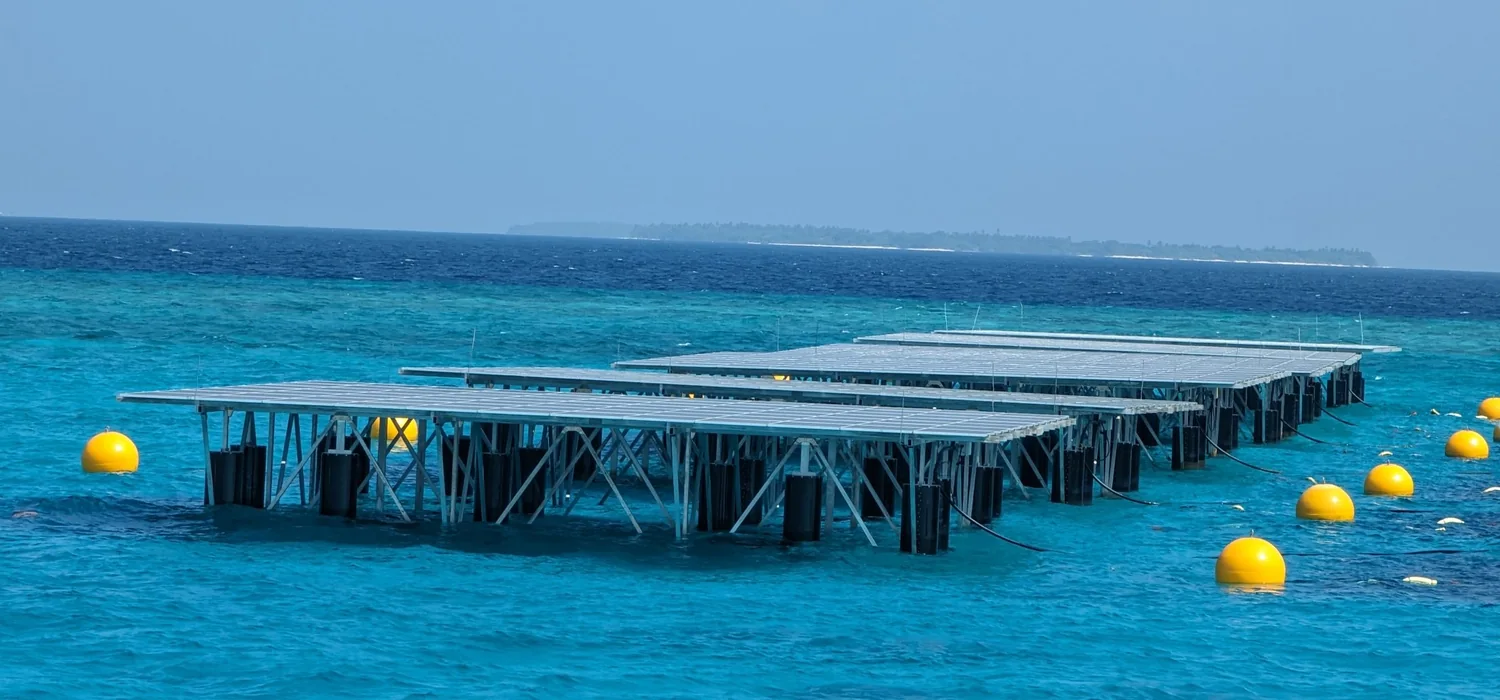
Piled floating solar PV platforms in open sea at Cheval Blanc Randheli, Maldives
Cheval Blanc Randheli — 3 MW in open sea.
Vibhawa engineer running a string test on a Seaward PV210 solar installation tester beside a ground-mounted array
String test with a PV installation tester at a ground-mounted plant: open-circuit voltage, short-circuit current and insulation, string by string.

How an engagement runs

01

Scope

New project or operating plant; the drawings, the yield model or the generation data; who the result is for — owner, lender, utility or insurer.

02

Survey

Site visit, drone mapping or thermal flight, string and inverter measurements as the job needs.

03

Model or analyse

PVsyst yield, ETAP grid studies and the design — or, for a running plant, PR, availability and the loss breakdown.

04

Report

Drawings and specifications, or a findings report with ranked recommendations, signed by a Chartered Electrical Engineer.

Related

Solar projects usually need one or more of these.

Energy Audits

Measure where the energy goes before you size a solar system for it.

Explore →

Aerial Thermography

Drone thermal surveys of PV arrays and substations.

Explore →

Protection Coordination Study

The ETAP study a grid-connected plant needs before energisation.

Explore →

Lightning Protection & Earthing

Earthing and lightning protection design and testing for PV plants.

Explore →

Frequently asked

Open a question to read the answer. If yours is not here, ask us — the scope call is free.

What does a solar PV performance assessment include?

We compare the plant's measured output with what it should have produced for the irradiance it received, and calculate the performance ratio and availability. Then we find the causes of the gap on site: string measurements, inverter logs, a thermal inspection of the array and a check of soiling and shading. You get the losses broken down by cause and a ranked list of actions to recover yield.

What is a good performance ratio for a solar plant?

It depends on the climate, the module technology and how the ratio is calculated, so the useful comparison is with the plant's own design value and its own history. A ratio that falls year on year faster than module degradation explains is a sign of a problem worth finding.

Why use a drone to inspect a solar plant?

A drone with a thermal camera sees every module in a few hours, where a team on foot takes days. It finds hotspots, failed bypass diodes, disconnected strings and damaged modules, and locates each one on a map. Our pilots are CAASL-registered and the images are read by certified Level III and Level II thermographers.

Do you design rooftop solar systems for commercial buildings?

Yes. Feasibility, PVsyst yield simulation, detailed design, tender documents and BOQ, supervision during installation, and testing and commissioning. The Standard Chartered Bank head office in Colombo is one example.

Can you carry out the grid connection studies for a solar plant?

Yes. We model the plant and its connection in ETAP and carry out load flow, short circuit and protection coordination studies for the utility submission. For the 3 MW floating plant at Cheval Blanc Randheli we also designed the onshore and offshore substations and set the protection.

Do you work in the Maldives?

Yes. Cheval Blanc Randheli is our main reference there, and solar sits alongside thermography, safety audits and ETAP studies in our resort programme. Drone flights in the Maldives need a local permit, which we arrange with the client for each job.

Planning a solar project, or worried about one you already own?

Send us the site details, or a year of generation data. We will tell you what we would look at, how long it takes and what it costs.

Request a quote

At Vibhawa, we offer state-of-the-art Electrical Consultancy, Testing, Condition Monitoring and Engineering Services designed for the needs of tomorrow’s world.

Services

Electrical Testing

Infrared Thermography

Electrical Consultancy

Electrical Design

Compliance Monitoring

Other Services

Recent news

  • All Post
  • Blog
  • News & Insights
  • work

© 2025 Vibhawa Consultants. Site By Remnis Global

Scroll to Top