Lightning arrester vs lightning conductor vs ESE: what’s the difference?
By Vibhawa Editorial Team · Vibhawa Consultants
Three names that get used for the same rod on the roof. They are not the same thing, and the difference decides whether a building is actually protected.
In Sri Lanka, “lightning arrester” usually means the lightning rod on the roof, which engineers call an air terminal. Strictly, a lightning arrester (a lightning surge arrester) is a different device that protects power lines and equipment from voltage surges. A “lightning conductor” is the whole external system: air terminals, down conductors and the earth termination. An ESE (early streamer emission) terminal is a type of air terminal designed to the French standard NFC 17-102, which claims a larger protection radius than a conventional rod; the international standard IEC 62305 does not recognise that claim.
The three terms, and what they really mean
| What people say | What they usually mean | What it is technically | Standard |
|---|---|---|---|
| Lightning arrester | The rod or spike on the roof | A surge arrester, also sold as a lightning surge arrester: a device on power lines, transformers and switchboards that diverts voltage surges to earth | IEC 60099-4 (HV surge arresters); IEC 61643-11 (LV surge protective devices) |
| Lightning conductor | The rod and the copper tape down the building | The external lightning protection system: air terminals, down conductors and earth termination | IEC 62305-3 |
| Lightning rod (air terminal, Franklin rod) | A plain rod on the roof | The part of the system designed to be struck: rods, catenary wires or a roof mesh | IEC 62305-3 |
| ESE lightning arrester | A “modern” arrester with a bigger range | An early streamer emission air terminal that claims to launch an upward streamer earlier than a plain rod | NFC 17-102 (French national standard) |
The mix-up matters because a quote for “a lightning arrester” can mean a single terminal on the roof with nothing else. That is not a lightning protection system. Without down conductors, test joints, an earth termination and bonding, the current from a strike has no safe path to the ground.
How a conventional lightning protection system works
IEC 62305 is the international standard for lightning protection. It starts with a risk assessment (IEC 62305-2) that decides whether a structure needs protection and at what lightning protection level, from LPL I (most stringent) to LPL IV. The system is then designed to IEC 62305-3:
- Air termination: rods, wires or a roof mesh placed where lightning will strike. The protected zone is checked by the rolling sphere method (sphere radius 20 m for LPL I, 30 m for II, 45 m for III and 60 m for IV), the protection angle method, or the mesh method (5 m, 10 m, 15 m or 20 m mesh for LPL I to IV).
- Down conductors: several parallel paths from the roof to the ground, spread around the building, each with a test joint so it can be measured.
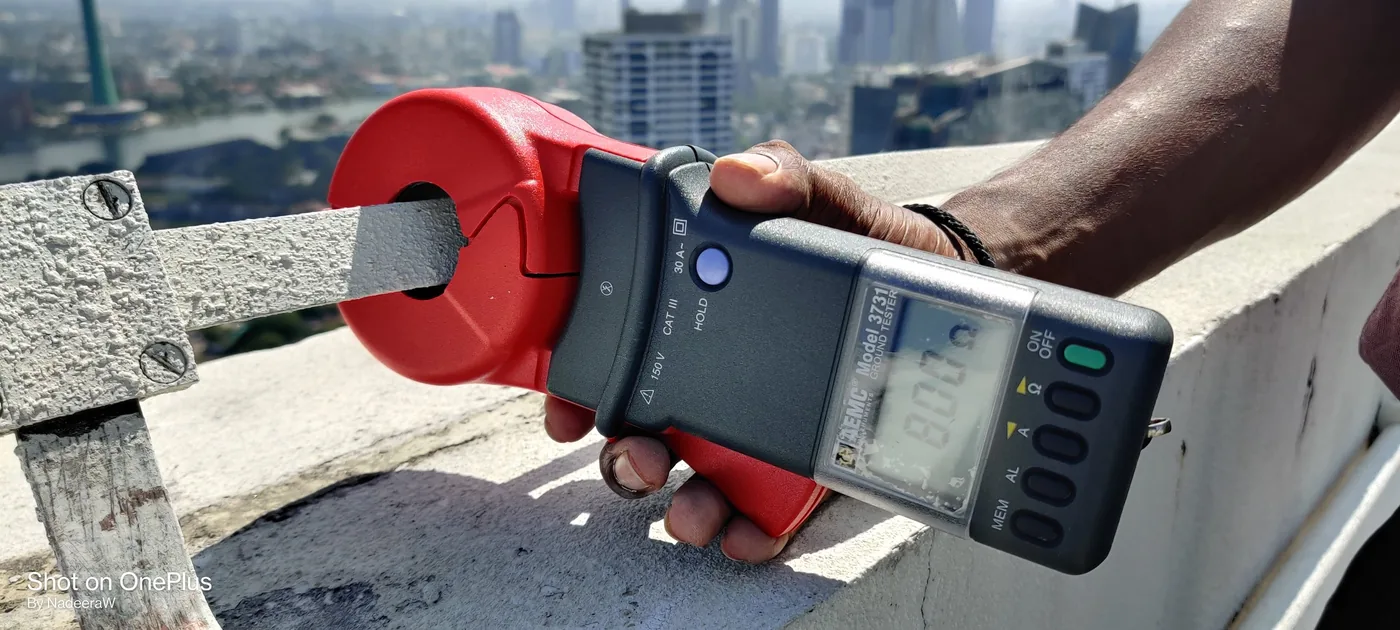
- Earth termination: electrodes that spread the current into the soil. IEC 62305-3 recommends an earth resistance below 10 Ω, measured at low frequency, where possible.
- Bonding and separation: metalwork, services and the electrical earth are bonded or kept at a safe distance, so the current does not jump into the building.
What an ESE terminal is, and why it is debated
An early streamer emission (ESE) terminal looks like a rod with a head on top. Its makers say the head triggers an upward streamer earlier than a plain rod would, so it meets the downward lightning leader sooner and protects a much larger area. Under NFC 17-102 the protection radius is calculated from that claimed time advance, and one ESE terminal is often specified where a conventional design would need several rods or a mesh.
The claim is the problem. IEC 62305 does not include ESE terminals or their enlarged protection radius. Field observations, notably long-term studies of buildings in Kuala Lumpur, recorded lightning striking buildings within the zones ESE terminals were supposed to protect. Many lightning researchers and standards bodies treat an ESE terminal as performing no better than a plain rod of the same height.
ESE systems are still widely installed in Sri Lanka and the Maldives, often because a specification, an insurer or a supplier asked for one. Whatever the terminal, the rest of the system does the same job: an ESE system under NFC 17-102 still needs down conductors, test joints, an earth termination and bonding, and that is where most of the faults we find are.
Neither protects your electronics
Air terminals, down conductors and earthing protect the structure and the people inside from a direct strike. A lightning rod does not stop surges. Most of the damage we investigate after a storm is to lift controllers, CCTV, BMS, inverters and telecoms, and it comes from the surge a strike induces in power and data cables, often from a strike nearby rather than on the building. That needs surge protective devices (SPDs): a Type 1 or Type 2 device at the incoming supply, and Type 2 and Type 3 devices closer to sensitive equipment, coordinated to IEC 62305-4 and selected to IEC 61643-11.
Conventional or ESE: how to choose
- Start with a risk assessment to IEC 62305-2. It tells you whether the building needs protection and at what level, before anyone chooses hardware.
- Check who has to accept the result. An insurer, a hotel brand standard, a lender or a client specification may name the standard. Design to that standard and say so in the report.
- Judge the whole system, not the terminal. Ask how many down conductors there are, where the test joints are, what the earth resistance is and how the services are bonded.
- Add surge protection. Without SPDs, the electronics are not protected, whichever terminal is on the roof.
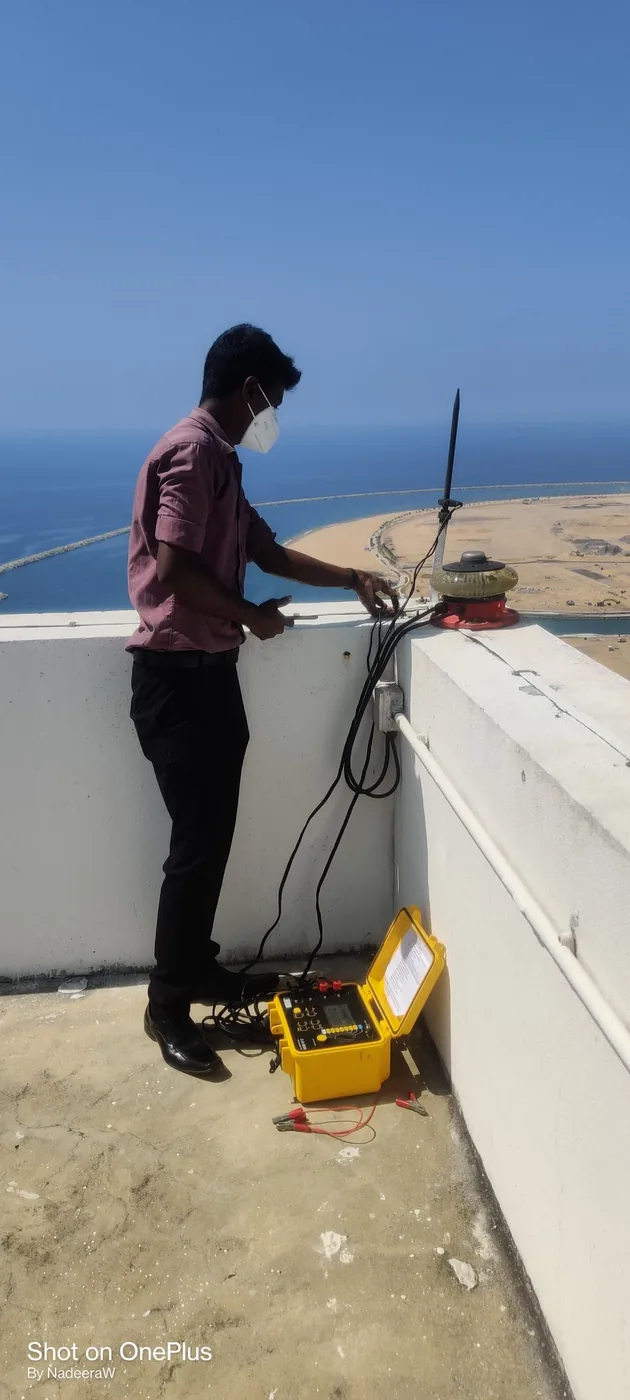
- Plan the testing. A system that is never tested cannot be shown to work. Continuity, earth resistance and visual checks should be on a schedule from day one.
How often should it be inspected?
The most widely used intervals come from Table E.2 of IEC 62305-3:2010: for protection levels I and II, a visual inspection every year and a complete inspection and test every two years; for levels III and IV, every two and every four years; and a complete inspection every year in critical situations. The 2024 edition keeps periodic inspection and testing as a requirement without a fixed table. On Sri Lanka’s coast, with salt air and two thunderstorm seasons, an annual test is the sensible default.
Independent design and testing in Sri Lanka
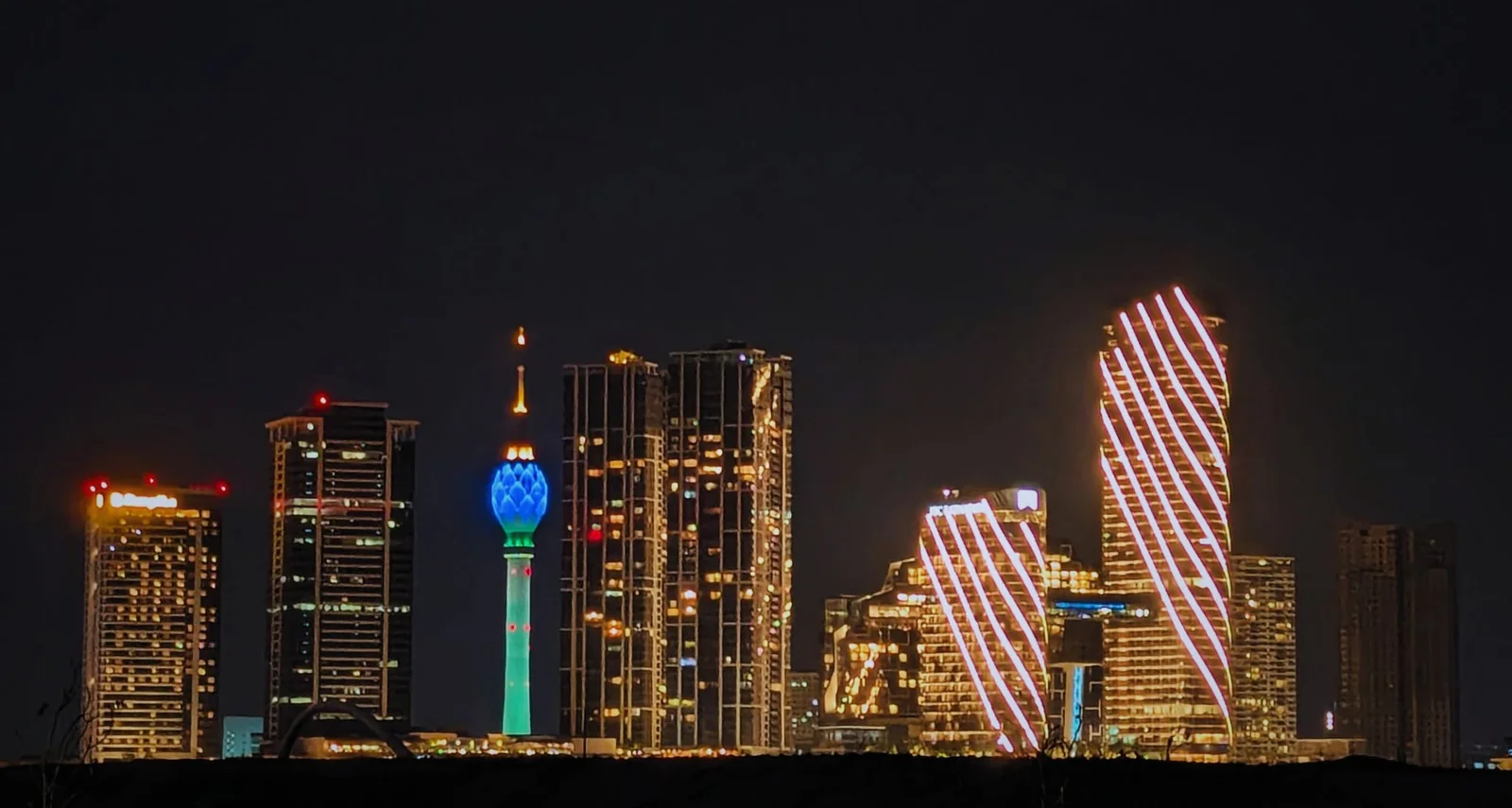
Vibhawa does not sell or install lightning protection hardware. We carry out the risk assessment, design the system to IEC 62305 or NFC 17-102, and test what is installed, so the result is independent of the supplier. Our work includes lightning risk assessment and testing at Shangri-La Colombo, risk assessment and design for INSEE Cement’s Puttalam plant, and condition monitoring of the lightning protection and structural earthing of towers on the Galle Face skyline.
Frequently asked questions
Is a lightning arrester the same as a lightning conductor?
Not strictly. In everyday use both mean the rod on the roof. Technically, a lightning (surge) arrester protects power lines and equipment from voltage surges, and a lightning conductor is the whole external system of air terminals, down conductors and earth termination.
Does an ESE lightning arrester protect a bigger area than a normal rod?
NFC 17-102 gives ESE terminals a larger protection radius based on a claimed early streamer. IEC 62305 does not recognise that radius, and field observations have recorded strikes inside the claimed protection zones. Many engineers treat an ESE terminal as equivalent to a plain rod of the same height.
Is ESE allowed in Sri Lanka?
There is no Sri Lankan rule that bans or requires either type. The standard a system is designed to is usually set by the client’s specification, the insurer or a brand standard. The report should state which standard the system meets.
Does a lightning protection system protect electrical equipment?
No. It protects the structure and people from a direct strike. Equipment needs surge protective devices on the power, data and telecom lines, coordinated to IEC 62305-4.
What earth resistance should a lightning protection system have?
IEC 62305-3 recommends below 10 Ω, measured at low frequency, where possible. The layout of the electrodes matters as much as the number, so the result should be read with the design.
Not sure what is on your roof?
We assess, design and test lightning protection and earthing systems across Sri Lanka and the Maldives, independent of any supplier.
Sources: IEC 62305-1 to -4 (2024 edition and IEC 62305-3:2010 Table E.2); NFC 17-102:2011; IEC 60099-4; IEC 61643-11.