3D Thermal Substation Inspection: Drone Thermography for MV Infrastructure
3D thermal substation inspection using drone thermography represents a significant advance in condition monitoring for energised medium voltage assets.
Substations are designed for reliability. Yet most failures begin quietly with a loose connector, a degrading insulator or a bushing under thermal stress. These defects rarely show up until a trip, fire risk, or forced outage occurs.Infrared thermography has long been used to detect abnormal heat patterns in energised systems. It is a proven method. But traditional handheld scans capture isolated images. They show what is hot at a single moment, without revealing how heat interacts across surrounding structures or how patterns evolve over time.From a reliability standpoint, that limitation matters.Thermal drone inspection for substations and medium voltage infrastructure expands thermography from isolated snapshots to measurable system-level insight. It improves visibility across 11kV, 33kV, and higher voltage installations where access, safety, and spatial continuity are critical.
The Limits of Conventional Substation Thermography
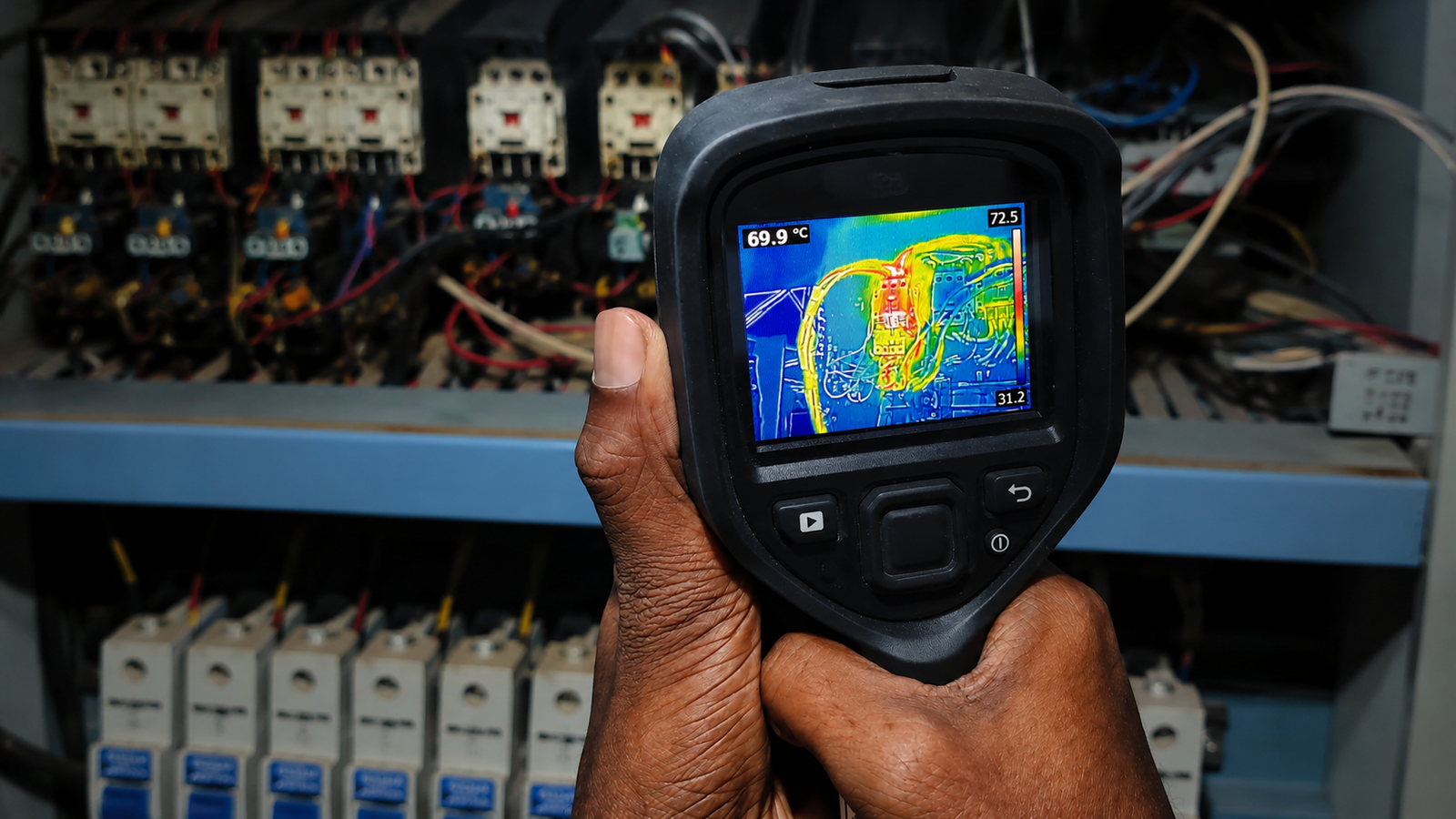
Traditional substation thermography involves a technician scanning panels, gantries, and transformer connections using a handheld infrared camera.This method has three practical constraints.
1. Line-of-sight limitations
Elevated busbars, rear terminations, and outdoor gantries are difficult to access safely. Inspections may require climbing or working close to energised conductors, increasing risk and limiting coverage.
2. Lack of spatial continuity
A 2D thermal image isolates a component. It does not show how heat distributes across an entire bay, how phases compare under load, or whether neighbouring structures are affected.
3. Inconsistent measurement baselines
Manual inspection angles and distance variations reduce repeatability. Long-term comparison becomes less reliable when geometry is not controlled.Standards such as NFPA 70B and IEC maintenance guidelines recommend routine inspection of electrical systems under load. However, compliance alone does not guarantee meaningful insight. The inspection method also determines the quality of data collected.
Why Use 3D Thermal Substation Inspection?
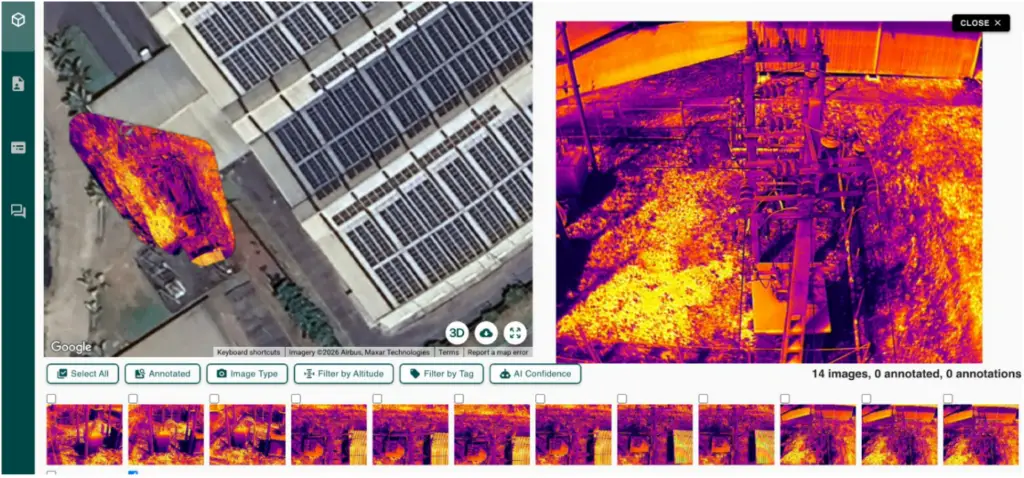
Drone thermography inspection uses UAV platforms equipped with calibrated radiometric thermal cameras. These systems capture high-resolution temperature data while maintaining a safe distance from energised equipment.When thermal imaging is integrated with 3D spatial mapping, overlapping images are combined into a measurable digital model of the substation. Each thermal anomaly is located within a defined coordinate system.This delivers four engineering advantages.
1. Full Spatial Context
Instead of reviewing isolated images, engineers can evaluate heat patterns across entire structures. Phase imbalance, connector degradation, and insulator heating can be analysed in relation to surrounding components.For 33kV outdoor yards and complex gantry layouts, this broader context supports clearer root cause assessment.
2. Precise Geolocation
Each anomaly is tagged to a specific structural location. Maintenance teams can identify the exact clamp, cross arm, or bushing without interpretation errors.This reduces inspection-to-repair time and improves planning accuracy.
3. Repeatable Historical Comparison
Because the geometry is mapped, future inspections can be aligned with previous datasets. Temperature rise trends can be tracked at the same physical point over time.This enables trend analysis rather than one-time detection. Substation thermography shifts from identifying faults to monitoring degradation behaviour.
4. Safer Inspection of Energised Infrastructure
UAV-based thermal inspection reduces the need for climbing structures or approaching live equipment. For high-risk environments such as transformer yards and live bus structures, this is a direct safety improvement aligned with IEC and IEEE safety practices.
Technical Foundations Behind 3D Thermal Modelling
Modern drone thermal systems typically include:
- Radiometric cameras with high thermal sensitivity
- GPS-stabilised flight control
- Visual spectrum cameras for alignment
- Software for photogrammetry and 3D reconstruction
During inspection, overlapping thermal images are captured from multiple angles. The software reconstructs a point cloud model where each coordinate contains temperature data.Unlike conventional imaging, engineers can extract temperature values at any location within the model after the inspection is complete. Heat distribution patterns can be analysed across structural components, not just individual connections.Because inspections are conducted under operational load, resistive heating caused by loose connections or degradation becomes detectable. Wider spatial coverage improves the likelihood of identifying imbalance across phases or adjacent assemblies.This structured dataset becomes part of a broader electrical condition monitoring program rather than a standalone report.
Standards and Compliance
Thermal drone inspection supports established maintenance frameworks.
- NFPA 70B recommends routine infrared inspection to detect deterioration in electrical systems.
- IEC maintenance guidance emphasises condition-based monitoring for critical infrastructure.
- ISO 18436 defines qualification requirements for personnel conducting thermography.
Plus, when inspections are performed by certified Level 2 and Level 3 thermographers, data interpretation meets recognised professional standards.For utilities, industrial plants, and renewable EPC projects, structured documentation strengthens audit readiness and insurance alignment.
Strategic Value in Reliability Programs
Maintenance programs usually focus on visible defects or recent failures, while the hidden degradation receives attention only when it escalates.By mapping thermal behaviour across entire substations, drone thermography improves visibility into early-stage heating and structural patterns.This supports:
- Data-driven maintenance prioritisation
- Reduced unplanned outage risk
- Improved lifecycle planning
- More accurate repair scoping
For medium voltage infrastructure, a single forced outage can exceed the cost of structured condition monitoring. Reliability performance depends on early detection and consistent measurement.Thermal drone inspection becomes one layer within a broader engineering framework that includes electrical testing, protection coordination, and structured asset monitoring.
Where Vibhawa Fits
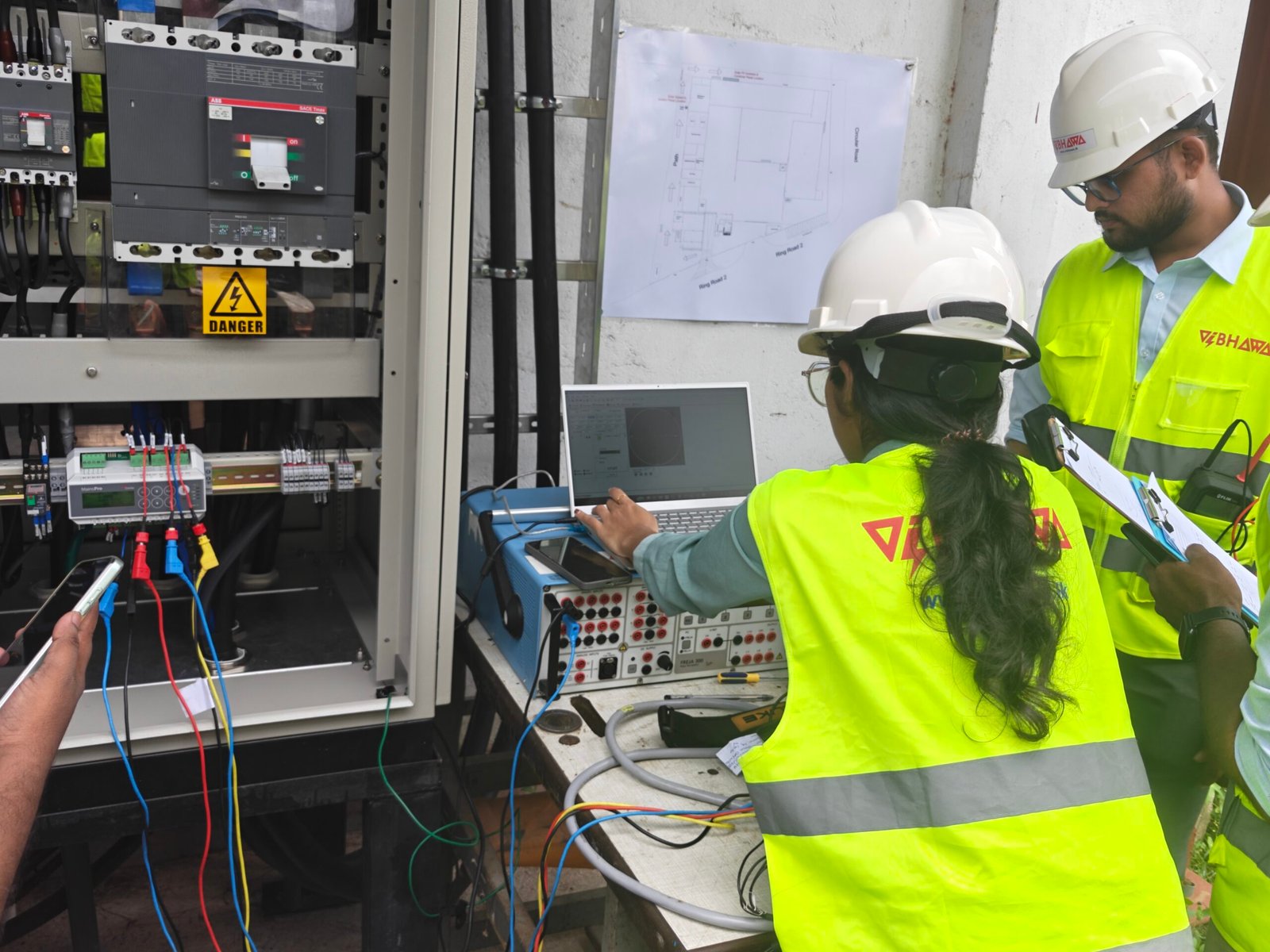
Implementing thermal drone inspection for substations and medium voltage infrastructure requires more than equipment. It requires engineering interpretation, system knowledge, and compliance awareness.At Vibhawa Consultants, drone thermography is integrated within our wider electrical condition monitoring and medium voltage assessment services. Inspections are conducted by certified thermographers with electrical engineering expertise in MV systems up to 33kV and above.Our approach focuses on measurable asset behaviour, not just image capture. We analyse thermal data within the context of system design, load conditions, and operational risk. This supports structured reliability planning rather than isolated fault detection.
Are You Seeing the Full Picture in Your Substation Inspections?
Most facilities still rely on periodic 2D thermal scans. The issue is not whether they detect heat, but whether they provide actionable insight across the full spatial and lifecycle context of the asset.Expanding thermography into a mapped, repeatable system improves visibility and supports long-term reliability planning.If you are reviewing your current inspection methodology, a structured technical assessment can identify where spatial modelling and repeatable thermal analysis strengthen reliability performance.To learn more about our electrical condition monitoring and drone inspection services, contact us at Vibhawa Consultants for a technical discussion.