Vibhawa Completes Electrical Audit and Arc Flash Study for Fonterra Sri Lanka Manufacturing Plant
An arc flash study is one of the most consequential pieces of work a manufacturing plant can commission, because the findings affect personnel safety, protective device settings, and how the maintenance team is allowed to work near energised equipment. Electrical issues in a plant rarely show up as a single visible fault — they begin as heat, poor selectivity, ageing connections, incorrect protection settings, or work practices that no longer match the way the plant operates.
That is why a proper electrical safety audit must go beyond a visual checklist.
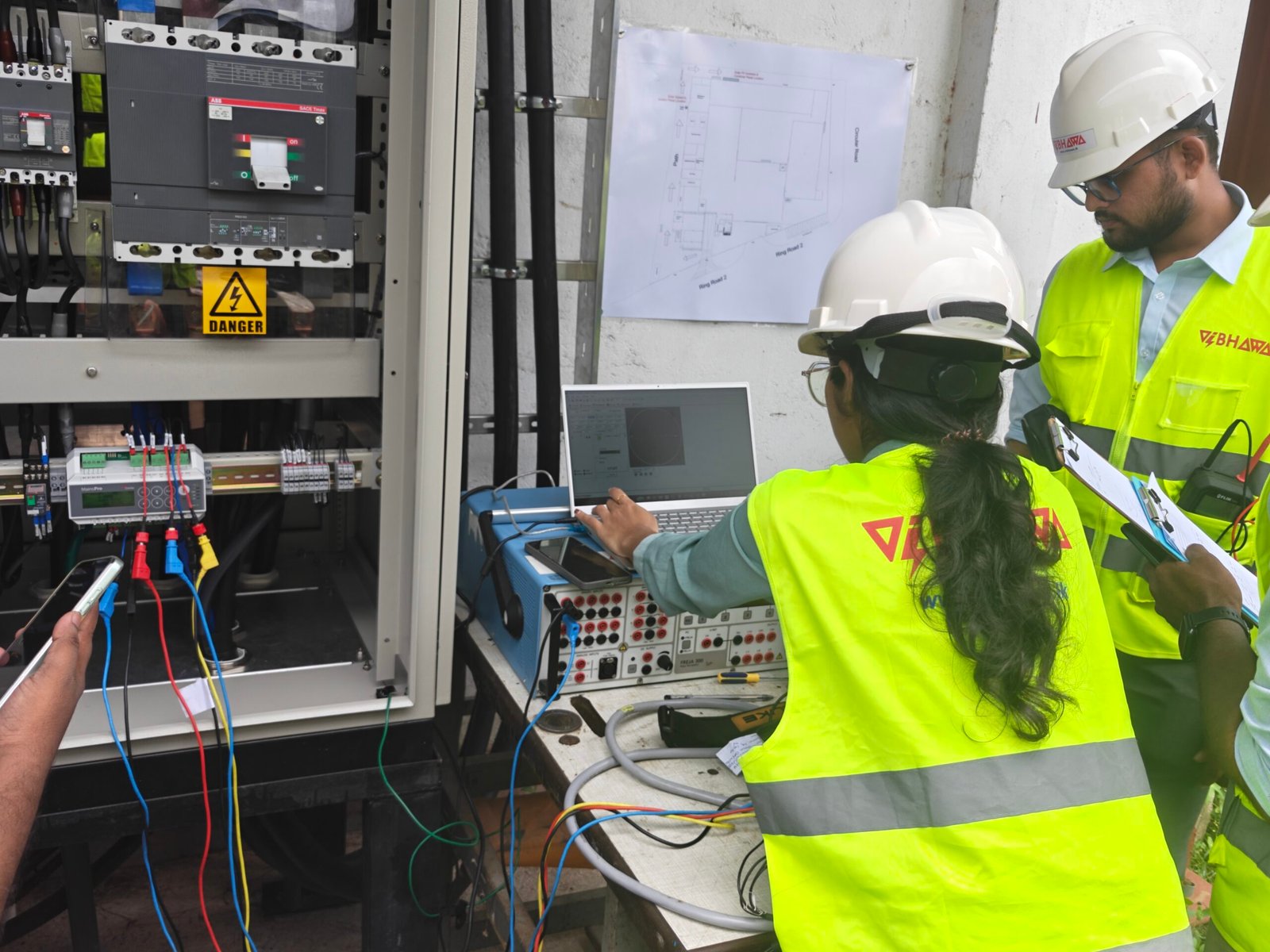
We, at Vibhawa Consultants, recently completed the annual electrical audit and thermography survey of the Fonterra Sri Lanka manufacturing plant for the fifth consecutive time. This year’s work also included a protection coordination study and arc flash study for the complete electricity distribution system, covering the 33kV system and low voltage network.
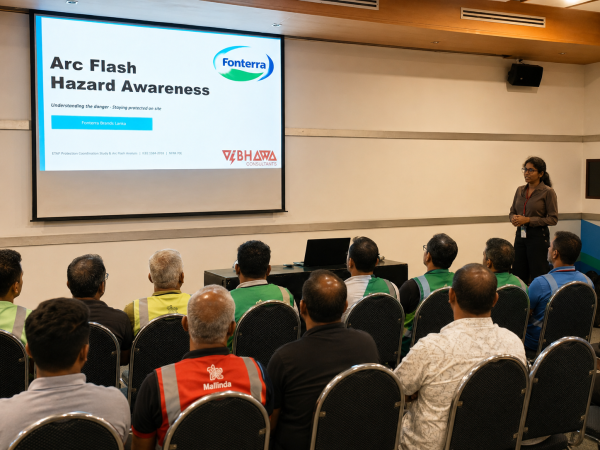
The project concluded with an arc flash safety awareness session for Fonterra’s maintenance team, followed by a Q&A discussion. Here’s everything you need to know about this:
Project Scope
This assignment brought together three connected areas of engineering work:
- Annual electrical audit of the manufacturing plant
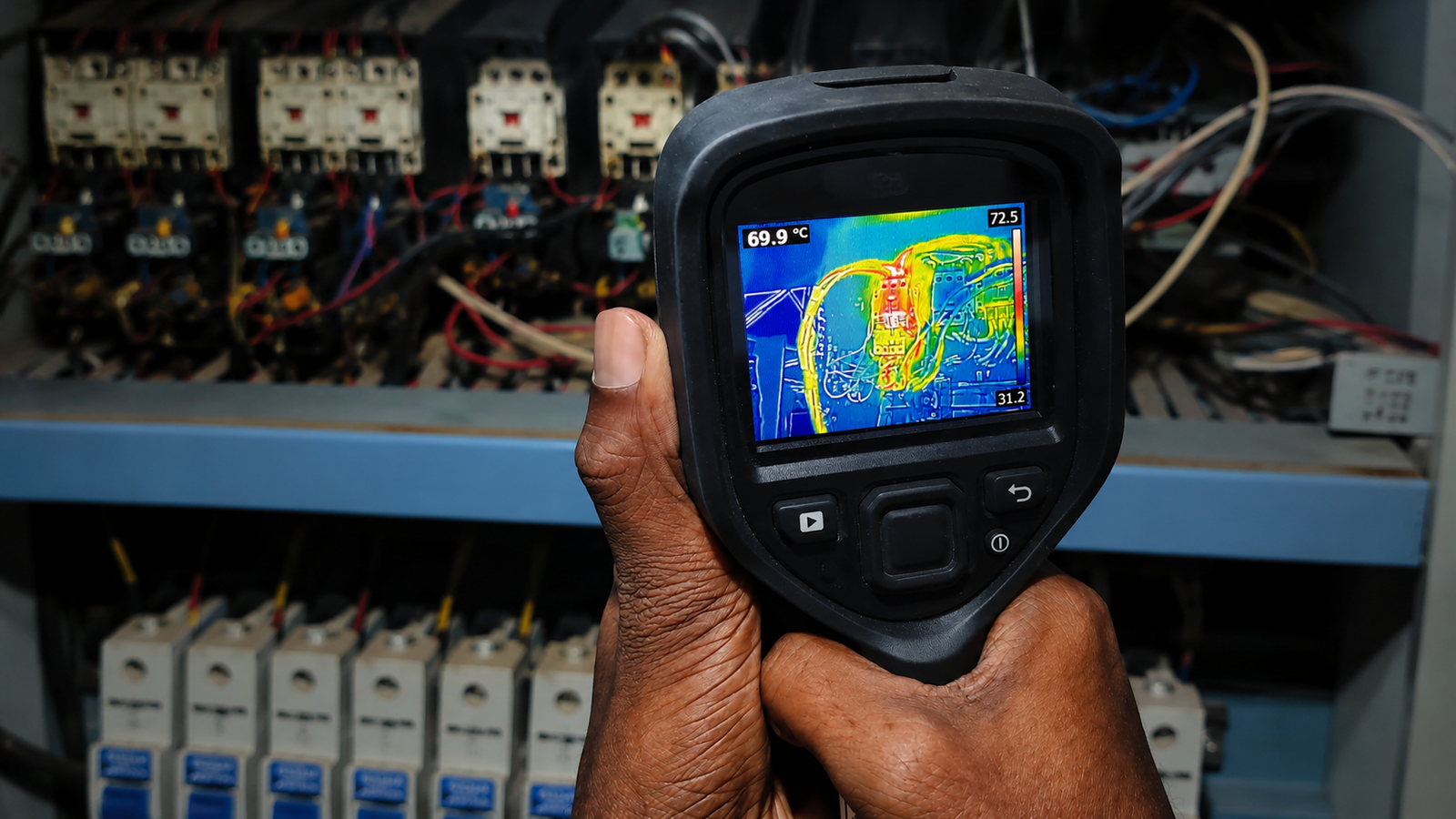
- Infrared thermography survey of live electrical assets
- Protection coordination and arc flash analysis across the full distribution system
For a facility that depends on continuous production, each part serves a different purpose.
The audit checks the wider condition, safety and compliance position of the installation. The infrared thermography inspection helps identify abnormal heating while equipment is in service. The protection coordination and arc flash study reviews how the network behaves during fault conditions and what exposure may exist for personnel working near energised equipment.
Together, these activities give the maintenance and engineering teams a clearer basis for decisions.
Why Electrical Safety Audits Matter in Manufacturing Facilities
Manufacturing plants like Fonterra carry a different level of electrical dependency from many commercial sites. Production equipment, utilities, refrigeration, packaging, process control and maintenance access all depend on stable power.
A fault in one section can affect more than one machine. So, if protection settings are not selective, a local issue can lead to a wider interruption.
A structured electrical safety audit helps plant teams understand:
- Where immediate electrical hazards may exist
- Whether maintenance priorities are correctly ranked
- Which defects require shutdown planning
- How safety and production continuity are connected
- Whether past corrective actions have held over time
For Fonterra, the fifth consecutive annual assessment also added continuity. Repeated checks help compare the current condition against previous observations. This is important because risk changes as load, asset condition and operating demands change.
What an Infrared Thermography Survey Reveals in a Live Plant
The thermography survey was a key part of the project as it allowed us to inspect live equipment without interrupting plant operation.
Thermal imaging is useful for identifying early warning signs such as:
- Loose cable terminations
- Overheated joints
- Phase imbalance
- Excessive loading
- Poor contact resistance
- Deteriorating components inside panels
These findings are valuable only when they are interpreted correctly. A thermal anomaly on non-critical equipment does not carry the same operational consequence as a similar reading on a main distribution panel.
Vibhawa’s assessment considered the asset, load condition and location of each finding. This helped Fonterra’s maintenance team prioritise action based on practical risk rather than temperature readings alone.
This is where condition monitoring becomes more than inspection. It becomes a planning tool to reduce unplanned failures.
How a Protection Coordination Study Improves Plant Reliability
The protection coordination study reviewed how protective devices should operate during a fault.
The objective is simple: the device closest to the fault should isolate the affected section where possible, while upstream supply remains available. When this does not happen, one fault can shut down a larger part of the plant.
That’s why we studied the full distribution arrangement, including the 33kV system and the low voltage network, since coordination cannot be judged by one voltage level alone.
A protection study typically considers:
- Fault levels
- Protective device settings
- Time-current behaviour
- Selectivity between upstream and downstream devices
- Equipment ratings
- System response during abnormal conditions
Better coordination can reduce the scale of interruption, support safer fault isolation and help maintenance teams understand how the network is expected to respond.
This also connects naturally with protection system testing, where protection relays, circuit breakers, CTs, VTs and related circuits are checked against intended performance.
What an Arc Flash Study Tells You About Worker Exposure
The arc flash study added another safety layer to the project. Arc flash analysis evaluates the potential incident energy released during an arcing fault and helps determine the level of hazard faced by personnel working near energised equipment.
This is not only a compliance exercise. It affects daily work decisions.The study helped us identify where higher exposure may exist across the distribution system.
It also supports decisions around:
- Safe working boundaries
- Personal protective equipment
- Equipment labelling
- Switching practices
- Isolation procedures
- Work authorisation and supervision
This is critical because Fonterra’s system includes both 33kV and low voltage assets. Work at these levels requires a clear understanding of the hazard, not general assumptions.
Awareness Session on Arc Flash Safety
After the studies were completed, our engineering experts at Vibhawa lead by Sandika Sawandi – Power System Design & Simulation Engineer of Vibhawa conducted an arc flash safety awareness session for Fonterra’s maintenance team.
This step matters because technical reports are only useful when the people responsible for operation understand how to apply the findings.
The session covered why protection coordination matters, and how maintenance decisions should account for exposure. The Q&A allowed the team to raise questions about plant access, equipment and work routines.
This made the project more useful at site level. It connected engineering analysis with the decisions maintenance staff make during inspections, switching and fault response.
How Vibhawa Combines Field Testing, System Studies, and Safety Training
This project reflects Vibhawa’s strength in field testing, system studies and practical guidance.
The work connected:
- Electrical audit findings
- Thermography observations
- Protection coordination analysis
- Arc flash hazard assessment
- Safety awareness for the maintenance team
That combination is important for industrial facilities because reliability cannot be assessed alone from one angle. Visible condition, fault behaviour and human exposure must be reviewed together.
Vibhawa’s fifth consecutive annual assessment at Fonterra also shows the value of long-term technical familiarity. When engineers understand how a plant changes over time, recommendations become more relevant and easier to act on.
Speak to Vibhawa About Electrical Safety Audits and Arc Flash Studies
The Fonterra Sri Lanka project shows how a manufacturing plant can use electrical audits, thermography, protection studies and arc flash analysis to support safer operation and better maintenance planning.
Being one of the leading electrical testing experts in Sri Lanka, Vibhawa Consultants provide electrical audits, thermography surveys, testing, commissioning, power system studies and safety engineering support for industrial, commercial and utility facilities.
To discuss an electrical audit, arc flash study or protection coordination requirement for your facility, speak to us at Vibhawa today!